
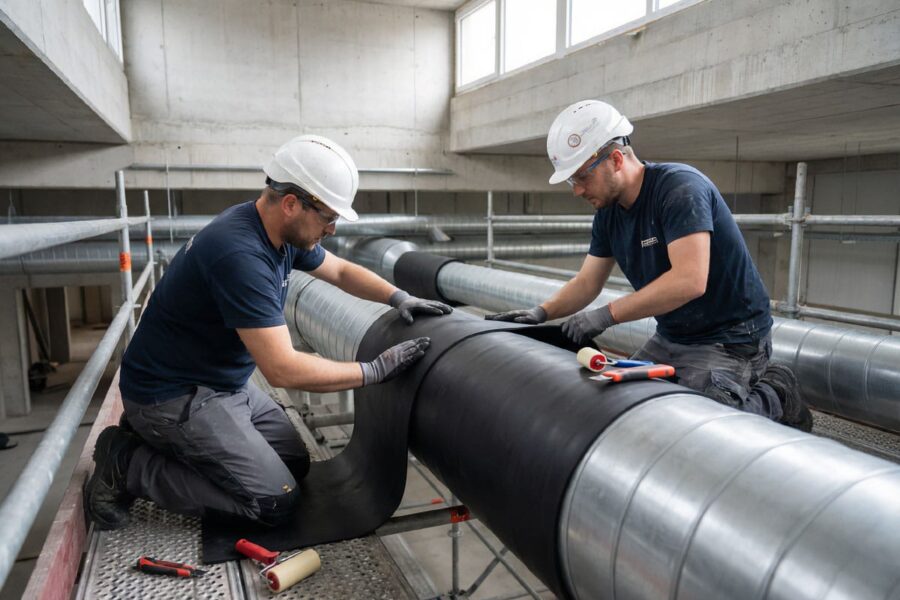
Noise coming from ventilation systems can effectively disrupt the comfort of life and work. Metal ducts conduct sounds generated by fans, silencers, and turbulence of the flowing air. Rubber mats offer a solution that combines sound reduction with thermal protection of the ducts. The closed-cell structure of the material blocks acoustic waves and minimizes duct vibrations.
Ventilation systems generate various types of noise. Low-frequency rumbling comes from motors and blowers. High frequencies arise at high flow speeds. Acoustic resonance in long duct sections further amplifies unwanted sounds. The duct walls transmit vibrations into rooms, spreading noise throughout the building.
Flexible rubber foam adapts to different duct shapes. The self-adhesive layer facilitates installation on rectangular and round surfaces. Additional thermal insulation prevents condensation on cold ducts. The material’s long-lasting durability maintains damping parameters despite exposure to moisture and temperature changes.
Acoustic properties of rubber mats in ventilation systems
Rubber foam exhibits noise-damping properties in the mid-frequency range. The dense material structure absorbs sound energy and reduces the amplitude of acoustic waves. Ventilation ducts wrapped with rubber mats emit significantly less noise to the surroundings. Thicknesses from 6 to 50 millimeters allow adjustment of insulation levels to specific requirements.
Closed-cell structure blocking sound wave transmission
The closed air cells in rubber foam create a barrier for sounds. Each cell acts as a miniature shock absorber for acoustic energy. Sound waves lose power as they pass through successive layers of the material. Mechanical energy transforms into a small amount of heat dissipated within the foam structure.
A material density of 50-70 kg/m³ provides optimal damping properties. Higher density increases duct mass but improves acoustic insulation effectiveness. Ventilation system manufacturers use mats 13-19 millimeters thick for standard installations. Industrial ventilation systems require thicker material layers for effective noise reduction.
The closed-cell structure prevents moisture penetration into the material’s interior. Water resistance preserves acoustic parameters throughout the service life. Ducts carrying humid air remain effectively acoustically insulated. Lack of water absorption eliminates the risk of deteriorating damping properties.
Damping noise generated by fans and air turbulence
Rotary fans generate noise at frequencies between 100-500 Hz. Rubber mats effectively reduce these sound disturbances reaching rooms. Rotor vibrations transfer to the housing and then to ventilation ducts. The flexible foam layer interrupts the propagation path of mechanical vibrations.
Air turbulence occurs in places where the flow direction changes abruptly. Elbows, tees, and diameter reductions generate aerodynamic noise with a wide frequency spectrum. Insulating these sections with rubber mats reduces noise emission by 15-25 decibels. Attenuation of high-frequency sounds requires the use of an additional absorbing foam layer.
The most common sources of noise in ventilation systems:
- Bearings and fan rotors producing mechanical vibrations
- Sudden contractions and expansions of duct cross-sections causing air swirling
- Ventilation grilles generating whistles at high flow speeds
- Expansion boxes and silencers with improperly selected lengths
- Leaks in duct connections emitting hissing and whistling sounds
The effectiveness of acoustic insulation depends on properly covering the entire surface of the ducts. Gaps between foam sheets create acoustic bridges that transmit sound. Overlaps at material joints should be at least 20-30 millimeters. Reinforced insulation at structural elements prevents vibration transmission to the building. Regular inspections of rubber mats detect detached sections requiring repair. Professional installation of insulation guarantees long-lasting reduction of ventilation noise.
Sound reduction coefficient in the mid-frequency range
ABM Insulation rubber foam shows a reduction coefficient ΔRw = 30-32 dB for a thickness of 25 millimeters. The most effective attenuation occurs in the 250-2000 Hz band. The human ear is most sensitive to speech frequencies between 500-4000 Hz. Rubber mat insulation covers the key acoustic range for hearing comfort.
Low-frequency rumble below 125 Hz requires thicker layers of insulating material. High-frequency hisses above 4000 Hz are more easily attenuated by thinner foam layers. Optimal soundproofing of ventilation ducts is achieved through a combination of different material thicknesses. Sections near fans require 19-25 millimeters of rubber foam.
Long straight duct sections can be insulated with thinner mats of 10-13 millimeters. Elbows and branches need reinforced insulation due to air turbulence. Acoustic measurements after installing rubber mats confirm a decrease in noise levels. Microphone frequency spectrum analysis shows the greatest reduction in mid-tones.
Material flexibility absorbing vibrations of metal ducts
Metal ventilation ducts transmit vibrations over long distances. Rigid steel or aluminum sheets resonate under airflow influence. Flexible rubber foam absorbs vibrations and prevents their propagation along the ducts. The adhesive layer bonds the mat to the metal surface, creating a damping system.
The resonance frequency of rectangular ducts depends on duct length and cross-section. Installing rubber mats changes the mechanical parameters of the system and shifts resonance out of the audible range. Damping vibrations in metal sheets reduces structural noise transmitted to the building structure. Foundations and ceilings no longer act as acoustic membranes dispersing sound.
The flexible properties of the foam allow for precise fitting to cylindrical surfaces. Round ducts with diameters of 100-500 millimeters can be effectively wrapped with rubber mats. Overlaps at sheet joints eliminate acoustic bridges. A tight covering of the entire surface of the ducts provides a uniform sound barrier.
Noise specifics in ventilation ducts and its characteristics
Ventilation systems generate a complex acoustic spectrum. Different system components produce characteristic types of noise at various frequencies. Identifying sources of sound disturbances enables the selection of appropriate insulation solutions. Acoustic analysis of ventilation ducts determines dominant frequency bands requiring attenuation.
Low-frequency sounds originating from blower and motor operation
Electric motors of fans emit noise with a fundamental frequency of 50 Hz. Higher-order harmonics occur in the range of 100-250 Hz. Rotating blades produce characteristic rumbling dependent on rotational speed. Blade pass frequency (BPF) is the product of revolutions per second and number of blades.
Low-frequency vibrations easily penetrate metal duct walls. Long acoustic waves bypass obstacles and propagate over considerable distances. Attenuation of low frequencies requires massive materials with high density. ABM Professional butyl mats weighing 0.75-1 EUR/ft² effectively block low-frequency sounds.
The combination of butyl mats and rubber foam creates a two-layer system. The heavy butyl mat serves as a mass barrier for low frequencies. The flexible rubber foam absorbs mid and high tones. Such a combination of materials ensures broadband attenuation of ventilation noise.
Air noise at high flow velocities
Flow velocities above 5 meters per second generate audible aerodynamic noise. Air passing through constrictions and openings produces whistles at frequencies between 2000-8000 Hz. Turbulence at grille edges and dampers causes broadband noise. Improper system design leads to excessive speeds and noise.
Small cross-section ducts force high flow velocities at given ventilation capacity. Each doubling of velocity increases noise by about 15-18 decibels. Optimizing duct diameters reduces turbulence and related noise. Installing rubber mats dampens sounds originating from flowing air.
Factors affecting aerodynamic noise level:
- Diameter of ducts determining flow velocity at constant capacity
- Roughness of internal duct surfaces increasing resistance
- Shape and bend radii in elbows minimizing turbulence
- Design of grilles and diffusers determining outlet resistance
- Length of straight ducts allowing flow stabilization
Reducing the flow velocity below 4 meters per second eliminates most aerodynamic noise. Installing larger duct diameters requires additional financial outlays at the beginning of the investment. Energy savings from lower flow resistance repay costs within a few years. Quiet ventilation operation increases acoustic comfort in residential and office spaces. Combining design optimization with rubber mat insulation yields the best damping results. Professional hydraulic calculations determine optimal duct diameters for specific system capacities.
Acoustic resonance in straight duct sections
Long straight duct sections create acoustic resonators. Sound waves reflected from the duct ends interfere with incident waves. Resonant frequencies depend on duct length and sound speed in air. The first resonance occurs when the duct length equals half the wavelength of the sound wave.
A 5-meter-long duct resonates at a frequency of about 34 Hz. Higher-order harmonics appear every 34 Hz up the frequency range. Acoustic resonance amplifies selected components of the ventilation noise spectrum. Sound reflections from grilles and dampers further complicate the system’s acoustic picture.
Damping resonances requires breaking the acoustic continuity of ducts. Rubber mat insulation changes the acoustic impedance of duct walls. Sound energy reflected from insulated surfaces is partially absorbed. The decrease in standing wave amplitude reduces resonant amplification of selected frequencies.
Noise transmission through duct walls into rooms
Metal duct walls vibrate under acoustic pressure inside ducts. Steel sheet thickness 0.5-1.0 millimeters easily transmits vibrations. The surface of ducts acts as a speaker membrane emitting noise into the surroundings. The large surface area of ducts effectively disperses sound within rooms.
Ducts routed in suspended ceiling structures transmit noise to occupied spaces. Gaps around ducts in wall penetrations create acoustic bridges. Lack of duct insulation leads to audible ventilation noise in quiet rooms. Offices, conference rooms, and bedrooms require special attention to noise reduction.
Rubber mats applied to external duct surfaces block sound emission. The damping layer increases the surface mass of walls and reduces vibration amplitude. Acoustic energy remains trapped inside ducts instead of dispersing into rooms. Noise level measurements before and after insulation show a reduction of 20-30 decibels.
Tip: Duct insulation should be installed before enclosing or closing them in the ceiling. Later access to the ducts significantly complicates the proper installation of damping mats.
Fitting Rubber Mats to the Shapes and Sizes of Ducts
The flexibility of rubber foam allows application on various surfaces. Ventilation ducts come in rectangular and round cross-sections with varying dimensions. Matching the insulating material to the geometry of the ducts determines the effectiveness of damping. Proper planning of foam sheet sizes minimizes the number of joints and material waste.
Installation on Rectangular and Large-Diameter Round Ducts
Rectangular ducts have flat surfaces that facilitate the application of rubber mats. Foam sheets can be cut to fit the dimensions of duct walls. Corner joints require precise fitting without gaps in the insulation. Overlapping sheets by 20-30 millimeters ensures continuity of the damping layer.
Round ducts with diameters of 200-600 millimeters are wrapped with mats in a spiral shape. The flexible foam adapts to the curvature of the cylindrical surface. The self-adhesive layer allows installation without additional fasteners. Sheet ends overlap along the cylinder’s generatrix.
Larger diameters above 600 millimeters require wider sheets or several foam strips. Vertical ducts are installed from bottom to top with overlapping layers. This prevents mats from shifting due to gravity during operation. Mounting tapes reinforce connections at points of greatest mechanical stress.
| Channel type | Cross-section [mm] | Recommended mat thickness [mm] | Installation method |
|---|---|---|---|
| Rectangular | 300×150 | 10-13 | Sheets on flat walls |
| Rectangular | 600×300 | 13-19 | Sheets with overlaps at corners |
| Round | φ 200-400 | 10-13 | Spiral wrapping |
| Round | φ 500-800 | 13-19 | Multilayer spiral wrapping |
Installation of rubber mats in existing systems requires the disassembly of some structural elements. Limited access to ducts in ceiling spaces complicates the proper application of foam. Cutting tools include an upholstery knife with sharp replaceable blades. Trimming sheets directly on the duct surface ensures an accurate fit to the dimensions. Quality control of the installation includes checking the tightness of connections and the absence of exposed metal parts. Professional photographic documentation before closing the casing confirms the correct execution of acoustic insulation.
Use of self-adhesive mats with reinforcing mesh
Self-adhesive ABM Insulation rubber mats have a high-quality adhesive layer. This eliminates the need for additional adhesives or mounting tapes. The protective film removed before application protects the adhesive layer during transport. A prepared duct surface ensures a durable bond between the material and metal.
The reinforcing mesh made of fiberglass or aluminum increases the mechanical strength of the foam. It prevents tearing of the material in areas exposed to damage during installation. The reinforced structure maintains the shape of mats on vertical and ceiling surfaces. Long-term dimensional stability preserves insulation effectiveness throughout years of use.
The aluminum foil on the foam surface acts as a vapor barrier. It reflects thermal radiation and increases thermal insulation efficiency. The aluminum gloss facilitates quality control during installation and detection of uncovered sections. The aesthetic appearance of insulated ducts is important in technical rooms with elevated requirements.
Insulation of expansion boxes and ventilation fittings
Expansion boxes reduce air velocity and dampen noise by dispersing energy. The increased internal volume of the chamber requires more insulating material. Rubber foam applied to the outer walls of boxes prevents noise emission to the surroundings. Special attention is required for insulating connections between boxes and inlet and outlet ducts.
Bends and ventilation tees generate turbulence and related aerodynamic noise. Insulating these elements with rubber mats significantly reduces sound emission. Complex shapes require cutting foam tailored to the geometry of the fitting. Several smaller pieces cover surfaces better than one large sheet.
Diameter reductions in ducts are points of sudden flow velocity changes. Concentration of acoustic energy at these points requires reinforced insulation. A double-layer application of rubber mats with a total thickness of 6-8 millimeters provides effective damping. Overlapping sheet joints eliminate acoustic bridges in insulation.
Tip: Fittings and elbows should be insulated before installation in the system. Access to all surfaces facilitates thorough coverage with damping material.
Thermal and Anti-Condensation Benefits in Soundproofing
Acoustic insulation of ventilation ducts also serves thermal functions. Rubber foam has a low thermal conductivity λ = 0.035-0.040 W/(m·K). The insulation layer limits heat loss from ducts carrying heated air. Cold air conditioning ducts do not condense moisture from the surrounding air on the insulated surfaces.
Protection Against Water Vapor Condensation on Cold Surfaces
Water vapor condensation occurs when the surface temperature falls below the dew point. Cold air conditioning ducts at 10-15°C in a humid room become covered with water. Droplets dripping from the ducts damage suspended ceilings and wall finishes. Rubber mats with a vapor barrier prevent moisture from reaching the cold metal surface.
The closed-cell structure of the foam does not allow water vapor to penetrate into the material. The insulation layer keeps the external surface temperature above the dew point. Mat thickness is selected depending on the temperature difference between the air and the duct. Ducts at 6-8°C require 19-25 millimeters of insulation under standard conditions.
Thermal calculations determine the minimum insulation thickness to prevent condensation. Building codes require protection of all cooling ducts against condensation. Lack of insulation leads to corrosion of steel sheets and mold growth. Microbiological contamination threatens building occupants’ health.
Low Thermal Conductivity Maintaining Energy Efficiency
Heated air in ventilation ducts loses heat to the surroundings. Heat loss reduces heating system efficiency. Thermal insulation of ducts reduces energy consumption needed to heat rooms. Rubber foam 13 millimeters thick reduces heat loss by 60-70 percent.
Cold air in air conditioning systems warms up as it flows through ducts. Temperature increase requires higher cooling capacity from units. Insulated ducts maintain low air temperature until delivery to diffusers. Electricity savings reduce operating costs of air conditioning systems.
Temperature stabilization in insulated ducts shortens heating system startup time. The mass of air in ducts reaches the desired temperature faster. Thermal comfort in rooms is established more quickly after ventilation is turned on. Long-term use of insulated systems brings significant financial savings.
Elements Affecting Energy Efficiency of Insulated Ducts:
- Thickness of the insulation layer determining thermal resistance
- Tightness of foam sheet joints eliminating thermal bridges
- Ambient temperature of ducts affecting heat exchange intensity
- Length of insulated duct sections and their exposure
- Quality of thermal insulation installation
Building energy certificates require insulation of all ducts running through unheated spaces. Building regulations specify minimum insulation layer thicknesses for different system operating temperatures. Energy audits of ventilation installations identify areas with the greatest heat loss. Modernizing uninsulated ducts with rubber mats pays off within 3-5 years of operation. Lower heating or cooling power is sufficient to maintain comfort in rooms. The ecological aspect of reducing energy consumption lowers carbon dioxide emissions into the atmosphere.
Stabilization of air temperature in insulated ducts
Fluctuations in external temperature in unheated spaces affect air parameters. Ducts running through unheated attics and basements require effective insulation. Rubber foam maintains a constant air temperature in ducts despite changing environmental conditions. The thermal inertia of the insulated system stabilizes ventilation parameters.
In summer, hot air in attics does not heat ducts carrying cool air. In winter, frost in unheated spaces does not cool ducts with warm air. Thermal comfort in rooms remains independent of temperatures where the installation runs. The ventilation system operates efficiently year-round.
Reducing temperature fluctuations limits thermal stresses in duct materials. Metal ducts do not undergo cyclic expansion and contraction. The durability of connections and system tightness remain preserved for many years. Maintenance and repair costs decrease thanks to stable operating conditions of the installation.
Tip: It is best to perform thermal insulation of ducts simultaneously with acoustic insulation. The same material serves both functions, saving installation time and investment costs.
ABM Insulation Rubber Foams at Izolacja ABM Store
Effective soundproofing of ventilation ducts requires the use of specialized insulating materials. Rubber foam combines acoustic properties with thermal protection of ducts. Izolacja ABM Store provides professional solutions for ventilation installations. The closed-cell structure of the material ensures long-lasting noise attenuation efficiency.
The company supplies products to the Polish and European markets. Self-adhesive rubber foams facilitate installation on metal duct surfaces. Fast order processing within 24 hours ensures timely delivery of materials. Professional technical advice helps select appropriate thicknesses of insulation mats.
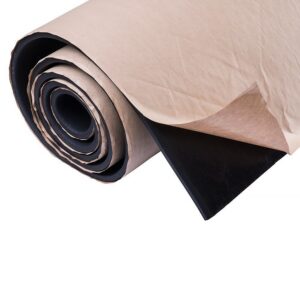
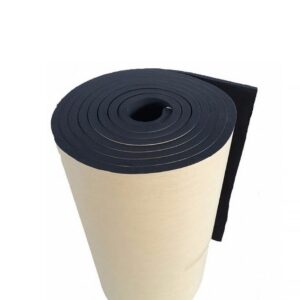
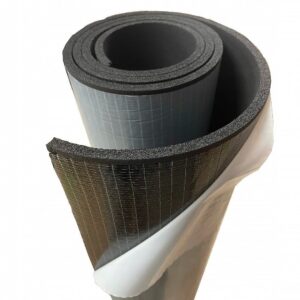
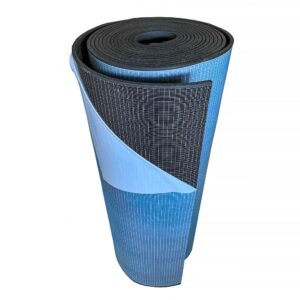
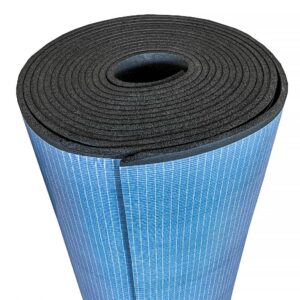
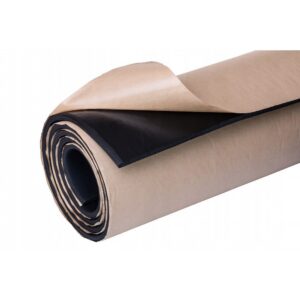
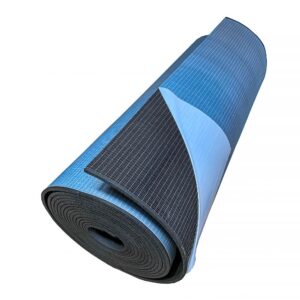
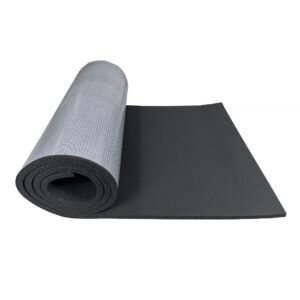
Rubber Foam. ABM Acoustic Insulation Self-adhesive, 25mm, 1m2
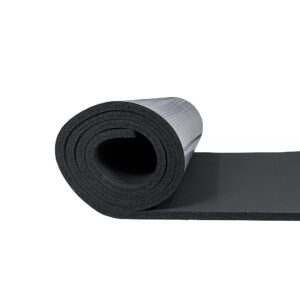
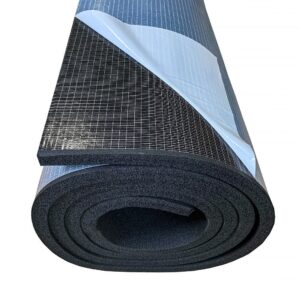
ABM Rubber Foam. Acoustic Insulation Self-adhesive, 32mm, 0.5m2
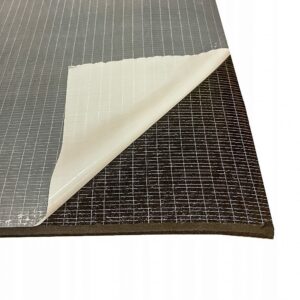
Rubber Foam. Acoustic Insulation Self-adhesive ABM, 32mm, 1m2
Wide Range of Foam Thicknesses for Various Applications
Available thicknesses from 3 to 50 millimeters allow insulation to be tailored to the noise level. Thin layers of 3-6 millimeters are suitable for residential ventilation systems. Medium thicknesses of 10-19 millimeters reduce noise near medium-power fans. Thick layers of 25-50 millimeters dampen sounds in industrial installations.
The self-adhesive layer eliminates the need for additional mounting adhesives. The aluminum foil on the foam surface enhances the thermal barrier effect. The flexible material adapts to rectangular and round duct shapes. Sheets available in various dimensions minimize the number of joints in the insulation.
Anti-Condensation Properties of Rubber Foams
Closed air cells prevent moisture from penetrating into the material’s interior. Cold air conditioning ducts insulated with foam do not condense water vapor. Low thermal conductivity λ = 0.035-0.040 W/(m·K) limits energy losses. Stabilizing air temperature in ducts improves ventilation system efficiency.
Resistance to microorganism growth maintains hygienic installation conditions. The material does not absorb odors or chemical substances from the air. The foam’s self-extinguishing properties increase building fire safety. Long-lasting material durability preserves insulation parameters over decades of use.
Comprehensive Service and Technical Support
The experienced ABM Insulation team assists in selecting appropriate insulation solutions. Technical consultations consider ventilation system specifics and acoustic requirements. Delivery across Poland and the European Union is carried out efficiently. Quality certificates confirm the effectiveness of materials in noise reduction.
Regular assortment updates introduce innovative products to the market. Affordable material prices enable projects with various budgets to be realized. Proven logistics guarantee timely deliveries to individual customers and companies. Long-standing market presence since 2010 confirms supplier reliability.
Choose ABM rubber foams for duct insulation and enjoy a quieter environment. Contact our team for professional technical advice. Order insulation materials and experience the effectiveness of ABM Insulation solutions.
Practical Installation Tips and Long-Term Durability
Proper installation of rubber mats determines acoustic and thermal insulation effectiveness. Surface preparation and execution accuracy affect solution durability. High-quality materials maintain damping parameters over many years of use. Resistance to environmental factors ensures reliability of insulated systems.
Preparation of Duct Surfaces Before Mat Application
The metal surface must be clean, dry, and degreased before applying the foam. Dust, dirt, and oil residues weaken the adhesive layer’s bond. Cleaning the surface with a solvent or detergent removes contaminants. Thorough drying of the ducts eliminates moisture that could weaken material adhesion.
Rust and peeling paint require mechanical surface cleaning. A wire brush or sandpaper prepares the substrate for mat application. Paint coatings on ducts should be durable and well bonded to the metal. Newly painted ducts require full paint drying before insulation.
The surface temperature during installation should be 10-30 degrees Celsius. Low temperatures reduce adhesive viscosity and weaken adhesion. High temperatures can damage the rubber foam structure. Optimal installation conditions ensure a durable bond between the material and the duct.
Mat Thicknesses from 6 to 50 Millimeters for Various Acoustic Loads
The choice of rubber foam thickness depends on the required noise reduction. Residential ventilation installations require attenuation of 15-20 decibels. Industrial systems with high power need reductions of 25-35 decibels. Material thickness is selected individually for each application.
Applications of Different Rubber Mat Thicknesses:
- 6 millimeters for light duct insulation in technical spaces
- 10 millimeters standard thickness for residential ventilation systems
- 13 millimeters reinforced insulation for medium-power fans
- 19 millimeters for industrial installations with high airflows
- 25 millimeters effective acoustic barrier for loud fans
- 32 millimeters maximum attenuation for particularly noisy systems
Thicker insulation layers increase duct weight and require reinforcement of supporting structures. Structural calculations determine allowable loads on brackets and hangers. Economic analysis compares material costs with achieved acoustic benefits. The optimal solution balances attenuation effectiveness with financial outlays.
Resistance to Moisture and Microorganism Growth in Humid Conditions
The closed cells of rubber foam do not absorb water from the environment. The material maintains its insulation properties even in environments with high relative humidity. Ducts carrying humidified air in pools and laundries remain effectively insulated. Lack of water absorption eliminates the risk of mold and bacteria growth within the foam structure.
ABM Insulation rubber foam contains fungicidal agents preventing microorganism growth. The material’s surface does not provide nutrients for mold or bacteria. Hygienic conditions of insulated ventilation systems protect users’ health. Sanitary certificates confirm the safety of using the foam in public facilities.
Chemical resistance of the material allows cleaning with detergent if contaminated. The foam does not dissolve in water and retains its shape after washing. Regular maintenance of ventilation installations preserves operational parameters of insulated systems. Material durability minimizes replacement and maintenance costs throughout its service life.
Retention of Damping Parameters After Years of Use
High-quality rubber mats maintain their acoustic properties for 15-20 years. The stable cellular structure does not degrade over time. Damping parameters measured after a decade of use remain at 90-95 percent of the initial values. Long-term manufacturer warranties confirm the material’s durability.
Exposure to temperature cycles does not alter the mechanical properties of the foam. The operating temperature range from -40 to +110 degrees Celsius covers all usage conditions. Ventilation ducts in unheated spaces and near hot equipment remain effectively insulated. The material’s flexibility is preserved despite variable thermal conditions.
The foam’s dimensional stability prevents mats from detaching from duct surfaces. Thermal contraction and expansion of metal do not cause insulation delamination. The adhesive layer’s bond remains durable throughout the entire service life. Insulated systems require no repairs or material replenishment for decades.
Tip: Photographic documentation of completed insulation facilitates quality control and potential warranty claims. Photos confirm proper installation according to the material manufacturer’s recommendations.
FAQ: Frequently Asked Questions
What Thickness of Rubber Mat Should Be Chosen for Ventilation Duct Insulation?
The thickness of rubber foam is selected based on the noise level of the ventilation system. Residential ventilation systems require layers of 10-13 millimeters for standard damping. Industrial installations with high power demand thicker layers of 19-25 millimeters. Ducts near high-performance fans are insulated with 25-32 millimeters of foam.
Different Thickness Applications:
- 6 millimeters for quiet gravity systems
- 10 millimeters near residential fans
- 13 millimeters in offices and commercial spaces
- 19 millimeters for noisy industrial installations
- 25 millimeters near high-power blowers
Long straight duct sections can be insulated with thinner layers. Elbows and branches require thicker foam due to air turbulence. Acoustic measurements before insulation determine the optimal material thickness for a specific installation.
Does Rubber Foam Protect Ducts Against Condensation?
The closed-cell structure of rubber foam effectively prevents water vapor condensation. The insulation material maintains the duct surface temperature above the dew point. Cold air conditioning ducts at 6-12 degrees Celsius require 13-19 millimeters of insulation. The foam layer blocks moisture access from the environment to the cold metal surface. Waterproof properties maintain protection effectiveness throughout the system’s service life.
Water condensation on uninsulated ducts damages ceilings and room finishes. Droplets dripping from ducts promote mold and bacteria growth. Rubber insulation eliminates the risk of corrosion on steel metal sheets. Thermal calculations determine the minimum foam thickness for specific room humidity conditions.
How to prepare the surface before installing rubber mats?
The metal surface of the ducts requires thorough cleaning before applying the foam. Dust, grease, and contaminants weaken the adhesion of the self-adhesive layer. Degreasing with a solvent or detergent removes oil and dirt residues. Thorough drying of the ducts eliminates moisture that could weaken the adhesion of the insulation material.
Surface preparation steps:
- Mechanical cleaning with a brush to remove loose contaminants
- Degreasing with an organic solvent or detergent
- Rust removal with sandpaper or a wire brush
- Drying the surface with a clean cloth
- Checking the metal temperature before foam application
The surface temperature during installation should be 10-30 degrees Celsius. Freshly painted ducts require complete drying of the paint before insulation. Proper substrate preparation guarantees a durable bond between the mat and metal for many years.
Are rubber mats suitable for ducts of various shapes?
Flexible rubber foam adapts to rectangular and round duct surfaces. Rectangular ducts are insulated with flat sheets of mats cut to the dimensions of the walls. Round ducts are wrapped spirally with rubber mats overlapping along the length. The self-adhesive layer holds the material on the metal surface without additional fasteners. Vent fittings, elbows, and tees require cutting foam to fit their geometry.
Expansion boxes and diameter reducers are insulated with several smaller pieces of material. Precise coverage of complex shapes eliminates acoustic bridges in insulation. The flexible properties of foam allow wrapping ducts with diameters from 100 to 800 millimeters. Overlapping sheet joints provide a tight noise-damping layer.
How long does rubber foam maintain its insulating properties?
High-quality rubber foams maintain acoustic parameters for 15-20 years of use. The stable cellular structure does not degrade over time or due to temperature changes. Noise reduction measurements after a decade of use show only a 5-10 percent decrease in effectiveness. Closed air cells prevent moisture from penetrating inside the material throughout its lifespan.
Factors affecting insulation durability:
- Material quality and cellular structure density
- Operating conditions and exposure to moisture
- Operating temperature range of the ventilation system
- Quality of installation and surface preparation
The operating temperature range from minus 40 to plus 110 degrees Celsius covers all installation conditions. Exposure to thermal cycles does not change the mechanical and acoustic properties of the foam. Long-term manufacturer warranties confirm the reliability of insulation materials for decades.
Summary
Rubber mats effectively reduce noise in ventilation systems. The closed-cell structure blocks sound wave transmission. The material’s flexibility absorbs vibrations from metal ducts. A sound reduction coefficient of 30-32 decibels ensures acoustic comfort in rooms. Thicknesses from 6 to 50 millimeters allow customization of insulation according to noise levels.
Additional thermal properties of rubber foam improve the energy efficiency of systems. Protection against condensation safeguards air conditioning ducts. Low thermal conductivity reduces energy losses in heating ducts. Air temperature stabilization increases building comfort. Installing insulation requires surface preparation and precision.
The long-lasting durability of rubber mats maintains damping parameters for decades of use. Resistance to moisture and microorganisms ensures hygienic ventilation conditions. ABM Insulation materials combine acoustic effectiveness with thermal reliability. A comprehensive insulation solution enhances comfort and reduces operating costs of ventilation systems.
Sources:
- https://www.acousticalsurfaces.com/blog/acoustics-education/is-rubber-soundproof/
- https://www.atlantic-rubber.co.uk/acoustic-solutions
- https://www.geonoise.com/noise-in-hvac-system-what-where-and-how-noise-comes-from/amp/
- https://www.airah.org.au/Common/Uploaded%20files/Resources/SkillsWorkshop/sw123.pdf
- https://xray.greyb.com/hvac/noise-reduction-duct-systems
- https://www.rexio.de/en/post/cellular-rubber-the-closed-cell-all-rounder-for-sealing-insulation-damping
- https://gfihvac.com/rubber-foam-insulation-guide/
- https://pl.wikipedia.org/wiki/Izolacja_akustyczna
- https://pl.wikipedia.org/wiki/Pianka_spieniona
- https://en.wikipedia.org/wiki/Soundproofing
- https://en.wikipedia.org/wiki/Noise_control
