

Modern offices struggle with the growing problem of excessive noise. Open-plan spaces have become the organizational standard. However, a solution that promotes collaboration has brought a new problem. Noise levels often exceed regulatory standards. Employees lose concentration, experience auditory fatigue, and stress.
Insulating rubber foams are one of the most effective acoustic solutions for office spaces. The material features a closed-cell structure that blocks the propagation of sound waves. The foam’s flexibility allows for easy installation on various surfaces. The self-adhesive layer speeds up installation without the need for specialized tools. Moisture resistance ensures long-lasting insulation performance.
Research confirms that noise reduction in offices directly impacts team productivity. Excessive noise reduces employee efficiency by 15-20 percent during tasks requiring focus. Chronic exposure to sounds raises cortisol levels, leading to mental fatigue and frustration. Using acoustic materials restores work comfort and creates conditions conducive to performing professional duties.
Acoustic properties of rubber foams in the workplace environment
Insulating materials used in offices must meet specific acoustic requirements. Rubber foams stand out with unique physical characteristics. The closed-cell structure forms a natural barrier against sounds. The material’s flexibility allows adaptation to irregular surfaces. Foam density determines the effectiveness of damping specific frequencies.
The thickness of the insulation layer directly affects the range of absorbed sounds. Thinner foams reduce high frequencies. Thicker layers more effectively dampen low bass frequencies. Proper thickness selection increases the room’s acoustic efficiency.
Ability to absorb mid and high-frequency sounds
Rubber foams most effectively absorb sounds in the 500-4000 Hz frequency range. This range includes human speech and most office noises. Telephone conversations generate sounds at 300-3400 Hz frequencies. Computer keyboard keys produce higher frequency sounds between 2000-5000 Hz.
The material’s cellular structure converts sound energy into heat. The absorption process occurs through vibrations of cell walls. Thicker foams achieve a sound absorption coefficient above 0.7, meaning they reduce over 70 percent of acoustic energy.
Closed-cell structure as a barrier to sound waves
Closed air cells create millions of miniature acoustic barriers. Sound waves reflect off individual cell walls. Acoustic energy disperses as it passes through the material. The system of closed spaces acts like a labyrinth for sound.
The structure prevents moisture from penetrating inside the material. The dry material maintains consistent insulation parameters for years of use. Closed cells eliminate the risk of mold and fungi growth. Dimensional stability ensures durable adhesion to the substrate.
Noise reduction coefficient in decibels for office spaces
Polish standards specify maximum noise levels for various types of office rooms. Executive offices require a level not exceeding 35 dB. Open space areas should maintain noise below 40 dB. Administrative rooms allow levels up to 55 dB.
Actual measurements indicate levels of 60-65 dB in open offices. This means exceeding standards by 20-25 dB. Rubber foams can reduce noise levels by 10-15 dB. The reduction restores levels compliant with occupational safety regulations.
The impact of material thickness on sound damping efficiency
The thickness of rubber foam directly affects insulation effectiveness. Layers of 3-6 mm effectively dampen high-frequency sounds. Foams with thicknesses of 10-13 mm reduce mid-frequency ranges. Materials 19-25 mm thick also absorb low bass frequencies.
Increasing thickness by every 3 mm raises the noise reduction coefficient by 2-3 dB. The relationship ceases to be linear above 25 mm thickness. The optimal thickness for offices is 10-13 mm. Such a layer provides a balance between effectiveness and material cost.
| Foam Thickness | Noise Reduction | Office Application |
|---|---|---|
| 3-6 mm | 5-8 dB | Doors, light partitions |
| 10-13 mm | 10-12 dB | Partition walls, ceilings |
| 19-25 mm | 15-18 dB | Conference rooms, loud zones |
Rubber foam surpasses traditional materials in terms of installation flexibility. Mineral wool requires additional supporting structures. Gypsum board increases wall thickness by several centimeters. Melamine foam acoustic panels do not protect against sound penetration.
The rubber structure combines insulation and sound absorption functions. Mineral wool only absorbs sounds without blocking their transmission. Rubber foam provides self-extinguishing fire protection properties. The material does not require additional fire protection measures.
When choosing an insulating material, it is necessary to check fire safety certificates. ABM Insulation rubber foam meets Polish fire safety standards.
Sources of noise in office buildings and methods of their elimination
Identifying noise sources is the first step to effective acoustic insulation. Open space offices generate multidirectional sound sources. Employee conversations are the dominant source of disturbances. Office equipment produces continuous background noise. Ventilation systems add a monotonous low-frequency sound.
Reverberation in open space offices
Large office spaces without partitions cause long reverberation times. Sound waves reflect off smooth wall surfaces. Concrete, glass, and metal do not absorb acoustic energy. Sound circulates in the room for several seconds.
Main causes of excessive reverberation:
- High ceilings without sound-absorbing materials
- Large glazed surfaces reflecting acoustic waves
- Hard floors made of tiles or laminated panels
- Lack of upholstered furniture dispersing sound energy
- Minimalist furnishings without textile elements
Rubber foams installed on ceilings reduce reverberation time by 60-70 percent. The material absorbs reflected waves before they can bounce again. The arrangement of acoustic panels creates zones with reduced reverberation.
Sounds transmitted through partition walls and suspended ceilings
Partition walls in offices often do not reach the structural ceiling. Sound passes through the space above the suspended ceiling. Thin gypsum board partitions allow conversations from adjacent rooms to pass through. Vibrations transfer through structural elements connecting walls.
Rubber foams installed above suspended ceilings block sound transmission. A 10-13 mm thick layer reduces transmission by 15-18 dB. Insulating the base of partition walls eliminates structural vibrations.
Noise generated by ventilation and air conditioning systems
HVAC systems are a constant source of noise in office buildings. Fans produce low frequencies of 50-200 Hz. Airflow through ducts generates broadband noise. Ventilation grilles emit sounds directly into rooms.
Wrapping ventilation ducts with rubber foam reduces noise emission by 10-12 dB. The material dampens vibrations of metal ducts. Lining fan chambers with acoustic absorption lowers noise levels at the source.
Vibrations from Elevators and Mechanical Devices
Low-frequency sounds travel through the building structure. Elevators generate vibrations during cabin movement. Heat pumps and refrigeration units produce pulsating noise. Vibrations transfer through beams and columns for tens of meters.
Rubber foam pads under mechanical devices isolate vibrations. The elastic layer interrupts the transmission path of vibrations to the structure. Thickness of 19-25 mm effectively dampens frequencies below 100 Hz.
Tip: Installation of anti-vibration insulation under mechanical devices should be performed by a specialist. Proper placement of pads ensures even load distribution.
Locations for Installing Rubber Foam in Office Buildings
Strategic placement of acoustic materials maximizes noise reduction effectiveness. Different office zones require different insulation approaches. Conference rooms need the highest level of soundproofing. Corridors transmit noise between rooms. Technical spaces generate the highest sound levels.
Wall Insulation Between Conference Rooms and Corridors
Conference rooms require conversation privacy and protection from external noise. Walls adjacent to corridors allow conversations to pass through traditional construction. 13 mm thick rubber foam installed on both sides of the wall increases insulation by 20-25 dB.
Installing material between drywall panels doubles effectiveness. The acoustic layer interrupts vibration transmission through the structure. Sealing all gaps eliminates acoustic bridges. Door seals are a critical element of the entire system.
Use Under Floating Floors in Multifunctional Rooms
Floating floors separate the walking layer from the structural slab. Rubber foam under the concrete screed dampens footstep sounds. Thickness of 6-10 mm provides a compromise between insulation and room height. The material evenly distributes loads across the entire surface.
The elastic layer reduces vibration transmission to lower floors. Residents or employees on lower floors do not hear footsteps. The insulation works effectively for multi-story buildings.
Ceiling Lining in Areas Requiring Conversation Privacy
Ceilings are a key surface for acoustic control in rooms. Rubber foam with a self-adhesive layer sticks directly to ceiling panels. A 10 mm thick layer effectively absorbs reflected sounds. The dark color of the foam does not visually dominate the space.
Zones especially requiring ceiling insulation:
- Executive offices conducting confidential conversations
- HR rooms with sensitive information
- Financial areas with client data
- Negotiation rooms with external contractors
Soundproofing Ventilation Ducts and Installation Pipes
Ventilation ducts passing through office spaces transmit sounds between floors. Wrapping ducts with 13-19 mm thick rubber foam creates an acoustic barrier. Securing the material with tape or straps keeps the insulation in place.
Water and sewage installation pipes generate noise during media flow. The insulation layer dampens knocking and hydraulic noises. Protecting the installation risers shields the entire floor from disturbances.
Installation in technical spaces with loud equipment
Server rooms generate continuous noise from cooling fans. Lining the walls with rubber foam 19-25 mm thick reduces sound emission outside. Tight doors with acoustic seals close off the room.
Generators and pumps require intensive insulation. Rubber foam on all surfaces creates an “acoustic box.” Leaving ventilation paths prevents equipment overheating.
Tip: Installing foam in technical rooms requires compliance with fire safety regulations. The material must have a fire resistance certificate according to the building classification.
Health benefits and employee productivity after noise reduction
Excessive noise in the workplace is a serious factor lowering professional quality of life. Chronic exposure leads to measurable health effects. The body reacts to noise as a source of stress regardless of conscious perception. Reducing sound levels brings immediate and long-term benefits.
The impact of low sound levels on concentration during complex tasks
Studies confirm a 15-20 percent drop in performance in noisy offices. Tasks requiring analysis, writing, or programming suffer the most. The brain uses cognitive resources to filter acoustic disturbances. Fewer resources remain for the actual work task.
Reducing noise by 10-15 dB restores normal concentration levels. Employees complete tasks faster and with fewer errors. The quality of conceptual work measurably improves after quieting the space.
Reducing stress and auditory fatigue during the workday
Constant noise raises cortisol levels in the blood. The stress hormone activates the fight-or-flight response. The body remains on alert throughout the workday. This leads to faster mental and physical fatigue.
Symptoms of chronic exposure to office noise:
- Headaches appearing at the end of the day
- Difficulty falling asleep despite tiredness
- Irritability and reduced tolerance for frustration
- Trouble relaxing after work ends
- A feeling of burnout despite engaging tasks
A quiet work environment lowers cortisol levels by 25-30 percent. Employees feel less fatigued at shift end. Recovery after work is faster and more effective.
Improved speech intelligibility during meetings and phone calls
Excessive background noise masks important frequencies of human speech. Speakers must raise their voices or repeat information. Meetings last longer due to communication misunderstandings. Phone conversations become tiring for both parties.
Reducing background noise by 15 dB increases speech intelligibility by 40-50 percent. Meetings proceed more smoothly without needing repetition. The quality of phone communication measurably improves. Clients perceive the company as more professional.
Compliance with Occupational Safety Standards Regarding Noise Levels
Regulations specify maximum noise levels for various types of work. Exceeding these limits constitutes a violation of occupational health and safety regulations. The employer is responsible for ensuring safe conditions. Labor inspections may result in fines or orders to improve conditions.
The installation of rubber foams restores compliance with the PN-N-01307:1994 standard. Acoustic measurements after installation document the fulfillment of requirements. Investing in acoustics protects the company from legal sanctions and is also an element of caring for the team’s well-being.
Tip: Conducting acoustic measurements before and after insulation installation provides documentation of compliance. A certified acoustician can issue a compliance report for labor inspections.
ABM Insulation Rubber Insulating Foams in the ABM Insulation Store
ABM Insulation Store offers proven acoustic solutions for office buildings. Rubber insulating foams provide a comprehensive response to noise reduction needs. Materials available in stock include a wide range of thicknesses from 3 to 25 mm. Each layer exhibits different sound absorption properties. The extensive offer allows selection of parameters tailored to specific room requirements.
The company began operations in 2010 as a manufacturer of insulating materials. The company’s development was based on experience in acoustic insulation of vehicles, machinery, and buildings. Currently, the assortment includes butyl mats, rubber foams, and absorbing materials. Orders are fulfilled within 24 hours of purchase. Shipping reaches customers in Poland, European Union countries, and the United States.
Self-Adhesive Rubber Foams Ready for Immediate Installation
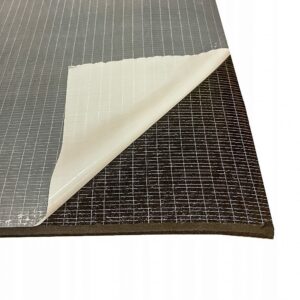
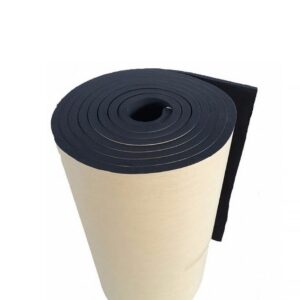
Rubber insulating foams available in the store come with a factory-applied adhesive layer. The design eliminates the need to purchase additional fastening agents. Installation proceeds quickly without specialized equipment. Simply clean the surface and remove the protective film. The material adheres firmly to concrete, metal, wood, and drywall.
The closed-cell structure ensures long-lasting insulation effectiveness. Flexibility allows finishing corners and complex shapes. The material does not absorb moisture from the air. Acoustic properties remain stable for decades of use.
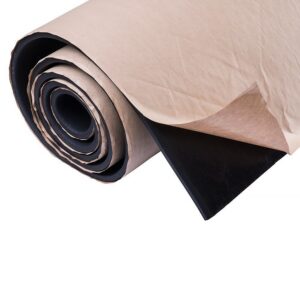
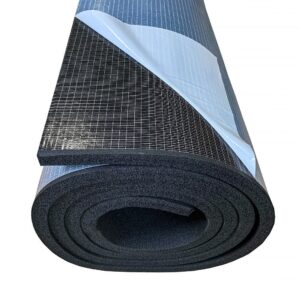
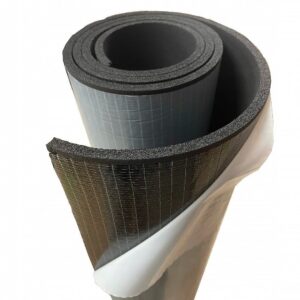
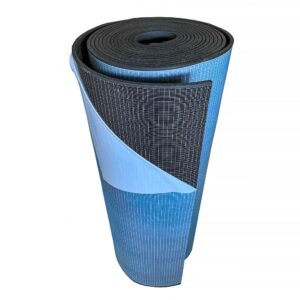
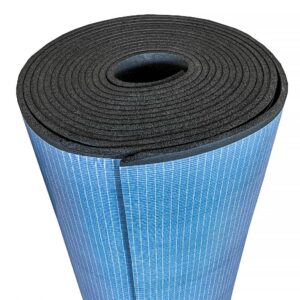
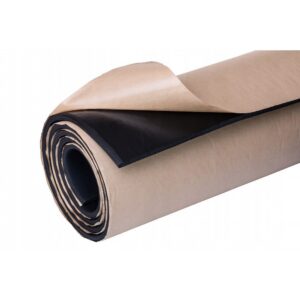
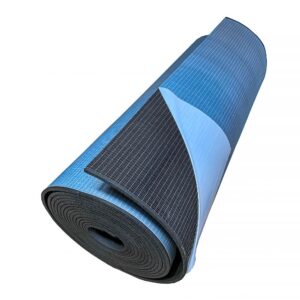
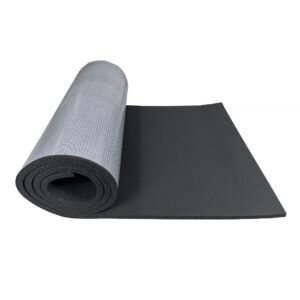
Rubber Foam. ABM Acoustic Insulation Self-adhesive, 25mm, 1m2
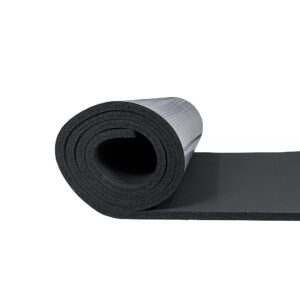
ABM Rubber Foam. Acoustic Insulation Self-adhesive, 32mm, 0.5m2
Rubber Foam. Acoustic Insulation Self-adhesive ABM, 32mm, 1m2
Diverse Thicknesses for Various Office Applications
Thinner layers of 3-6 mm effectively reduce high-frequency voices. Medium thicknesses of 10-13 mm absorb a wide spectrum of office sounds. Thicker foams of 19-25 mm also dampen low frequencies from ventilation systems. Flexible thickness selection maximizes efficiency while controlling costs.
Foam applications by thickness:
- Layers 3-6 mm reduce keyboard and phone sounds
- Foams 10-13 mm insulate partition walls between rooms
- Materials 19-25 mm soundproof technical spaces and server rooms
Technical support and advice on material selection
The ABM Insulation Team provides professional support in choosing solutions. Technical advice helps determine the optimal material thickness. Consultants consider the room’s specifics and noise sources. An individual approach guarantees the effectiveness of the acoustic investment.
Use ABM Insulation products and experience the effectiveness of rubber foams. Order materials through the online store and receive your shipment within 24 hours. Contact the team for help selecting optimal solutions for your office. Professional consultation ensures maximum noise reduction while controlling project budget.
Installation and durability of acoustic solutions in long-term use
The effectiveness of acoustic insulation depends on proper installation and material quality. Rubber foams stand out for easy installation without specialized equipment. Material durability ensures performance retention over decades of use. Minimal maintenance requirements reduce operating costs.
Self-adhesive layer enabling quick installation without specialized tools
ABM Insulation foams come with a factory-applied adhesive layer. Removing the protective film reveals a surface ready for installation. The material adheres to clean concrete, metal, and wood surfaces. Installing one square meter takes 5-10 minutes of work.
The installation does not require specialized training for construction crews. Anyone can correctly apply the material after reading the instructions. No need to use spray adhesives eliminates odors and drying time. The room becomes usable immediately after installation is complete.
Material flexibility allowing adaptation to irregular surfaces
The rubber structure remains flexible at temperatures from -40 to +80 degrees Celsius. The material adheres to curves, corners, and irregular shapes. Cutting with a knife or scissors allows precise fitting to dimensions. The foam does not crack or crumble when bent.
Surfaces especially challenging for traditional materials:
- Round ventilation ducts
- Pipes installed on slopes
- Spaces behind radiators and pipes
- Ceilings with complex suspended constructions
The flexibility of rubber foam solves installation problems impossible for rigid boards. One material is sufficient to insulate all elements of the room.
Resistance to Moisture and Mold Growth in Air-Conditioned Rooms
The closed-cell structure prevents water from penetrating inside the material. The foam does not absorb moisture from the air even at high relative humidity. The absence of water eliminates conditions for microorganism growth. The material remains hygienic throughout its entire service life.
Air-conditioned offices often struggle with water vapor condensation. Traditional insulation materials become damp and degrade. Rubber foam maintains its properties even in environments with 80-90 percent humidity. It does not require replacement after flooding or leaks.
Preservation of Insulation Properties After Years of Use
The rubber structure does not age or undergo structural degradation. The material retains flexibility for at least 25-30 years of use. The sound absorption coefficient remains stable without loss of effectiveness. Aging tests confirm the durability of acoustic properties.
UV resistance protects foam installed near windows. The material does not change color or harden under sunlight exposure. Self-extinguishing properties remain active throughout the product’s lifetime. One installation is enough for decades of building use.
| Parameter | Initial Value | After 10 Years | After 25 Years |
|---|---|---|---|
| Absorption Coefficient | 0.75 | 0.73 | 0.70 |
| Elasticity | Full | Full | Full |
| Adhesive Bond Strength | 100% | 98% | 95% |
Long-term stability of parameters translates into significant savings over the building’s lifecycle. The lack of need to replace the material eliminates the costs of reinstallation and downtime. Other acoustic solutions require refreshing after 10-15 years of use. Rubber foams operate continuously without maintenance or technical inspections. A one-time investment provides acoustic benefits throughout a decade of office building operation.
Tip: Rubber foam requires no maintenance or replacement for decades. Periodic adhesion checks in corners ensure continuous acoustic insulation.
FAQ: Frequently Asked Questions
How long do the insulating properties of rubber foams last in an office?
Rubber insulating foams maintain stable acoustic parameters for 25-30 years of use. The closed-cell structure prevents material degradation over time. Insulating parameters remain unchanged throughout the product’s lifetime. Aging studies confirm maintaining a sound absorption coefficient above 0.70 for decades.
Moisture resistance eliminates the risk of dampness and mold growth. The material does not absorb water vapor from air-conditioned rooms. Structural elasticity remains full regardless of years in use. Adhesion of the self-adhesive layer stays at 95-100 percent.
Building structures with rubber foams: last over 50 years without material replacement. Investment in acoustic insulation is a one-time expense for decades.
Does installing rubber foams require specialized tools or a construction team?
Installing rubber foams does not require specialized equipment or training. The self-adhesive layer eliminates the need for spray adhesives. A knife or scissors is sufficient to cut the material to size. The mounting surface must be clean, dry, and degreased.
Tools needed for installation:
- Wallpaper knife or tailor’s scissors
- Measuring tape or ruler
- Cloth to clean the surface
- Roller or smoothing tool to press the material
One person installs one square meter of foam in 5-10 minutes. The office space becomes usable immediately after completion. No glue odor or drying times speed up project execution. Installing an entire open space office takes one working day.
What thickness of rubber foam is optimal for a standard open space office?
Open spaces require a thickness of 10-13 mm for effective noise reduction. Thinner layers of 3-6 mm do not sufficiently dampen conversation sounds. Thicker foams of 19-25 mm exceed typical office needs. The optimal choice balances acoustic efficiency with material cost.
A 10 mm layer reduces noise levels by 10-12 dB. This lowers levels from 65 dB to 53-55 dB, meeting standards that specify a maximum level of 55 dB for administrative rooms. A thickness of 13 mm increases reduction to 12-15 dB, providing acoustic comfort even during intensive teamwork. Conference rooms may require thicker layers of 19 mm.
Are rubber insulation foams safe for the health of office workers?
Rubber materials meet strict safety standards for enclosed spaces. The closed-cell structure does not emit harmful volatile organic compounds. The foams have fire resistance certificates in accordance with fire safety regulations. The absence of odor emissions ensures comfort even immediately after installation.
Safety certificates of rubber foams: fire resistance certificates, toxicological tests, hygiene standards for offices. The material does not cause allergic reactions in employees. The structure does not accumulate dust or house dust mites. Resistance to mold and fungi eliminates microbiological hazards. Air-conditioned rooms with foams maintain high air quality.
How long does a complete acoustic insulation installation take in an office room?
Installing foam in a standard 50-100 square meter office takes one working day. Surface preparation takes 2-3 hours of cleaning and degreasing. Cutting the material to size and applying it proceeds at a rate of one square meter per 5-10 minutes. Two workers finish a typical room in 6-8 hours.
The room remains usable immediately after installation is completed. There is no need for ventilation or waiting for adhesives to dry. Employees can return to the office the next day without restrictions. Larger open space projects of 200-300 square meters require two days of work. Installation proceeds without shutting down ventilation or electrical systems.
Summary
The use of rubber foams is a proven solution for noise reduction in office buildings. The closed-cell structure effectively blocks transmission and absorbs acoustic energy. The material meets noise level standards for workplaces. A reduction of 10-15 dB restores compliance with safety regulations. Simple installation eliminates the need to engage specialized construction teams.
Health benefits and increased productivity provide a measurable return on investment. Employees in quiet spaces achieve 15-20 percent higher efficiency. Reduced stress levels improve team atmosphere and lower staff turnover. Compliance with standards protects employers from labor inspection penalties. Material durability ensures benefits are maintained for decades without maintenance costs.
ABM Insulation rubber foams combine acoustic effectiveness with practical application. The self-adhesive layer speeds up installation without odor emissions or drying periods. Flexibility allows insulation of complex technical spaces. Moisture resistance protects against degradation in air-conditioned rooms. Investing in office acoustics is a strategic decision affecting organizational efficiency and employee satisfaction.
Sources:
- https://www.ciop.pl/CIOPPortalWAR/appmanager/ciop/pl?_nfpb=true&_pageLabel=P30001831335539182278&html_tresc_root_id=19382&html_tresc_object_id=19382
- https://www.scientific.net/AMM.110-116.1145
- https://www.ippt.pan.pl/repository/open/o7049.pdf
- https://pmc.ncbi.nlm.nih.gov/articles/PMC4844473/
- https://london-post.co.uk/the-impact-of-office-noise-on-employee-productivity-and-wellbeing/
