
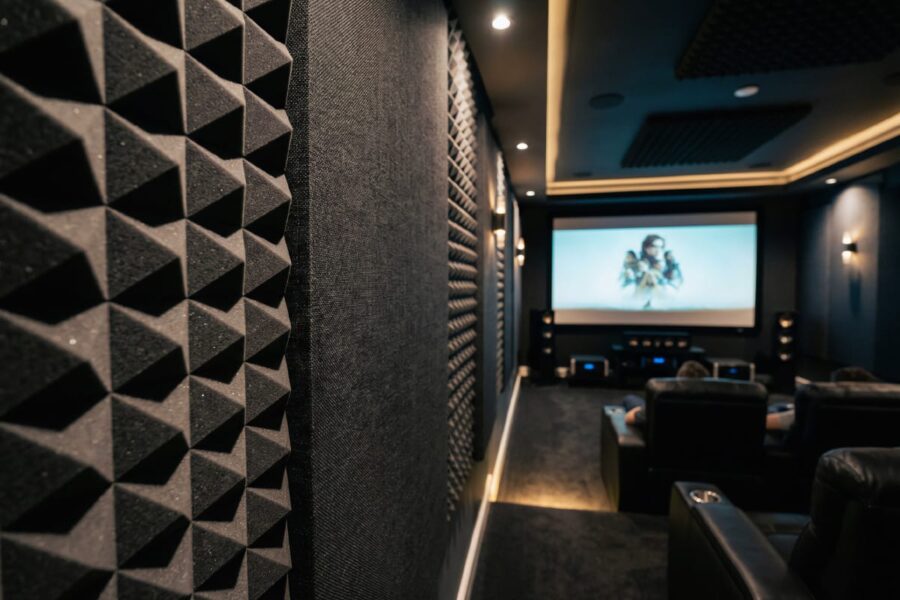
Acoustic foams are one of the most commonly used materials for improving sound quality in home theaters. However, many people assume that once they are installed, the room will become perfectly soundproof. The reality is more complex. Acoustic absorption foams do not block sound from passing through walls, but rather control what happens to sound waves inside the room.
An effective home theater requires precise acoustic control. Excessive reflections distort the sound image, and too much reverberation makes dialogue sound unclear. Properly placed polyurethane foam panels shorten reverberation time, eliminate echo, and clearly improve sound clarity, which is noticeable to anyone sitting in front of the screen.
However, before choosing specific products and proceeding with installation, it is worth understanding how sound absorption works and what acoustic foams are not capable of doing.
How do acoustic foams absorb sound in a home theater?
Sound absorption is a physical process in which the energy of an acoustic wave is converted into heat within a porous material. Polyurethane foams perform exceptionally well in this role because their internal structure effectively slows down and dissipates sound waves. Understanding this mechanism allows for choosing the right material and applying it correctly.
How does sound absorption differ from acoustic insulation?
This is a fundamental distinction that is often overlooked. Sound absorption and acoustic insulation are two completely different phenomena, although both affect the auditory comfort of a room.
Absorption works exclusively inside the room. Absorptive materials, such as polyurethane foams, reduce the energy of sound waves that bounce off walls, ceilings, and floors. This reduces reverberation and echo, making the sound cleaner and more precise.
Acoustic insulation, on the other hand, blocks sound from passing through a building partition. Heavy and dense materials, such as butyl mats, are used for this purpose. Polyurethane foam itself does not have enough mass to effectively stop noise coming from outside the room. Therefore, a home theater often requires a combination of both solutions.
Open-cell structure of polyurethane and sound wave damping
The polyurethane foam used in acoustics has an open-cell structure. This means that its interior is made up of interconnected pores through which air flows freely. When a sound wave enters such a structure, it encounters resistance that gradually absorbs its energy and converts it into heat.
The more developed the internal surface area of the foam, the more sound energy is absorbed. This is precisely why profiled patterns, such as waves and pyramids, are more effective than flat panels of the same thickness. ABM Insulation produces absorption foams in both variants, both flat and profiled, which allows for selecting the product to suit the specific acoustic needs of a theater room.
Open-cell foam has a sound absorption coefficient that can reach values from 0.90 to 0.95 for selected frequencies. In practice, this means the absorption of over 90% of the acoustic energy incident on the material, which is a very high result.
Which frequencies does polyurethane foam absorb most effectively?
Polyurethane foam acts selectively. It performs best with medium and high frequencies, from approximately 500 Hz upwards. Thin foams with a thickness of 10 to 20 mm focus almost exclusively on high tones, while thicker layers, 30 to 50 mm, gradually cover lower ranges.
Pyramidal foams with a thickness of 50 mm, such as products from the ABM Insulation line, achieve an absorption efficiency close to 100% at frequencies from 1000 to 4000 Hz. They also absorb frequencies below 500 Hz, although the efficiency is lower in this range.
Basic absorption ranges of polyurethane foams:
- 10 mm foams: mainly high tones, above 2000 Hz
- 20 mm foams: high tones and some medium tones, from approximately 1000 Hz
- 40 mm foams: medium tones and some low tones, from approximately 500 Hz
- 50 mm foams: wide band, with clear performance from 250 Hz upwards
Low frequencies, i.e., bass below 200 Hz, require significantly thicker materials or special bass traps. Polyurethane foam alone is not able to effectively absorb deep bass, which is important information when planning home theater acoustics.
Do acoustic foams actually reduce noise in a room?
The answer is: yes, but with an important caveat. Absorbing foams reduce noise inside a room by limiting reflections and shortening reverberation time. However, they do not block noise coming from the outside. The effect heard after installing the panels is real and measurable, although its scale depends on many factors.
Reverberation and echo reduction versus actual noise level in a home theater
Reverberation is a phenomenon in which sound persists in a room after the source has stopped emitting it. In a home theater, excessive reverberation causes successive syllables of dialogue to overlap, and sound effects lose precision and directionality. The RT60 reverberation time in a home cinema room should be between 0.2 and 0.4 seconds for rooms with a volume of up to 300 m³.
Installing polyurethane foam panels significantly shortens this time. After placing the panels in key locations, an improvement of 30 to 50 percent can be measured in terms of reverberation times at medium and high frequencies. The result is clearer sound, better localization of audio sources, and more legible dialogue.
It is worth remembering that reducing reverberation does not mean reducing the volume of the played sound. The sound pressure level (SPL) remains similar. However, the quality and clarity of the sound change, which is crucial in the context of watching movies.
NRC coefficient and assessing foam effectiveness in practice
The NRC (Noise Reduction Coefficient) is a number ranging from 0 to 1 that determines what portion of sound energy a given material absorbs. A value of 0 means no absorption, while a value of 1 means the absorption of all energy. It is determined based on measurements at frequencies of 250 Hz, 500 Hz, 1000 Hz, and 2000 Hz.
Good acoustic foam achieves an NRC level of 0.75 to 0.95. A material with an NRC of 0.85 absorbs 85% of the sound energy that hits it. This is a sufficient value to clearly improve the acoustics of an average home theater.
When choosing foam, it is worth paying attention not only to the general NRC value but also to frequency data. A material may have a great result at 1000 Hz and a poor one at 250 Hz, which in practice means it will handle voices well, but not low-pitched instruments.
When is foam alone enough, and when is deeper insulation needed?
Polyurethane foam alone is sufficient in situations where the main problem is reverberation, echo, or a lack of sound clarity. If the room suffers from excessive reflections that blur the sound image of a cinema system, acoustic panels will effectively solve this problem.
However, when the problem is noise penetrating through walls, such as traffic noise, footsteps from neighbors, or sounds from other rooms, foam alone will not be enough. In such cases, it is necessary to use solutions that increase the mass and airtightness of building partitions. For this purpose, you can use butyl mats, such as those from the ABM Insulation offer, which effectively dampen sounds penetrating through partitions.
When acoustic foams are a sufficient solution:
- The room has an excessively long reverberation time
- Movie dialogues sound unclear due to echo
- Surround sound loses its localization precision
- Reflections from walls cause tonal coloration
Noise level measurements before and after installing acoustic panels
Before starting the installation, it is worth performing an RT60 reverberation time measurement. A smartphone measurement app or REW (Room EQ Wizard) software connected to a measurement microphone is sufficient for this. The measurement will indicate in which frequency ranges the reverberation is the longest.
After installing the panels and taking a new measurement, the difference is visible. The RT60 time in the mid-frequency range drops significantly. Good placement of panels can shorten reverberation by as much as 40 to 60%, which translates into a significant improvement in the quality of hearing dialogues and sound effects.
It is worth repeating measurements after each subsequent batch of installed panels. This approach allows you to determine how much material is actually needed and in which places its effect is most effective.
Wavy, pyramidal, and flat foam—which will work better in a cinema?
The surface shape of acoustic foam directly affects its effectiveness. Each profile has different advantages and is optimal under slightly different conditions. The choice of the appropriate type of panel should result from an analysis of the acoustic needs of a specific room.
Wavy profile and its effectiveness in diffusing sound reflections
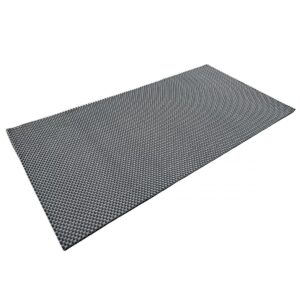
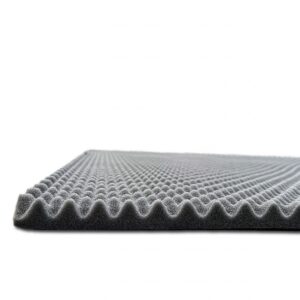
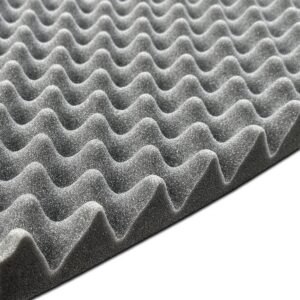
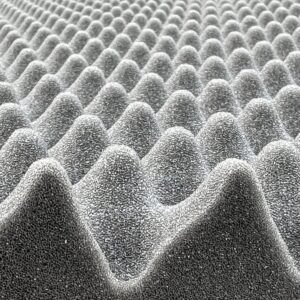
Wavy foam, available for example as ABM Fala, has a surface shaped into regular ridges and valleys. This shape expands the effective absorbing surface and simultaneously gently diffuses sound waves hitting it at various angles. The result is better absorption over a slightly wider range of sound incidence angles.
The 20 mm thick convoluted foam works well for mid-to-high tones and is a popular choice for side walls in home theaters. The 40 mm version extends its effectiveness to lower mid-tones, which is important for multi-channel systems with strong bass. The convoluted profile is also often an aesthetic choice due to its regular, patterned appearance.
Acoustic pyramids versus low and high frequency absorption
Pyramidal foam is one of the most effective absorption profiles available on the market. The pyramid shape significantly increases the active surface area of the material, which translates into a higher absorption coefficient across a wide frequency range.
50 mm thick pyramidal foams, such as ABM Insulation Pyramids, effectively absorb from 250 Hz upwards, achieving nearly 100% absorption between 1000 and 4000 Hz. This is a key range for dialogue clarity and the precision of sound effects. Pyramids are particularly recommended for critical acoustic zones, such as the front wall and side reflection points.
It is worth noting that the increased thickness of the pyramid not only broadens the absorption band but also increases the depth to which waves penetrate the material structure. This gives low-frequency energy more time and space to be converted into heat inside the foam.
When installing pyramids, it is worth alternating the orientation of the panels by 90 degrees, which improves sound diffusion and prevents the formation of regular reflection patterns.
Flat polyurethane foam, when does a simple panel provide a sufficient effect?
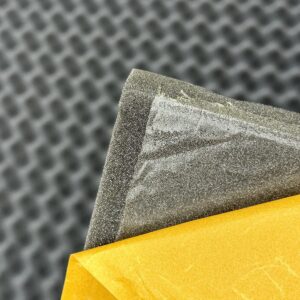
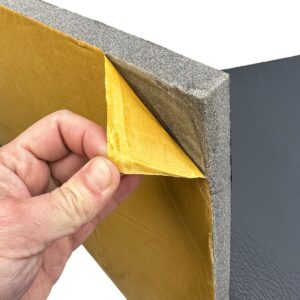
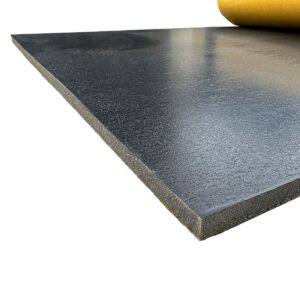
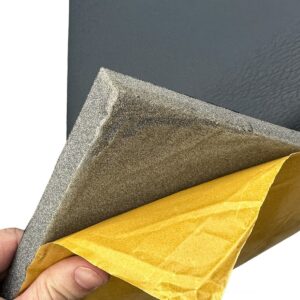
Flat absorbent foams are the simplest and often the lightest solution. They are easy to cut and install, and in the self-adhesive version, they do not require any tools. They work well wherever space is limited, e.g., on the ceiling or in corners.
20 mm flat foam effectively absorbs high tones and some mid-tones. When well-distributed at multiple points in a room, it can provide a satisfactory effect in budget home theater configurations, where the price of the entire project is more important than maximum acoustic efficiency.
Comparison of acoustic foam profiles:
| Profile | Typical thickness | Absorption range | Best use |
|---|---|---|---|
| Flat | 10–30 mm | High tones, from 1000 Hz | Ceiling, corners, filler |
| Wavy (ABM Fala) | 20–40 mm | Mid and high tones, from 500 Hz | Side walls, front wall |
| Pyramidal (ABM Piramidki) | 50 mm | Wide band, from 250 Hz | Reflection points, front and rear wall |
Tip: Combining different profiles in one room, e.g., pyramids at reflection points and convoluted foam on the remaining surfaces, provides a better effect than covering everything with one type.
Materials for effective acoustics and soundproofing at the ABM Insulation store
ABM Insulation is a manufacturer and supplier of insulation materials that has been providing acoustic solutions for individual and corporate clients since 2010. The assortment includes products for sound absorption inside rooms and for acoustic insulation of partitions, which makes it possible to complete a full home theater setup here. Orders are processed within 24 hours, and delivery covers European Union countries.
A wide product range allows for selecting the right material for a specific acoustic problem, regardless of whether it concerns reducing reverberation in a cinema room or insulation from external noise.
Acoustic products for home theater
In the ABM Insulation store, there are four main types of materials available that complement each other:
Types of insulation and absorption materials:
- Acoustic foams and panels in convoluted, pyramidal, and flat profiles for sound absorption inside a room
- Rubber insulation foams for additional vibration damping and acoustic sealing
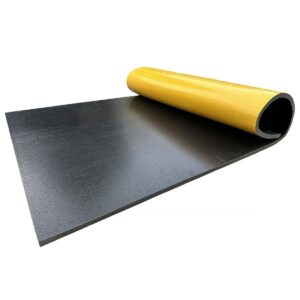
- ABM Professional butyl mats for soundproofing building partitions, ducts, and structural elements
- ABM Xtreme butyl mats for applications requiring the highest level of noise and vibration damping
Butyl mats are designed to increase the mass and insulation of walls, which blocks sound penetration from the outside. Acoustic foams work inside the room, absorbing reflections and shortening reverberation time. Both types of materials together create a comprehensive solution for a home theater, where both sound quality and peace from the surroundings matter.
Product quality and customer service
ABM Insulation manufactures butyl mats from raw materials free of toxic substances, and a 5-year warranty is provided on ABM brand products. The materials retain their properties in a wide temperature range, from -40°C to +170°C, which confirms their durability in demanding conditions.
Customers regularly rate their purchases. Reviews regarding products, service, and delivery speed are publicly available and confirm the high quality of order fulfillment. Delivery within the European Union is carried out efficiently, which is important when planning installation for a specific date.
When choosing materials or if you have doubts about selecting a product for a specific room, you can take advantage of technical consultation. The contact form and details for the advisory team are available on the contact ABM Insulation page.
How to arrange acoustic foam to improve home theater acoustics?
The placement of panels is at least as important as their type. Even the best acoustic foam will not fulfill its role if it is glued in places where sound does not reach with high energy anyway. Planning the installation should begin with understanding how sound waves move in a given room.
First reflection points: where to install panels first?
The first reflection point is the spot on the wall or ceiling from which sound reflects before reaching the listener’s ears. This first reflection contains a lot of energy and significantly affects the perceived precision and localization of surround sound.
Locating these points is easy using the mirror method. Simply place a mirror against the side wall and move it until the main speaker is visible in it from the seating position. This is exactly where the first panel should be installed.
Priority panel installation locations:
- First reflection points on the side walls (to the left and right of the seating area)
- First reflection point on the ceiling (between the speakers and the listener)
- Front wall behind the main speakers
- Rear wall behind the seating area
Installing panels in these specific locations provides the greatest and most immediately audible effect in improving acoustics. Only after securing these areas is it worth considering covering other surfaces.
However, covering too much with foam absorbers can make the room unpleasantly dead. The optimal RT60 time for a home theater is 0.2 to 0.4 seconds, not zero. A reverb that is too short deprives the sound of its natural quality.
Foam thickness of 20 mm, 40 mm, and 50 mm vs. the range of absorbed frequencies
Foam thickness is one of the key parameters that directly determines which frequencies will be absorbed. The thinner the material, the higher the tones that are dampened.
20 mm foam works effectively from about 1000 Hz upwards, absorbing hissing tones and part of the midrange. 40 mm foam extends the effect to the range from 500 Hz, which already covers a significant portion of the mid-tones responsible for the timbre of voices. 50 mm foam, especially in a pyramidal profile, absorbs from approx. 250 Hz upwards, thereby realistically affecting the sound of instruments and effects in the soundtrack.
For full control of home theater acoustics, it is recommended to use a mix of thicknesses: thinner panels in places where high-frequency absorption is important, and thicker ones in corners and on the back wall, where bass energy accumulates.
Corners, ceiling, and back wall as installation zones for acoustic foam
Room corners are places where low-frequency energy accumulates. Sound waves converge in trihedral corners, i.e., at the junction of two walls and the ceiling, creating standing waves and modal resonances. Installing thicker panels in these specific areas significantly reduces bass problems.
The ceiling, especially its central part, is the first reflection zone for many speakers in a multi-channel system. A panel on the ceiling between the speakers and the listener clearly improves the clarity of the soundstage and reduces the “flutter echo” effect. Installation on the ceiling requires some technical preparation, such as using mounting adhesive or mounting strips.
The back wall, located behind the seating area, reflects sound back toward the screen, which disrupts the spatial sound image. Acoustic foams mounted on the back wall eliminate these unwanted reflections. Solutions for this zone include both 50 mm pyramidal foams and thicker convoluted foam.
Tip: if a limited amount of material is available, you should first cover the side walls at reflection points and the corners, and treat the ceiling and back wall as a second stage.
FAQ: Frequently Asked Questions
Do acoustic foams soundproof a home theater from outside noise?
Acoustic absorption foams do not block noise coming from outside, from the hallway, or from adjacent rooms. Their effect is limited exclusively to controlling sound inside the room. They absorb reflections from walls and the ceiling, shorten reverberation time, and eliminate echo, which directly improves the intelligibility of dialogue and the precision of sound effects.
To block external sounds, heavy mass materials are needed, such as butyl mats, which increase the acoustic insulation of building partitions. Foams and butyl mats complement each other well, but they perform completely different functions. Using only foams for an external noise problem will not produce the expected result.
How much acoustic foam is needed to improve home theater acoustics?
There is no single ready-made answer, because everything depends on the size of the room, its shape, and the current reverberation time. However, it is generally accepted that covering 20 to 35 percent of the wall and ceiling surface provides a clear, audible improvement in an average room with a volume of up to 50 m³. More important than the quantity itself, however, is the accurate placement of the panels.
Panels placed at first reflection points, on the front wall, and in the corners bring a faster effect than evenly covering entire walls. Too much foam coverage, on the other hand, can make the room unpleasantly dead. The goal is an RT60 reverberation time of 0.2 to 0.4 seconds, not its complete elimination.
Which acoustic foam profile works better in a home theater: wavy, pyramidal, or flat?
Each acoustic foam profile has different absorption properties and works best in different areas of a room. 50 mm thick pyramidal foam absorbs a wide frequency range, from about 250 Hz upwards, making it the best choice for reflection points and the rear wall. The 40 mm thick wavy profile is effective for mid and high tones while also looking good on side walls.
20 mm flat foam is a simpler and lighter solution. It works well on the ceiling and in areas with limited space. The best acoustic effect is achieved by combining different profiles in one room, e.g., pyramids in key zones and wavy foam on the remaining surfaces.
How to install acoustic foam in a home theater yourself without damaging the walls?
Installing acoustic foam does not require specialized construction knowledge. The simplest way is to use mounting adhesive or high-strength double-sided foam tape. Before sticking, make sure the wall is clean, dry, and degreased, as dirt reduces the adhesive’s grip.
An alternative to gluing is mounting the panels on wooden strips, which allows for later removal without damaging the plaster. Foam can also be hung on hooks screwed into wall plugs if the foam manufacturer provides mounting holes. Lightweight 20 mm thick flat panels can even be attached with Velcro, which allows them to be rearranged when changing equipment placement.
Regardless of the chosen method, it is worth laying the panels out on the floor before sticking them to check the planned arrangement. This makes it easier to evaluate the coverage layout and avoid mistakes that are difficult to fix after sticking.
Summary
Acoustic absorption foams effectively reduce noise inside a home theater, shorten reverberation time, and eliminate echo that ruins the movie experience. However, they are not a tool for isolation from external noise and will not replace solutions that increase the mass of partitions. Their strength lies in improving sound quality where it already exists, i.e., inside the cinema room.
The effectiveness of the installation depends on choosing the right profile and thickness of the foam, and above all, on its accurate placement. Wavy or pyramidal foam panels from the ABM Insulation brand in key reflection points, corners, and on the rear wall allow for achieving a reverberation time consistent with recommendations for home theater rooms. This is a real improvement that anyone who sits in front of the screen after acoustic adaptation will hear.
Sources:
- https://pmc.ncbi.nlm.nih.gov/articles/PMC9105932/
- https://pmc.ncbi.nlm.nih.gov/articles/PMC7763016/
- https://www.sciencedirect.com/science/article/abs/pii/S2352710221017307
- https://www.science.gov/topicpages/o/open-cell+polyurethane+foam
