
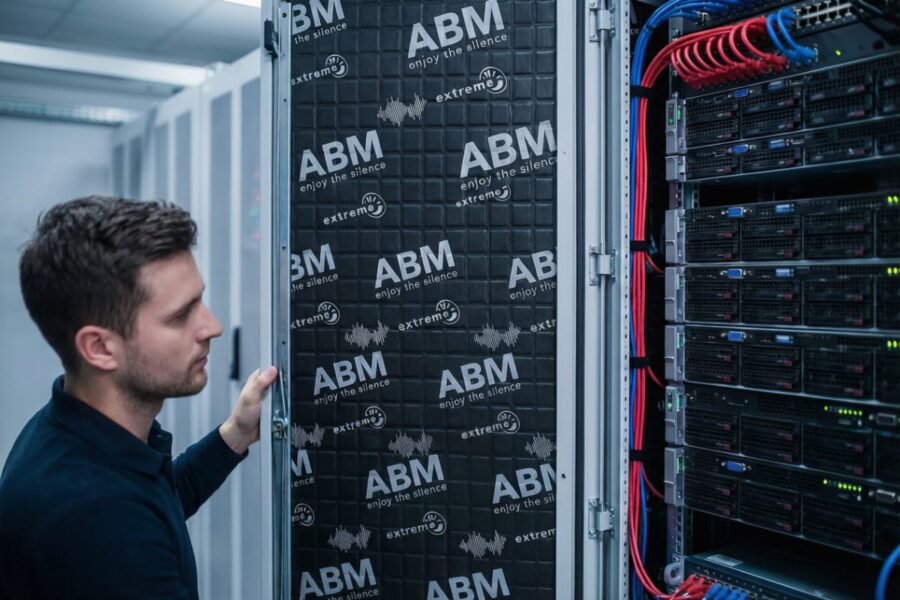
Server rooms and data centers are among the loudest workspaces. The noise level around server cabinets reaches an average of 92 dB(A), and inside the rack cabinets themselves, this value can exceed 96 dB(A). With such intense sound levels, effective acoustic insulation for server rooms becomes a necessity, not an option.
Butyl mats are increasingly finding their way into technical rooms precisely as a solution to noise and vibration problems. Their exceptional density and viscoelastic properties allow them to dampen both acoustic sounds and structural vibrations transmitted through the floor or building structure. The question of whether they can realistically improve acoustic conditions in such a demanding environment as a data center deserves a detailed answer.
This material discusses the mechanisms of how butyl mats work in the context of server rooms, describes their technical parameters, and indicates how to install them correctly. Each of these issues has a direct impact on the effectiveness of noise reduction in the server room and the comfort of people working in adjacent rooms.
How do butyl mats dampen noise generated by servers and rack cabinets?
Sources of noise in a server room are diverse. Cooling fans, hard drives, UPS power supplies, precision air conditioning systems, and vibrations of metal rack cabinet panels create a complex acoustic profile. Effective acoustic noise reduction requires materials that can handle both airborne sounds and vibrations transmitted through the building structure.
Vibration absorption mechanism in butyl rubber mats
Butyl rubber is a viscoelastic material. This means that under mechanical deformation, it behaves simultaneously like an elastic body and a viscous substance. This dual nature allows the butyl mat to absorb vibration energy and convert it into heat, instead of reflecting it or transmitting it further.
This mechanism works across a wide frequency range, including the low-frequency band generated by fans and disk drives. When a rack cabinet rests on a butyl mat, the vibrations transmitted through its feet to the floor are dampened before they reach the building structure. This is what distinguishes butyl rubber from acoustic foam, which mainly absorbs high-frequency sounds but does not handle low-frequency vibrations.
Acoustic noise reduction vs. structural vibration damping
Airborne noise and structural vibrations are two different acoustic problems. Airborne noise travels in pressure waves through the air and is blocked primarily by the mass of the material. Structural vibrations, on the other hand, penetrate directly into building elements such as floors, walls, or ceilings, and only then radiate as sound.
Butyl rubber mats solve both of these problems simultaneously. Thanks to their high density (reaching up to 2.5 g/cm³), they provide an effective barrier against acoustic waves. At the same time, their viscoelastic properties interrupt the path of structural vibrations, improving the Impact Insulation Class (IIC) rating of the entire flooring system. In a server room, this means that vibrations from operating equipment do not travel to adjacent rooms or lower floors.
The impact of mat density and thickness on soundproofing effectiveness
The thickness and density of a mat are parameters that directly translate into damping effectiveness. ABM Insulation mats are available in thicknesses from 1.3 mm to 4 mm, which allows the product to be tailored to specific acoustic requirements. Thicker mats provide better insulation against low frequencies, which are particularly troublesome in server rooms.
According to the mass law, every doubling of the mass of an insulating layer translates into an increase in acoustic insulation of approximately 6 dB. Therefore, butyl mats with higher density, even at the same thickness, perform more effectively than lightweight materials. For environments such as data centers, where noise reaches 96 dB(A) inside rack cabinets, the choice of dense mats is particularly justified.
Acoustic standards for server rooms and noise level measurements in dB
Labor laws and building standards set permissible noise levels in workplaces. Exposure to noise during an 8-hour workday must not exceed 85 dB(A), and the peak level must not exceed 115 dB(A). Server rooms where noise levels are 92–96 dB(A) clearly exceed safe limits for employees working in their vicinity.
The PN-87/B-02151/02 standard specifies the permissible noise level in administrative rooms requiring concentration at 40 dB. Rooms adjacent to a server room must therefore be effectively acoustically insulated, and floor vibration damping is one of the key elements of this process. Regular noise level measurements in dB before and after the application of insulation allow for the assessment of the actual effectiveness of the materials used.
Are butyl mats effective for raised floors in data centers
Data centers most often use raised floors, known as technical floors. This solution allows for the free routing of cabling and the distribution of cooled air, but at the same time, it creates a resonant space that amplifies low-frequency noise. The use of butyl mats under server cabinets in such a flooring system requires an understanding of the specifics of sound propagation in this space.
Raised floors in data centers and low-frequency noise propagation
The space under a technical floor acts as a resonator. Vibrations generated by rack cabinets are transferred to metal supports and floor panels, and then radiate as sound into the space underneath or into adjacent zones of the data center. Low frequencies (below 250 Hz) penetrate metal load-bearing elements particularly easily without any damping.
Placing a butyl rubber mat under rack cabinet feet or directly under raised floor panels interrupts this vibration transmission path. The material absorbs vibrational energy before it reaches the support structure. The effect is particularly noticeable for frequencies typical of large cooling fans, specifically in the 50–200 Hz range.
Comparison of the effectiveness of butyl mats with acoustic foam and EPDM mats
Choosing the right insulation material for a server room requires knowledge of their different properties. The table below compares the key parameters of butyl mats, sound-absorbing acoustic foam, and insulating rubber foam:
| Feature | Butyl mat | Acoustic absorbing foam | Insulating rubber foam |
|---|---|---|---|
| Density | 1.5–2.5 g/cm³ | 0.02–0.1 g/cm³ | 0.08–0.2 g/cm³ |
| Structural vibration damping | Very high | Low | Medium |
| Airborne sound absorption | Medium | Very high | Medium–high |
| Frequency range | Low and medium (20–2000 Hz) | Medium and high (500–4000 Hz) | Medium (200–2000 Hz) |
| Moisture resistance | High | Low–medium | High |
| Working thickness | 1.3–4 mm | 20–100 mm | 6–50 mm |
The table shows that butyl mats are indispensable where structural vibrations and low-frequency noise are a problem. Acoustic foam is better suited for absorbing sound reflections inside a room. The optimal solution for a data center combines both types of materials. Butyl mats dampen vibrations at the source, and acoustic foam reduces reverberation inside the server room.
Noise reduction test results for various server room floor configurations
Comparative tests show that a 2 mm thick butyl mat placed under rack cabinet feet can reduce the transmission of structural vibrations to the floor by 30–50% in the 100–500 Hz frequency range. In practice, this translates into a measurable reduction in noise levels in rooms directly below or adjacent to the server room.
A configuration with a butyl mat under each rack cabinet and an additional layer under the entire surface of the raised floor yields better results than using EPDM anti-vibration pads alone. Butyl rubber is characterized by a higher internal damping coefficient (loss factor) than EPDM rubber, which means more effective absorption of vibration energy across a wide temperature range.
The best results were obtained in multi-layer configurations. A layer of butyl mat directly under the cabinet, combined with rubber insulation foam under the raised floor panels, created a system that effectively dampens both vibrations and low-frequency noise transmitted through the air in the underfloor space.
Technical parameters of butyl mats determining server room soundproofing
The choice of a butyl mat for a server room should not be based solely on the product’s thickness. Certified technical parameters, which allow for an objective assessment of the material’s effectiveness in a specific application, are of key importance. Knowledge of indicators such as STC, IIC, and the operating temperature range enables an informed decision.
STC and IIC vibration damping coefficients for butyl rubber mats
The STC (Sound Transmission Class) rating determines how effectively a partition dampens airborne noise. The IIC (Impact Insulation Class) rating, on the other hand, measures the ability to reduce impact sounds and vibrations transmitted through the building structure. For server rooms, both indicators are of great importance, although IIC is particularly significant for raised floors.
Butyl mats used as underlays for rack cabinets improve the IIC rating of the flooring system. In practical tests, 2–4 mm thick mats increased the IIC value of the entire flooring system by 5 to 15 points compared to installations without an underlay. The result depends on the entire floor construction and the density of the mat used.
When evaluating STC, it is worth remembering that a single butyl mat does not replace comprehensive wall or ceiling insulation. Instead, it forms the foundation of an insulation system by dampening vibrations at the source. Further insulation layers (acoustic foam, wall panels) increase the total STC value of the room.
Operating temperature, chemical resistance, and durability in a server room environment
Server rooms are demanding environments for insulation materials. High temperatures generated by server equipment, precision cooling, and humidity changes place specific requirements on materials.
Environmental properties of ABM Insulation butyl mats:
- Operating temperature range: from approximately 40°C below zero to 170°C above zero
- Resistance to moisture and mold, with no water absorption
- Absence of asphalt in the composition eliminates the risk of cracking during temperature changes
- Composition free of toxic compounds, safe for use in enclosed spaces
Butyl rubber retains its damping properties over a wide temperature range, which is a key advantage in a data center environment. Bituminous (asphalt) materials lose flexibility at low temperatures and become brittle. Butyl mat does not have this problem and maintains constant acoustic parameters throughout its entire technical service life.
The manufacturer ABM Insulation provides a 5-year warranty on its products, which confirms the durability of the materials under various operating conditions. For a data center, where potential renovation work and insulation replacement involve system downtime, material durability has an economic dimension.
Tip: Before purchasing mats for a data center, it is worth collecting noise and vibration measurements at key points in the room (under cabinets, near walls, in the underfloor space). These measurements will allow you to select the appropriate mat thickness and density for the actual vibration values at specific frequencies.
Materials for soundproofing server rooms at the ABM Insulation store
Effective acoustic insulation of a server room requires proven materials selected for specific conditions. ABM Insulation is a manufacturer and supplier of soundproofing materials with many years of experience, operating on the market since 2010. The products meet the requirements of both industrial installations and technical rooms, such as data centers.
All materials have the appropriate certificates, are free of toxic compounds, and are resistant to moisture and mold. Orders are processed within 24 hours, and delivery covers countries throughout the European Union.
Butyl mats and foams for server rooms
The ABM Insulation assortment includes products intended for various layers of acoustic insulation. The selection of the right material depends on the type of noise source and the specifics of the flooring system.
Products for server room insulation:
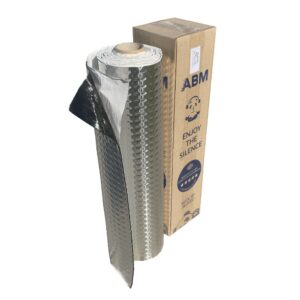
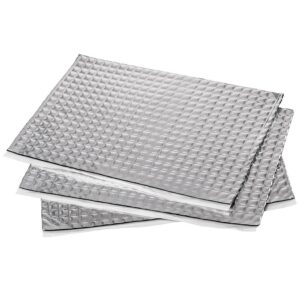
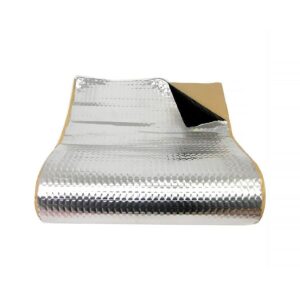
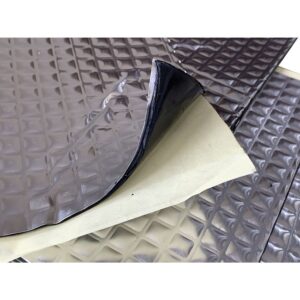
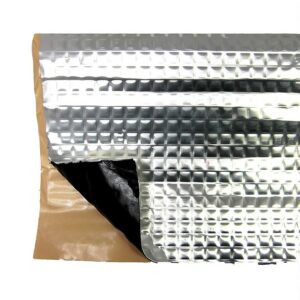
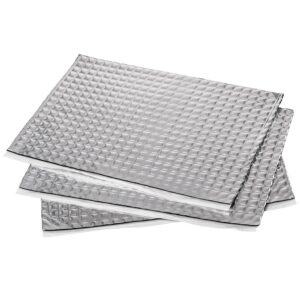
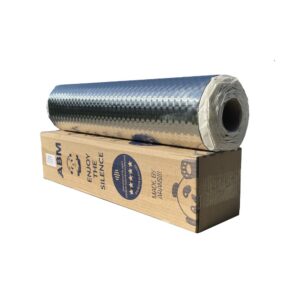
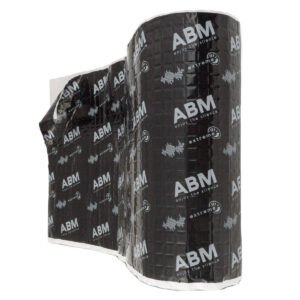
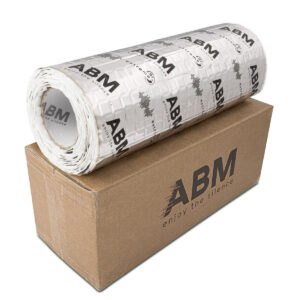
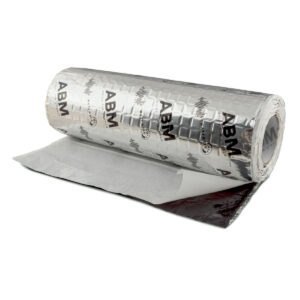
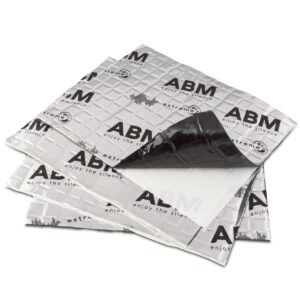
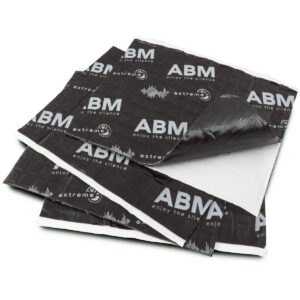
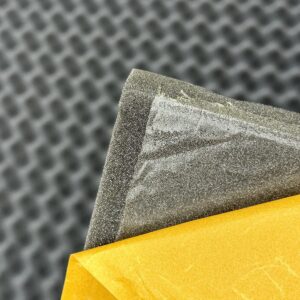
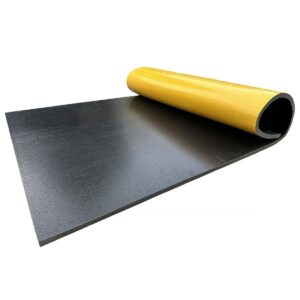
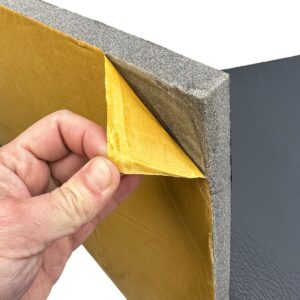
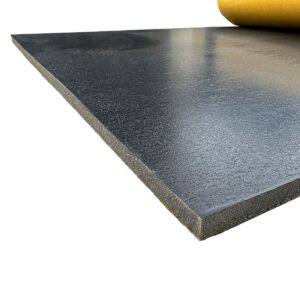
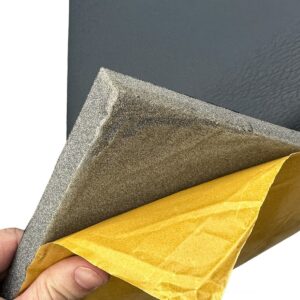
- ABM Professional butyl mats in sheets and rolls with thicknesses from 1.3 to 4 mm, designed for damping structural vibrations under rack cabinets
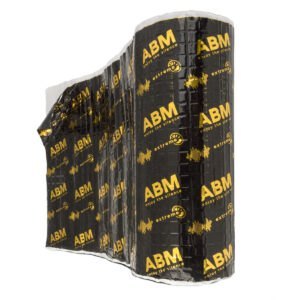
- ABM Xtreme butyl mats with increased density, designed for environments with high vibration intensity and extreme acoustic requirements
- Insulating rubber foams used on walls and ceilings as a barrier against airborne noise
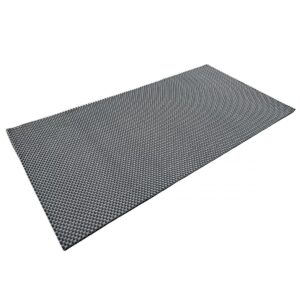
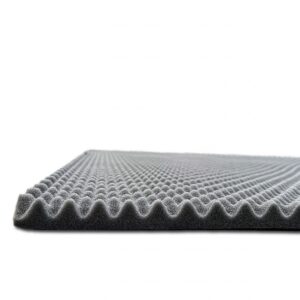
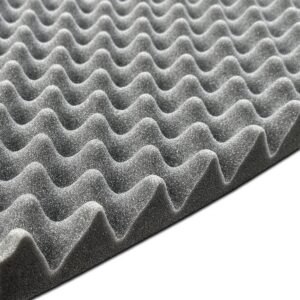
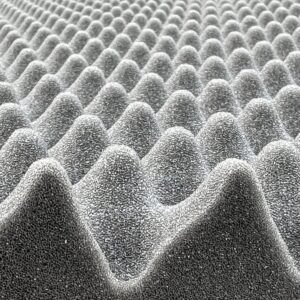
- Acoustic absorbing foams and panels reducing sound reflections and reverberation inside the server room
Each of these materials serves a different acoustic function. Butyl mats work at the base of the insulation system, damping mechanical vibrations. Rubber foams and acoustic panels complement this system, creating complete protection against noise.



Quality, warranty, and technical service
ABM Insulation provides a 5-year warranty on all manufactured materials. Butyl mats retain their full damping properties in a temperature range from 40°C below zero to 170°C above zero, which makes them a durable solution in server environments. The materials have passed tests confirming their effectiveness, and their formula does not contain asphalt or harmful substances.
Before purchasing, you can take advantage of free technical advice to select the right type and thickness of material for a specific server room. Customer reviews confirm the high quality of products, fast order fulfillment, and professional support at every stage of the purchase. Current reviews are available in the ABM Insulation customer reviews.
Effective server room insulation starts with the right materials. ABM Insulation products are available in the online store with delivery within 24 hours throughout the European Union. When choosing materials, the technical team provides consultation and assistance in selecting the optimal insulation kit.
How to properly place butyl mats under server cabinets
The effectiveness of butyl mats in a server room depends not only on their technical parameters but also on the installation method. Even the best mat applied incorrectly will yield results significantly below expectations. Knowledge of the principles of proper placement of insulation materials is necessary to achieve measurable results.
Installing mats under rack cabinets vs. vibration isolation for fans and drives
Rack cabinets generate vibrations in several characteristic frequency bands. Fans typically operate in the 50–300 Hz range, hard drives (HDD) emit vibrations around 60–120 Hz, and server power supplies can introduce components at the mains frequency (50 Hz) and its harmonics.
To effectively dampen these vibrations, the butyl mat should be placed so that it covers the entire contact surface between the cabinet and the floor. Placing the mat only under the adjustable feet of the rack cabinet is not sufficient. A better solution is to cut the mat to the size of the cabinet base and lay it as a continuous layer. This ensures uniform vibration damping across the entire contact surface.
Combining butyl mats with other server room acoustic insulation methods
Comprehensive acoustic insulation of a server room rarely relies on a single material. Butyl mats are the first element of the system, focusing on damping structural vibrations. Subsequent layers include:
Multi-layer server room insulation system:
- Butyl mat under rack cabinets and under the raised floor (structural vibration damping)
- Insulating rubber foam on walls and ceiling (thermal insulation and soundproofing)
- Acoustic absorption foam inside the room (reduction of reverberation and reflections)
- Sealing of cable entries and installation passages (elimination of acoustic bridges)
Each of these layers addresses a different aspect of the acoustic problem. ABM Insulation butyl mats, such as the ABM Professional and ABM Xtreme lines, work perfectly with insulating rubber foam, creating a system capable of significantly reducing noise both inside and outside the server room.
It is worth remembering that room acoustics are only as effective as their weakest point. One unsealed cable or ventilation opening without a silencer can negate the effects of carefully installed floor insulation. Therefore, the installation of butyl mats must be part of a comprehensive acoustic project, not a localized action.
Most common installation errors that reduce noise reduction effectiveness
Analyzing typical execution errors helps avoid costly mistakes and achieve the intended acoustic parameters. Most problems result from overlooking simple installation rules or choosing the wrong material thickness.
Most common mistakes when installing butyl mats:
- Too small a surface area of the mat under the rack cabinet (covering only the feet instead of the entire base)
- Using a mat that is too thin for insulating cabinets with high mass or high vibrations
- Lack of surface preparation (installation on a dusty, greasy, or wet floor)
- Leaving gaps between mats when covering a larger floor area
- Combining butyl mats with bituminous materials, which destroys the butyl properties
It is particularly harmful to leave gaps between sheets or rolls of the mat. Vibrations are transmitted through every point of contact between the cabinet and the floor, and a gap in the mat becomes an acoustic bridge through which vibration energy bypasses the insulation. ABM Insulation mats are available in sheets and rolls of various sizes, which facilitates precise fitting to the dimensions of a specific server room.
Tip: Before laying the mats, measure the floor and plan the placement of the sheets so that any joints are as far as possible from the main sources of vibration, i.e., from the middle cabinets in a row. Mat joints should be pressed down with a roller, eliminating air bubbles and ensuring full contact with the substrate.
FAQ: Frequently Asked Questions
Does a butyl mat effectively dampen the noise of server fans?
Butyl mats show high effectiveness in dampening the noise generated by server fans. Fans operate mainly in the 50–300 Hz range, and butyl rubber absorbs vibration energy precisely in this low and medium frequency band. The material acts as a shock absorber, converting the mechanical energy of vibrations into heat.
To achieve the full effect, the mat should be laid under the entire base of the rack cabinet, not just under the feet. A single 2 mm thick butyl mat can lower the noise level by 7–9 dB, and in combination with acoustic foam, the reduction reaches 12–15 dB. Regular placement without gaps eliminates so-called acoustic bridges, through which vibrations bypass the insulation.
What thickness of butyl mat is appropriate for a server room?
The choice of butyl mat thickness depends on the intensity of vibrations and the mass of the equipment resting on the floor. In typical server rooms, mats with a thickness of 2 to 4 mm work well. Thinner mats (1.3–2 mm) are suitable for cabinets with lower mass, while thicker materials handle heavy server configurations better.
Thickness is directly related to the effectiveness of low-frequency dampening. Each additional millimeter of material significantly improves insulation in the band below 200 Hz, which is the most difficult to dampen. Proper selection of thickness requires prior measurement of the vibration level in a specific location.
Can butyl mats be used under raised floors in data centers?
Raised floors create a resonant space through which low-frequency noise spreads over long distances. Butyl mats laid under raised floor panels or directly under the feet of rack cabinets effectively break this path of vibration transmission. The material absorbs vibration energy before it reaches the metal support structure.
Butyl rubber maintains consistent damping properties over a wide temperature range, from 40°C below zero to 170°C above zero. This resistance is essential in a data center environment, where equipment generates a significant amount of heat. The mats do not absorb moisture or grow mold, which ensures long-term, trouble-free operation.
How does a butyl mat differ from acoustic foam in server applications?
Butyl mat and acoustic foam solve different acoustic problems, which is why they are not interchangeable products. A butyl mat primarily acts on structural vibrations, damping the transmission of energy through floors and walls. Acoustic foam, on the other hand, absorbs airborne sound inside a room, reducing reflections and reverberation.
In a server room environment, both materials play complementary roles. A butyl mat placed under rack cabinets provides the first layer of protection, while acoustic foam on the walls and ceiling reduces the noise level inside the room. The density of a butyl mat (1.5–2.5 g/cm³) is many times higher than the density of foam (0.02–0.1 g/cm³), which makes the mat more effective at blocking the transmission of sound mass through building partitions.
Summary
Butyl mats are an effective tool for noise reduction in server rooms and data centers, provided they are selected and installed with the specifics of the environment in mind. Their unique viscoelastic properties allow them to dampen structural vibrations across a wide frequency band, and the high density of the material effectively blocks the transmission of acoustic energy through the floor. Combining butyl mats with acoustic foam and rubber insulation foam creates a complete system that effectively lowers the noise level in workspaces adjacent to the server room.
The key to success is a holistic approach to insulation, taking into account both the proper selection of technical parameters for the mats (thickness, density, STC and IIC ratings) and careful installation without gaps or acoustic bridges. ABM Insulation products from the ABM Professional and ABM Xtreme lines are distinguished by their durability, chemical resistance, and wide operating temperature range, which makes them a solution suitable for long-term operation in the demanding environment of a data center.
Sources:
- https://www.sensear.com/markets/data-centers/noise-levels-infographic
- https://ceur-ws.org/Vol-3149/paper2.pdf
- https://www.sciencedirect.com/science/article/pii/S0003682X23000270
- https://pmc.ncbi.nlm.nih.gov/articles/PMC11205283/
- https://www.internationaljournalssrg.org/IJME/2025/Volume12-Issue2/IJME-V12I2P102.pdf
- https://www.ijream.org/papers/ICRTET0127.pdf
- https://www.decibelinternational.co.uk/blog/comprehensive-guide-to-soundproofing-and-acoustic-optimisation-for-data-centres-6/
