
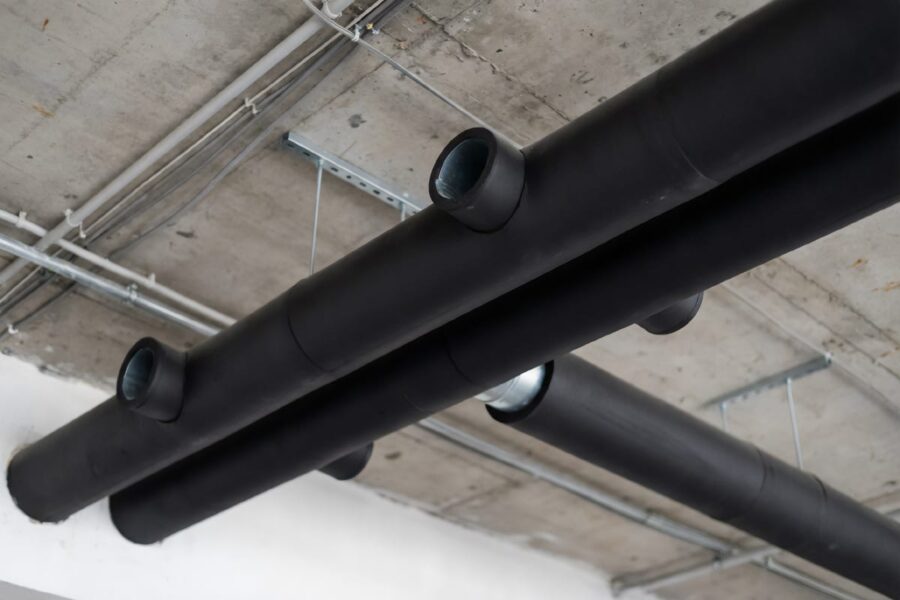
The closed cell structure of rubber foams forms the basis for effective protection against two serious problems in construction and industry: the development of mold and the corrosion of metal elements. This specific arrangement of hermetic, independent cells filled with gas creates a natural physical barrier that eliminates key factors necessary for the growth of microorganisms and corrosive processes. This structure provides a level of protection that open-cell materials or traditional fibrous insulations do not achieve.
The mechanism of action of closed cells is based on blocking moisture access to protected surfaces. Each individual cell in the foam structure functions like a miniature capsule that prevents water or water vapor molecules from penetrating. This property arises from the architecture of the material, in which individual cells are separated by thin but airtight polymer walls.
The use of rubber foams in ventilation, air conditioning systems, and on pipelines eliminates conditions conducive to condensation and biological development. Materials such as insulating rubber foam from ABM Insulation feature a water vapor diffusion resistance factor exceeding 3500, making them practically impermeable to moisture. The long-term effectiveness of this barrier translates into real protection for installations over decades of operation.
The construction of the closed cell structure of rubber foams and its barrier properties
The microstructure of rubber foams consists of millions of independent, closed cells distributed within a flexible polymer matrix. Each cell has wall thicknesses ranging from several to several tens of micrometers, providing mechanical strength while maintaining the lightness of the material. The foam production process controls the size and distribution of cells, determining the final insulation and barrier parameters of the product.
The density of typical rubber foams used in insulation ranges from 45 to 80 kg/m³, with an optimal range for thermal insulation applications between 45 and 55 kg/m³. This structure remains stable over a wide temperature range, from minus 40°C to plus 170°C, without losing cell integrity or barrier properties.
Characteristics of airtight gas-filled cells
The interior of each closed cell contains gas that replaces atmospheric air, which remains trapped for the entire life of the material. This trapped gas cannot be displaced by water or water vapor, which is fundamental to the waterproofing of the foam. The walls of the cells made from rubber elastomer exhibit natural hydrophobicity, meaning they repel water molecules at a molecular level.
Hydrophobic properties of the material:
- Water absorption below 0.2% by volume of the material
- No capillary suction of water into the interior of the structure
- Surface tension repelling moisture droplets
- Retention of properties even when the outer layer is damaged
The insulated structure of cells means that even with localized damage to the foam surface, moisture penetration is limited solely to the damaged cells. The remaining part of the material maintains full tightness and barrier properties. This feature distinguishes closed-cell foams from fibrous materials, where damage to the coating leads to saturation throughout the entire thickness of insulation.
The closed structure eliminates the effect of moisture ingress through capillaries, which is a major problem in fiberglass or mineral insulation. The lack of connections between cells prevents water from spreading deeper into the material, even under pressure or gravity.
Low absorption and diffusion resistance of the material
The diffusion coefficient of water vapor through rubber foams is extremely low, expressed by a parameter µ exceeding 3500 according to ISO 9346 standards. This value means that the material is over 3500 times less permeable to water vapor than a layer of air of the same thickness. Such a barrier eliminates the need for additional vapor barrier films in most applications.
Practical consequences of low diffusion:
- Prevention of moisture migration through walls and ceilings
- Elimination of interstitial condensation in partitions
- Protection of structures from moisture from the interior side
- Stability of thermal parameters throughout the year
The permeability to liquid water is even lower than for vapor. Laboratory tests show that rubber foams can be submerged in water for many months without a significant increase in mass, confirming the airtightness of the structure. In practice, this means that the material can be used in direct contact with water, for example, in insulation for underground pipelines.
Moisture resistance remains constant regardless of ambient humidity. While hygroscopic materials change their properties depending on air humidity, rubber foams maintain constant thermal conductivity and mechanical parameters. The lambda value for rubber foams typically ranges from 0.035 to 0.040 W/mK and does not change with increasing relative humidity.
Mechanical properties enhancing insulation durability
The flexibility of rubber foams allows for compensation of thermal movements in insulated installations without creating cracks or gaps. The material can be compressed and stretched multiple times, returning to its original dimensions after the load ceases. This property ensures continuity of the insulation layer even under varying temperatures and mechanical loads.
| Parameter | Value | Practical significance |
|---|---|---|
| Apparent density | 45-80 kg/m³ | Optimal insulation-to-mass ratio |
| Tensile strength | 0.3-0.5 MPa | Resistance to mechanical damage |
| Relative elongation | 150-300% | Adaptation to irregular surfaces |
| Temperature range | from -40°C to +170°C | Versatility of applications |
| Diffusion resistance factor µ | above 3500 | Effective moisture barrier |
The closed cell structure prevents the propagation of cracks through the material. Local damage does not lead to the degradation of the entire insulation system, which minimizes maintenance costs and extends the lifespan of the installation. The resistance to puncture damage results from the independence of individual cells, which do not transmit stresses to adjacent areas.
Rubber elastomer exhibits natural resistance to aging caused by UV radiation, ozone, and atmospheric oxygen. Stabilizing additives in the foam composition protect against oxidative degradation that could affect the cellular structure. The chemical stability of the EPDM matrix guarantees the invariability of properties for several decades of use.
Moisture and Water Vapor Condensation Protection Mechanisms
Moisture control in construction and industrial systems requires effective blocking of both liquid water and water vapor. Rubber foams accomplish both tasks through a physical barrier created by closed cells. This mechanism fundamentally differs from the operation of fibrous insulation, which can only slow down moisture penetration without completely stopping it.
A layer of rubber foam just a few millimeters thick creates a barrier equivalent to several dozen centimeters of concrete in terms of water vapor permeability. This property arises from the absence of continuous pores through which water molecules could move. Each cell serves as a local barrier that prevents gas diffusion through the material.
Blocking Water Molecule Penetration Through Foam Structure
The process of moisture transport through porous materials is based on diffusion through pores and capillaries. In the case of a closed cell structure, both mechanisms are blocked. Water molecules encounter successive cell walls, which constitute an insurmountable obstacle due to the hydrophobic nature of the elastomer.
Moisture Blocking Mechanisms:
- A physical barrier in the form of cell walls impermeable to water
- The absence of continuous pores allowing capillary transport
- Repulsion of water molecules by hydrophobic surfaces
- High diffusion resistance eliminating water vapor transport
Practical tests involving submerging foam in pressurized water show absorbency below 0.2% after 28 days of exposure. Such a low level of absorption means that the material can operate in direct contact with water without degrading its insulating properties. Cyclic tests with alternating freezing and thawing in water confirm structural stability over hundreds of cycles.
Local surface damage to the foam does not cause extensive saturation of the material with water. Water can only penetrate directly damaged cells, while the rest of the cross-section maintains full tightness. This property is critical in operational conditions where mechanical damage to insulation is inevitable over a longer period.
Preventing the Formation of Dew Point on the Surface of Elements
The dew point is the temperature at which the water vapor contained in the air begins to condense on surfaces. Condensation occurs when the surface temperature drops below the dew point of the surrounding air. Rubber foams prevent this phenomenon by raising the temperature of the insulated elements’ surfaces and blocking access to humid air.
The thickness of the insulation layer determines the location of the dew point in the cross-section of the partition. Properly selected rubber foam insulation shifts the dew point beyond the surface of the protected element, locating it within the insulation material itself. However, due to its impermeability to water vapor, condensation cannot occur even at this point because vapor does not reach areas with reduced temperatures.
Conditions for Eliminating Condensation:
- Surface temperature of the insulated element above the dew point
- Vapor barrier blocking access to cold areas
- Continuity of the insulation layer without thermal bridges
- Appropriate thickness of insulation adjusted to temperature gradients
Engineering calculations show that 13 mm thick rubber foam insulation on a pipeline at 5°C in a room with 80% humidity and a temperature of 25°C completely eliminates the risk of condensation. The external surface temperature of the insulation rises to about 22-23°C, which is above the dew point of approximately 21°C for these conditions.
Practical applications confirm the effectiveness of this method in air conditioning systems, where pipelines with cold refrigerants are completely protected from water droplet formation on their surfaces. The elimination of condensation protects not only the installation but also the surroundings from moisture that could lead to mold growth on walls and ceilings.
Tip: When selecting the thickness of rubber foam insulation, consider the lowest temperature of the insulated medium, highest ambient temperature, and maximum relative humidity of the air. Appropriate calculations protect the installation from condensation throughout its operational year.
Elimination of Conditions Favoring Microorganism Growth
The development of mold, fungi, and bacteria requires several basic conditions: access to moisture, appropriate temperature, presence of nutrients, and oxygen. Closed-cell rubber foams eliminate key factors from this list, creating an environment hostile to biological life. This mechanism works proactively by preventing colonization by microorganisms rather than merely slowing their growth.
Building and insulating materials become a habitat for microorganisms when relative humidity on their surfaces exceeds 60% for an extended period. Rubber foams keep surfaces of insulated elements dry, which automatically excludes any possibility of biological development. Microbiological studies confirm that the material itself does not support mold growth even under laboratory conditions conducive to proliferation.
Depriving Mold and Fungi of Access to Moisture Necessary for Growth
Moisture is an absolutely essential condition for the life of all microorganisms. Spores of mold and fungi present in the air can survive long periods in a dormant state, but they only germinate upon gaining access to water. The closed cellular structure of rubber foams blocks this access in two ways: by eliminating condensation and preventing moisture absorption from the environment.
Humidity Levels Excluding Biological Growth:
- Surface humidity below 60% prevents spore germination
- Lack of a water layer on the surface blocks nutrient transport
- Dry surfaces eliminate environments for bacteria requiring an aqueous medium
- Stable low humidity prevents seasonal growth cycles
Tests conducted according to ASTM G21 standards confirm no fungal growth on the surface of rubber foams after 28 days of exposure under extreme humidity and temperature conditions. Samples inoculated with the most common species of household mold remain free from colonization, while control materials made from organic fibers show intense growth.
The surface of rubber foams does not create microscopic cavities or pores where water could accumulate. The smooth, hydrophobic outer layer repels droplets that run off or evaporate before creating an environment conducive to microbial development. This property is particularly important in ventilation systems, where cyclical changes in humidity can lead to condensation on insulation surfaces.
Maintaining a Constant Temperature on Insulated Elements
Temperature fluctuations on the surfaces of building materials promote condensation and create conditions for microorganisms. Rubber foams stabilize the surface temperature of insulated elements, eliminating cyclical cooling that could lead to moisture formation. The low thermal conductivity of the material, ranging from 0.035-0.040 W/mK, provides an effective thermal barrier.
An insulated pipe or duct maintains a temperature close to that of the transported medium. Eliminating cold surfaces where water vapor could condense removes a fundamental biological risk factor. A stable temperature around the clock and throughout the year means no wet-dry cycles, which are crucial for the survival of many species of fungi.
Lack of Organic Substances Supporting Bacterial Colony Development
The rubber elastomer used in the production of insulation foams is a synthetic material that does not contain nutrients for microorganisms. Unlike insulation containing cellulose, starch binders, or natural fibers, rubber foams do not provide a source of carbon and energy for bacteria or fungi. The chemical neutrality of the material means that even in the presence of moisture and appropriate temperatures, microorganisms find no food.
Antimicrobial Properties of Foams:
- Synthetic polymer lacking nutritional value for living organisms
- Absence of cellulose fillers or organic additives
- Chemical resistance excluding degradation by bacterial enzymes
- Stable molecular structure that does not undergo biodegradation
Comparison with traditional insulation materials shows a fundamental difference. Mineral wool with organic binders, cellulose insulation, or foams with the addition of natural substances can serve as a breeding ground for microorganisms when damp. Rubber foams remain inert even under extreme humidity conditions.
Long-term studies on material samples taken from installations operated for over 20 years show no signs of biological degradation. The surface of the foam remains free from mold colonies, bacterial deposits, or discoloration resulting from microbiological activity. This durability confirms the fundamental unsuitability of the material as a habitat for life.
Long-term biological resistance confirmed by laboratory tests
International standards require testing of building materials for resistance to microorganisms according to rigorous protocols. Rubber foams successfully pass tests in accordance with ASTM G21 standards for resistance to fungi and ASTM C1338 for resistance to microbiological action. Certificates confirm no growth for a minimum of 28 days under optimal conditions for mold development.
Accelerated aging tests simulating decades of operation in humid conditions confirm the preservation of antimicrobial properties. Samples subjected to cycles of freezing, thawing, water saturation, and drying maintain full biological resistance without signs of colonization. The chemical stability of EPDM elastomer guarantees the invariability of these properties over a designed service life exceeding 30 years.
Tip: When installing rubber foams, continuity of the insulation layer should be maintained, especially at joints and transitions. Even small gaps can become sites for condensation and potential development of microorganisms on surfaces located beneath the insulation.
Corrosion protection of metal surfaces and installations
Metal corrosion is one of the main problems in industrial installations, HVAC systems, and building structures. Corrosive processes require the simultaneous presence of metal, oxygen, water, and electrolytes that conduct electricity. Closed-cell rubber foams prevent water and electrolytes from accessing metal surfaces, effectively interrupting the electrochemical reactions responsible for corrosion and degradation.
Traditional methods of corrosion protection involve applying paint or galvanic coatings that can suffer mechanical damage. Insulation made from rubber foam serves both as a protective layer against corrosive factors and as a thermal barrier, combining two functions in one material. The effectiveness of this method has been confirmed over decades of operation in industrial installations in demanding environments.
Insulation from Aggressive Atmospheric and Chemical Factors
Industrial environments are characterized by the presence of chemically aggressive substances that accelerate metal corrosion. Rubber foams exhibit high resistance to acids, bases, oils, and organic solvents, while simultaneously protecting the insulated surfaces from contact with these substances. The closed-cell structure prevents the penetration of aggressive liquids into the material.
Chemical Resistance of Rubber Foams:
- Stability in contact with mineral and organic acids
- No degradation under the influence of bases and solvents
- Resistance to oils, greases, and hydrocarbon fuels
- Unchanged properties in an atmosphere containing ozone and nitrogen oxides
Dipping tests in chemical solutions simulating industrial conditions confirm no dimensional changes and mechanical property alterations in the foams after prolonged exposure. The material retains flexibility and adhesion to the substrate even after contact with aggressive media. This resistance is critical in applications such as pipeline insulation in chemical plants or wastewater treatment facilities.
Atmospheric pollutants, especially in industrial and coastal environments, accelerate the corrosion of steel and other metals. The layer of rubber foam creates a physical barrier that cuts off the metal surface from contact with polluted air. Eliminating direct exposure to salt mists, acid aerosols, or ozone extends the lifespan of metal installations by decades.
Elimination of Metal Contact with Oxygen and Electrolytes
Electrochemical corrosion reactions require the presence of an electrolyte, which in practice is water containing dissolved salts. The closed-cell structure of rubber foams blocks access to both water and dissolved ions on the metal surface. Even in cases of condensation on the outer surface of the insulation, moisture does not penetrate into the metal core.
The phenomenon of corrosion under insulation (CUI) poses a serious problem in industrial installations. Traditional mineral or fiber insulations can absorb water, which then remains in contact with metal for long periods, accelerating corrosion. Rubber foams eliminate this mechanism by completely blocking water penetration.
| Corrosion Mechanism | Required Factors | Action of Rubber Foam |
|---|---|---|
| Atmospheric Corrosion | Oxygen + moisture + electrolytes | Blocking access of all factors |
| Galvanic Corrosion | Different metals + electrolyte | Physical separation and elimination of the electrolyte |
| Creep Corrosion | Creep + stagnant water | Elimination of water access to the surface |
Tests in accordance with ISO 19277 involving cyclic temperature changes in the presence of moisture show no signs of rust on metal samples insulated with rubber foam. Control samples without insulation or with fibrous insulation exhibit clear corrosion after just a few test cycles. The effectiveness of corrosion protection is maintained throughout the simulated lifespan of the installation.
Chemical Stability of Foam in Industrial Environments
The long-term effectiveness of corrosion protection depends on the stability of the insulation material itself. EPDM-based foams are characterized by exceptional resistance to environmental aging. Antioxidant additives protect against oxidative degradation, while UV stabilizers prevent breakdown due to sunlight exposure.
Operation within a temperature range from minus 40°C to plus 170°C does not affect the cellular structure or barrier properties of the material. Cyclic temperature changes that could lead to material fatigue and micro-cracking are absorbed by the elastic nature of the elastomer. Foams maintain structural integrity for a designed service life exceeding 30 years.
Tip: In installations exposed to intense corrosion, such as pipelines in marine atmospheres or chemical plants, using rubber foam as primary insulation eliminates the need for frequent corrosion inspections. Periodic checks of the external surface of the insulation are sufficient to ensure lasting protection.
ABM Rubber Insulation Foams at ABM Insulation Store
ABM Insulation Store specializes in providing professional insulation solutions based on closed-cell rubber foams. The range includes self-adhesive products in various thicknesses, from 3 to 19 millimeters, tailored to specific insulation requirements. Each material features high thermal and acoustic parameters, ensuring long-lasting protection against moisture, mold, and corrosion of metal installations.
The company has been operating in the market since 2010, focusing on the production and distribution of high-quality insulation materials. The products available are used in automotive, industrial, residential construction, and technical installations, providing comprehensive thermal and biological protection.
Range of Products Available
The store offers self-adhesive rubber foams in various surface configurations, from sheets of 0.25 square meters to larger meter formats. Materials are available in thicknesses of 3, 6, 10, 13, and 19 millimeters, allowing for precise selection for specific operating conditions. The closed-cell structure guarantees a thermal conductivity coefficient ranging from 0.035 to 0.040 W/mK and a diffusion resistance exceeding 3500.
There are also versions with aluminum foil, designed for applications requiring an additional thermal barrier and protection against heat radiation. Each product features self-extinguishing properties and resistance to chemicals, oils, and atmospheric factors, ensuring safe use in various environments.


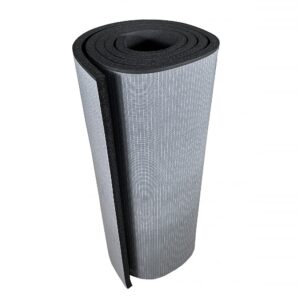
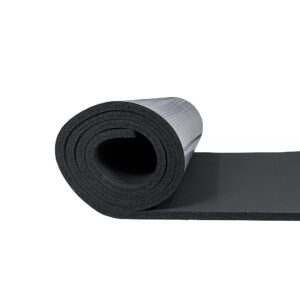
ABM Rubber Foam. Acoustic Insulation Self-adhesive, 32mm, 0.5m2
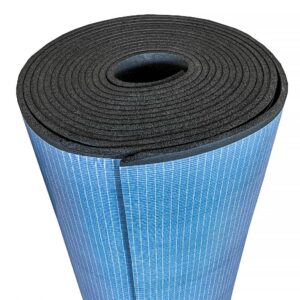
Applications of Insulation Materials
Rubber foams are widely used in soundproofing cars, campers, yachts, and boats, where they eliminate external and internal noise. In industry, they effectively insulate machines, generators, and compressors, improving working conditions by reducing sound emissions. Residential buildings, offices, and public utility facilities benefit from better room acoustics thanks to the insulation of walls, floors, and ceilings.
The materials also protect HVAC systems, cooling pipes, and technical cables from condensation of water vapor and the development of microorganisms. The flexibility of the foams allows installation on surfaces with complex shapes, while the self-adhesive layer speeds up the installation process without the need for additional adhesives.
Technical Support and Fast Implementation
ABM Insulation provides professional advice on selecting the optimal thickness and type of foam tailored to the specific project requirements. The team of specialists offers technical assistance at every stage of order fulfillment. The company guarantees product shipment within 24 hours of purchase throughout Poland and European Union countries.
The location enables efficient logistics and quick delivery of insulation materials to individual customers as well as businesses. Regular updates to the product range ensure access to the latest insulation technologies that meet current building and environmental standards.
We invite you to purchase rubber insulation foams at the ABM Insulation store. Contact our team for expert advice and assistance in selecting the optimal insulation solution for your project.
Durability of Insulation Solutions Based on Rubber Foams
The long-term effectiveness of insulation systems depends on maintaining technical parameters throughout the entire operational period of the building or installation. Rubber foams stand out for their exceptional stability in thermal, mechanical, and barrier properties regardless of environmental conditions. This durability results from the fundamental chemical and structural characteristics of the material that make it resistant to typical degradation mechanisms.
Observations of installations operated for 20-30 years confirm the retention of full functionality of rubber foams. Samples taken from facilities after decades of use show insulation and barrier parameters indistinguishable from those of new material. This remarkable stability translates into low life cycle costs for installations and eliminates the need for insulation replacement.
Maintaining Technical Parameters Throughout the Service Life
The key parameter of thermal insulation is the thermal conductivity lambda, which for rubber foams is 0.035-0.040 W/mK. The closed-cell structure ensures that this value remains constant for decades of use. Other materials, particularly those with open pores, may lose their insulating properties due to moisture or mechanical damage.
Stable parameters of the foams over time:
- Thermal conductivity unchanged even after 30 years
- Water vapor diffusion resistance μ above 3500 throughout the lifespan
- Stable apparent density without sedimentation phenomena
- Elasticity and ability to return to shape maintained
Accelerated aging tests simulating 50 years of use in extreme conditions show no degradation of the cellular structure. Electron microscopy of samples after testing shows unchanged cell geometry and wall thickness. The chemical stability of the polymer matrix prevents hydrolysis, oxidation, or thermal degradation processes that could affect the material properties.
The phenomenon of gradual gas release from cells, observed in some types of polyurethane foams, does not occur in rubber foams. The cells retain the filling gas content, ensuring the constancy of insulating properties. This feature is particularly important for installations where the expected service life exceeds 30 years.
Resistance to Cyclic Temperature Changes and Mechanical Loads
Construction and industrial installations are subject to cyclic temperature changes resulting from seasonal variations, day/night cycles, and variable process loads. Rubber foams maintain flexibility across the entire working temperature range from minus 40°C to plus 170°C. The ability to accommodate thermal movements without creating cracks or detachment from the substrate ensures continuity of the insulation layer throughout the life of the installation.
Cyclic tests in accordance with ISO 19277 involving alternating heating up to 150°C and cooling down to minus 30°C over hundreds of cycles do not cause cracks or loss of material adhesion. The elasticity of the foams allows for compensation of thermal stresses that would lead to damage in rigid materials. This property is critical in applications such as steam pipelines or cooling systems.
Resistance to mechanical loads translates into maintaining insulation integrity under operating conditions. Accidental impacts, machine vibrations, or structural settling do not lead to permanent material damage. The ability to return to its original shape after deformation ensures continuity of the thermal and moisture barrier even after mechanical loads.
Tip: When designing insulation systems with rubber foams, it is advisable to provide additional mechanical protection in areas particularly prone to damage. Although the material is resistant to deformation, protection against sharp objects or heavy traffic extends the aesthetics and functionality of the installation.
FAQ: Frequently Asked Questions
How long do rubber foams maintain protection against mold and corrosion?
Closed-cell rubber foams provide effective anti-corrosion and biological protection for over 30 years of intensive use. Studies of materials taken from installations used for two decades confirm the retention of full barrier parameters without signs of structural degradation. The chemical stability of EPDM elastomer and the airtightness of closed cells guarantee the invariability of insulation properties regardless of environmental conditions.
The long-term effectiveness results from the fundamental resistance of the material to moisture, aging, and biological factors. Unlike fibrous insulation, rubber foams do not lose thermal insulation or barrier parameters under the influence of ambient humidity. Practical applications in air conditioning systems and industrial pipelines document the trouble-free operation of the material for decades without the need for maintenance or replacement of insulation.
Does closed-cell structure require an additional vapor barrier layer?
Rubber foams have a diffusion resistance factor exceeding 3500, eliminating the need for separate vapor barrier films in most applications. The material independently serves as an effective moisture barrier, blocking water vapor transport through the insulation structure. Each closed cell acts as a local physical barrier, collectively creating a layer impermeable to water molecules. Laboratory tests confirm water vapor permeability below 1 perm at a thickness of just 50 mm, allowing compliance with the strictest building requirements.
What thickness of rubber foam should be used to effectively prevent condensation?
The selection of appropriate insulation thickness depends on the temperature difference between the insulated medium and the environment as well as the relative humidity of the air. For typical applications in air conditioning systems, a pipe at a temperature of 5 degrees Celsius requires insulation with a minimum thickness of 13 millimeters in a room at 25 degrees and 80 percent humidity. Engineering calculations consider the dew point shift beyond the outer surface of the insulation, eliminating condensation risk. In extreme conditions, particularly with very low medium temperatures or high ambient humidity, insulation thickness may need to be increased to 19 or 25 millimeters.
Professional design of insulation systems takes into account all operational parameters, ensuring full protection throughout the year. Insufficient thickness leads to condensation on the surface of the insulation, while excessive thickness generates unnecessary costs without increasing protective effectiveness.
Can rubber foams be used in direct contact with metal?
The direct contact of rubber foams with metal surfaces is not only permissible but constitutes an optimal method of corrosion protection for installations. The material does not contain chemical components that cause corrosion, such as chloride ions or acid compounds present in some foam insulations. The pH level of rubber foams remains neutral throughout their service life, confirming safety for metals. The closed-cell structure eliminates the access of oxygen and electrolytes to the metal surface, effectively interrupting the electrochemical reactions responsible for corrosion.
Studies compliant with international standards show no signs of rust on steel samples insulated with foam after thousands of hours of testing under extreme humidity conditions. This method outperforms traditional paint coatings, which can suffer mechanical damage and lose protection locally. Rubber foam insulation provides a continuous protective layer without the risk of localized corrosion.
At what temperatures do rubber foams retain their anti-corrosive properties?
The operating temperature range for rubber foams spans from minus 40 to plus 170 degrees Celsius without loss of structural integrity or barrier properties. The thermal stability of the EPDM elastomer guarantees the invariability of insulation parameters regardless of operating conditions. Cyclical temperature changes, typical for industrial installations, do not cause degradation of closed cells or deterioration of material tightness. Accelerated aging tests simulating decades of operation in extreme conditions confirm the maintenance of full anti-corrosion protection throughout the designed service life.
Does damage to the surface of rubber foam eliminate moisture protection?
Localized damage to the outer layer of foam does not lead to a loss of barrier properties for the entire insulation system. The closed-cell structure means that water can only penetrate directly damaged cells, while the remaining part retains full tightness. This property fundamentally distinguishes rubber foams from fibrous materials, where breaking the outer coating leads to saturation throughout the entire thickness of insulation. Each cell functions as an independent barrier, not transferring water to adjacent areas.
Practical tests show that even cutting foam to a depth of several millimeters does not affect the effectiveness of moisture protection in deeper layers of material. However, it is recommended to repair mechanical damage by applying contact adhesive or a patch made from the same material, ensuring aesthetic continuity and maximum durability of the installation. Properly secured foam retains full functionality for decades of use.
Summary
The closed-cell structure of rubber foams forms the foundation for effective and long-lasting protection against mold and corrosion. The mechanism of action of this material is based on the elimination of key factors necessary for the development of microorganisms and corrosive processes: access to moisture, contact with oxygen, and the presence of electrolytes. Each of the millions of closed cells creates an independent barrier that collectively effectively blocks the penetration of water and water vapor into the protected surfaces.
The practical applications of rubber foams in HVAC systems, industrial piping, and building insulation confirm the effectiveness of this technology through decades of operation. Materials such as insulating rubber foam from ABM Insulation combine thermal insulation functions with biological and anti-corrosion protection in one product. The chemical stability of EPDM elastomer and the closed-cell structure ensure that all properties are maintained for over 30 years of use without the need for maintenance or replacement.
The decision to use rubber foams in new investments and when modernizing existing installations translates into measurable reductions in maintenance costs and the elimination of moisture-related problems. The versatility of the material allows it to be used in a wide range of applications, from delicate air conditioning installations in residential construction to demanding industrial environments, as well as extreme conditions in outdoor or marine installations. Choosing the appropriate thickness and density of foam, tailored to specific operating conditions, guarantees optimal protection throughout the life of the investment.
Sources:
- https://www.sciencedirect.com/science/article/abs/pii/S1385894722006234
- https://en.wikipedia.org/wiki/Closed-cell_foam
- https://pl.wikipedia.org/wiki/Pianka_(materia%C5%82)
- https://www.astm.org/g0021-15.html
- https://www.iso.org/standard/19277
