
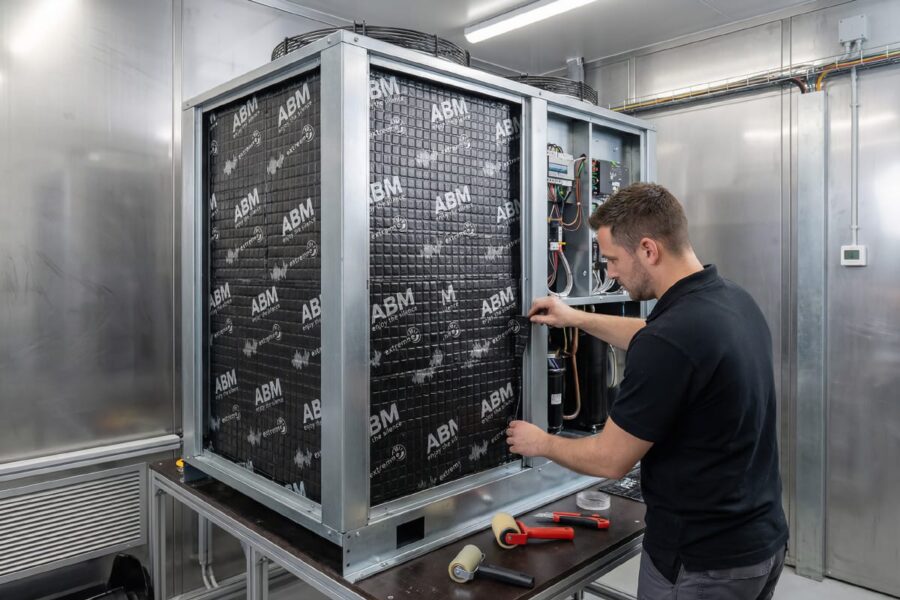
Heat pumps are devices that are increasingly common in homes. They offer savings on heating, but their operation is associated with noise and vibration emissions. For many property owners, the device’s excessively loud operation becomes a real problem that affects daily living comfort.
The solution that effectively limits this issue is butyl soundproofing mats. Properly selected and correctly installed, they can significantly reduce bothersome noise. This material is effective for both outdoor installations and in technical rooms where the indoor unit operates.
However, before proceeding with installation, it is worth understanding where the heat pump’s noise originates and what acoustic mechanisms govern its propagation. This knowledge allows for precise action and avoidance of common mistakes that reduce insulation effectiveness.
Why Heat Pumps Generate Noise and Vibrations
Every heat pump is a mechanical device that inherently produces sound. There are several sources of noise, and each requires a slightly different approach to soundproofing. Understanding this complexity is the foundation of effective acoustic insulation.
Main Sources of Sound in Heat Pumps
The primary source of noise in air-to-water heat pumps is the external fan. It generates broadband noise that is clearly audible during the device’s operation. The second important component is the compressor, which operates cyclically and produces a characteristic low-frequency hum.
In addition to these two components, noise also comes from:
- the circulating liquid pump, which generates a steady hydraulic hum
- pipelines, where liquid flow causes wall vibrations
- the metal casing, which resonates under the influence of compressor vibrations
- the device’s base, which transfers vibrations to the ground
Each of these sources has a different character. The fan produces airborne noise that propagates around the unit. The compressor and pipelines primarily generate structure-borne noise, transmitted through materials to building elements. It is the latter that penetrates most strongly into the interior of the house and is more difficult to control.
How Vibrations Transfer to the Building Structure
Compressor vibrations are a physical phenomenon that does not stop at the device’s casing. Through the mounting base, fastening screws, and pipework, vibrations travel further, directly into the building’s walls and floors.
Concrete, brick, and metal are excellent conductors of low-frequency vibrations. This phenomenon causes noise to be audible inside the building even with closed windows. Residents describe it as a dull hum or vibrating walls, especially at night. Solving this problem requires interrupting the path of vibration transmission, i.e., using flexible damping materials.
Noise Standards and Permissible Levels for Heat Pumps
Polish regulations precisely define the maximum noise level that a heat pump can emit. For single-family housing, the permissible level is 50 dB(A) during the day and 40 dB(A) at night (from 10:00 PM to 6:00 AM). Measurements are taken at the neighbor’s property line, not at the device itself.
For multi-family housing areas and mixed residential-commercial zones, the limits are slightly higher: 55 dB(A) during the day and 45 dB(A) at night. For spa areas and hospital grounds, the standards are stricter, at 40 dB(A) during the day and 35 dB(A) at night, respectively.
It is worth noting that the standard acoustic power level of an air source heat pump is in the range of 57–60 dB(A), with the quietest devices reaching levels below 50 dB(A). Adhering to the standards is not just a matter of regulations, but primarily about maintaining good neighborly relations and personal comfort. Exceeding permissible values by even 1–2 dB is easily detectable during professional measurements.
What is Butyl Mat and How Acoustic Soundproofing Works
Soundproofing butyl mat is a material based on synthetic butyl rubber. It is distinguished by its high density, significant self-weight, and vibration damping capabilities. Its mechanism of action involves converting vibration energy into heat before it can transfer to other structural components.
Construction and Damping Properties of Butyl Mats
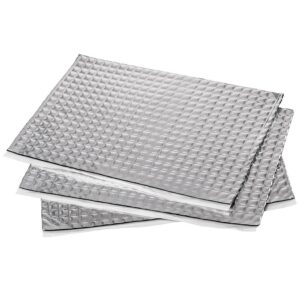
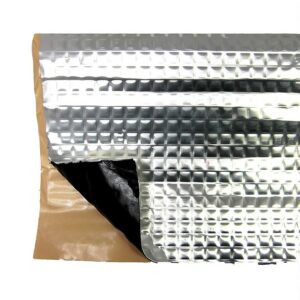
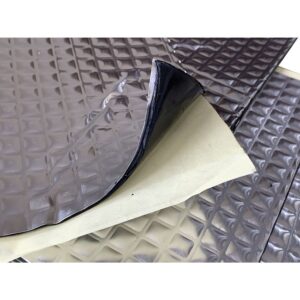
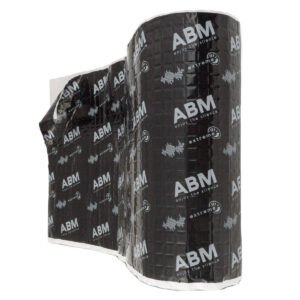
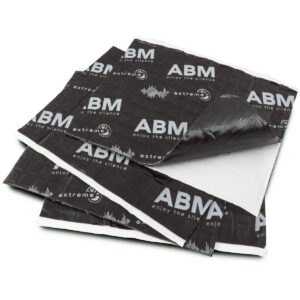
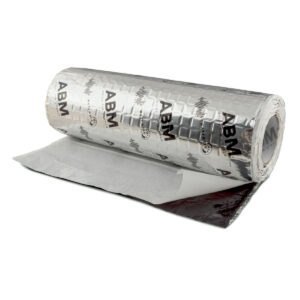
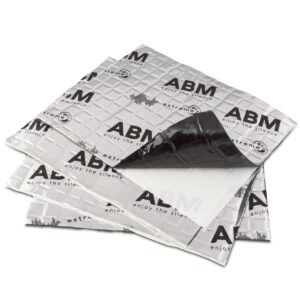
A typical acoustic butyl mat consists of two layers. The first is the actual high-density butyl layer, which absorbs vibrations. The second is an aluminum foil layer, which stiffens the mat’s structure and facilitates its adhesion to metal surfaces. The underside of the mats features a layer of contact adhesive with a protective film.
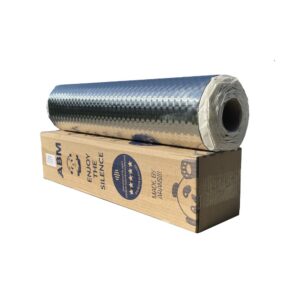
Products from ABM Insulation, such as ABM Professional butyl mat and ABM Xtreme butyl mat, are available in thicknesses from 1.3 mm to 4 mm and in sheets or rolls of various sizes. The material operates effectively within a temperature range of -40°C to 170°C, making it suitable for both outdoor applications and technical rooms.
The high density of butyl ensures that even a thin layer of the material effectively absorbs the mechanical energy of vibrations. The mat does not contain asphalt, which eliminates the risk of cracking at low temperatures. These properties are maintained for years without the need for maintenance.
Differences Between Butyl Mats and Other Soundproofing Materials
Several types of acoustic materials are available on the market. Each serves a slightly different purpose and has different performance characteristics. The table below shows the key differences:
| Material | Mechanism of Action | Moisture Resistance | Outdoor Use |
|---|---|---|---|
| Butyl Mat | Vibration Damping by Mass | High | Yes |
| Sound Absorbing Acoustic Foam | Airborne Sound Absorption | Low | No |
| Insulating Rubber Foam | Thermal and Acoustic Insulation | High | Yes (when protected) |
| Bitumen Mat | Vibration Damping by Mass | Medium | No (crumbles in frost) |
Bitumen mats, often mistaken for butyl mats, are cheaper but become brittle and crack at low temperatures. Sound-absorbing acoustic foams are mainly effective for silencing airborne noise but do not handle structural vibrations. Sound-deadening butyl mat combines mechanical resistance, flexibility, and high vibration damping effectiveness.
Selecting Butyl Mat Thickness for Noise Type
The thickness of the mat is chosen based on the nature of the acoustic problem. Thin mats, 1.3–2 mm thick, are effective for damping high frequencies and light casing rattle. Thicker variants, 3–4 mm, are used for damping strong compressor vibrations and low frequencies.
In practice, when soundproofing a heat pump, the best results are achieved by combining a sound-dampening butyl mat with rubber foam. The butyl mat dampens vibrations and increases the mass of the casing panels, while the rubber foam absorbs residual airborne noise and acts as an external insulating layer. This combination is successfully used for soundproofing industrial units and machinery.
Acoustic Butyl Mat and External Weather Conditions
Air-to-water heat pumps are located outdoors year-round. The material used for their soundproofing must withstand heat, frost, rain, and UV radiation. Acoustic butyl mat handles these challenges well due to its resistance to moisture, low temperatures, and mold resistance.
ABM Professional and ABM Xtreme mats are free from toxic components, resistant to fluids, and maintain their properties across the full range of external temperatures in Poland. The aluminum foil on top of the mat protects the butyl layer from direct sunlight. Thanks to these features, the material does not degrade over years of use.
How to Properly Install Butyl Mats on a Heat Pump
Installing sound-deadening butyl mats on a heat pump does not require specialized tools or advanced technical knowledge. However, it demands care and adherence to a few basic principles. Proper surface preparation and application technique determine the durability and effectiveness of the entire soundproofing process.
Surface Preparation Before Applying Sound-Deadening Butyl Mat
Before applying the sound-deadening butyl mat, the surface must be perfectly clean, dry, and degreased. Any contaminants, rust, dust, and greasy residues weaken the adhesive’s grip. Isopropyl alcohol or a dedicated metal surface cleaner should be used for degreasing.
The mat should be stored at room temperature for at least 12 hours before installation. A mat that is too cold is stiff and difficult to shape, and its adhesive loses tack. In outdoor conditions, when the temperature drops below 10°C, it is best to postpone installation to a warmer day or heat the mat before application.
Mat Mounting Techniques and Coverage of Key Device Components
Proper installation of the sound-dampening butyl mat on a heat pump is a multi-step process. The order of work is important for the final result.
Butyl Mat Installation Steps:
- Measure and cut the mat pieces with a sharp knife or utility knife with a new cutting edge.
- Partially peel off the protective film from the adhesive layer without touching it with your fingers.
- Apply the mat to the surface and gradually peel off the rest of the film, pressing the material down.
- Firmly press the mat with a rubber roller or a hard spatula, eliminating air bubbles.
- Overlap adjacent mat sheets by at least 1–2 cm.
On a heat pump, the metal casing panels that resonate due to compressor vibrations should be covered first. The next step is to dampen the base and frame, through which vibrations are transferred to the ground. If possible, it is also worth insulating the compressor housing from the inside. Covering at least 75–80% of each panel’s surface provides a noticeable acoustic improvement.
Most Common Installation Errors and How to Avoid Them
The most common mistake is applying the mat to a dirty or greasy surface. This causes the mat to peel off after a few weeks, especially during summer heat when the metal heats up. Simply take a moment to thoroughly degrease the surface to avoid this problem.
The second common mistake is using too small pieces of mat and neglecting corners, edges, and hard-to-reach areas. These are precisely the elements that resonate most strongly, so it is worth shaping the mat precisely into recesses and corners rather than stretching it. The third mistake is skipping the rolling process, which is essential for the adhesive to adhere evenly to the entire metal surface.
Tip: After installing the mats, wait at least 24 hours before operating the device at full power. The adhesive needs time to fully bond with the surface, ensuring durable insulation for many seasons.
Products for Effective Heat Pump Soundproofing at the ABM Insulation Store
Effective acoustic insulation for heat pumps requires proven, high-quality materials. ABM Insulation is a manufacturer and supplier of soundproofing materials that has been operating in the market since 2010. The company specializes in the acoustic insulation of devices, machinery, and buildings, and its products reach customers throughout the European Union and beyond.
Every product from ABM Insulation’s offer has the appropriate certificates and meets high safety standards. Orders are processed within 24 hours of purchase, and delivery within the European Union is efficient and without unnecessary delays.
Butyl Mats and Foams for Heat Pump Soundproofing
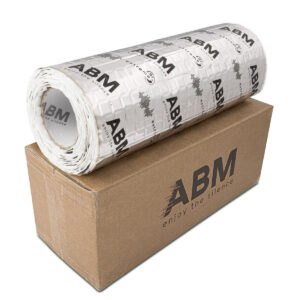
ABM Insulation’s range includes two series of butyl mats, differing in properties and intended use.
Butyl Mats in the ABM Insulation Offer:
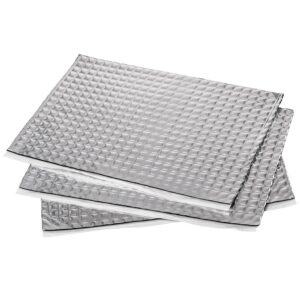
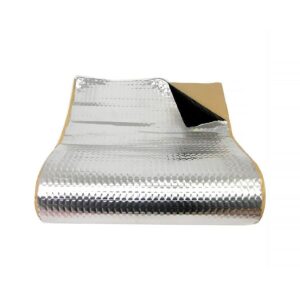
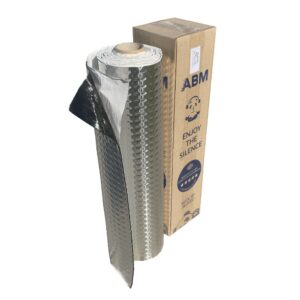
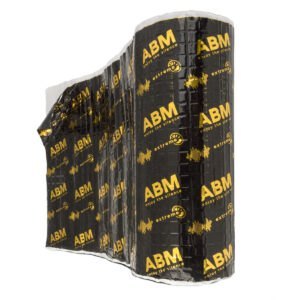
- ABM Professional Butyl Mats: a series designed for soundproofing metal enclosures and damping resonances, available in thicknesses from 1.8 mm to 3 mm, with a self-adhesive layer and aluminum foil
- ABM Xtreme Butyl Mats: a series for extreme acoustic applications, with increased density and mass, providing the highest level of low-frequency vibration damping, resistant to temperatures from minus 40°C to over 170°C
Both series are made from synthetic butyl rubber, free from asphalt and toxic components. The material does not crumble in the cold, does not absorb moisture, and maintains full flexibility year-round, making it ideal for outdoor applications with heat pumps.



Rubber and Acoustic Foams as Insulation Complement
The butyl mat itself is the first layer of the soundproofing system. The next element of effective insulation is rubber foams and sound-absorbing acoustic foams.
Foams for Heat Pump Acoustic Insulation:
- Insulating Rubber Foams: a material with a closed-cell structure, resistant to moisture and chemicals, available in thicknesses from 3 mm to 19 mm, with a self-adhesive layer or aluminum foil, serves as both thermal and acoustic insulation
- Sound-Absorbing Acoustic Foams and Panels: designed to absorb airborne fan noise, they reduce residual sound within technical enclosures and installation rooms


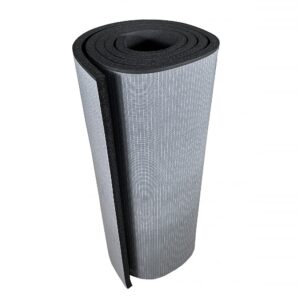
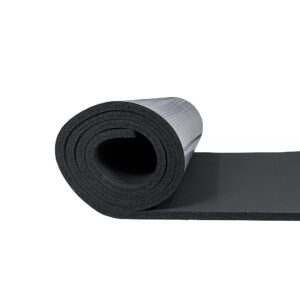
ABM Rubber Foam. Acoustic Insulation Self-adhesive, 32mm, 0.5m2
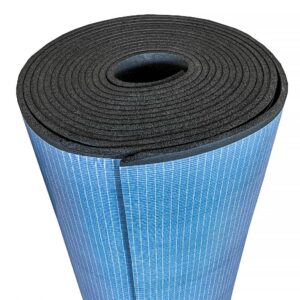
ABM Insulation rubber foams are self-extinguishing, do not emit toxic gases, and do not mold. Thicker variants from 10 to 19 mm are particularly effective as insulation for pipes and equipment bases. The combination of butyl mat with rubber foam creates a two-layer system that reduces both structural vibrations and airborne noise.
ABM Rubber Foam. Acoustic Insulation Self-adhesive, 32mm, 0.5m2
ABM Insulation customers regularly emphasize the high quality of the products, fast order fulfillment, and expert support in material selection. Professional technical advice allows for the selection of the right product for a specific acoustic problem, without the need for customers to find solutions themselves.
Comprehensive selection of materials for heat pump soundproofing is available directly through the ABM Insulation online store. A team of specialists is available to assist with choosing the appropriate series and thickness of mats, as well as planning the entire acoustic insulation system. Orders placed today will reach the customer quickly, regardless of the delivery location within the European Union.
Soundproofing Effects and Practical Tips for Users
Effective heat pump soundproofing translates into real and measurable benefits. Reduced noise means not only personal comfort but also good neighborly relations and compliance with environmental regulations. It is worth knowing what effects to expect and how to enhance the performance of butyl mats.
Measurable Noise Reduction Effects After Applying Butyl Mats
Applying butyl mats to the metal panels of the heat pump casing can reduce structural noise by 3–9 dB(A). This may sound modest, but in practice, every 3 dB means a subjective perception of sound that is twice as quiet. The best results are achieved when dampening low-frequency humming and vibrations generated by the compressor.
Butyl mats only indirectly reduce fan noise, which is airborne, by dampening casing resonances. Its complete reduction requires additional solutions, such as acoustic screens or sound-absorbing enclosures. However, the mats are effective as a first step, bringing the device into compliance with standards in many practical cases.
Combining Butyl Mats with Other Acoustic Insulation Methods
The best results are achieved by combining several soundproofing methods. The acoustic butyl mat serves as the first layer, applied directly to the metal. Rubber foam is then adhered to it, which absorbs residual vibrations and provides thermal insulation. Acoustic foam, which absorbs sound, is sometimes used as the outer layer.
In addition to soundproofing the device itself, insulating its base is important. Certified vibration-damping feet or concrete bases, isolated from the building walls, interrupt the transmission of vibrations to the structure. Flexible connectors on the piping prevent vibration transmission through the hydraulic system.
Below is a summary of soundproofing methods based on their effectiveness in various situations:
Heat Pump Soundproofing Methods:
- soundproofing butyl mats on the casing: reduction of metal resonance and structural vibrations
- rubber foam as a second layer: absorption of residual noise, thermal insulation
- vibration-damping feet under the device: interruption of vibration transmission to the floor and building
- flexible connectors on pipes: elimination of vibration transmission through the system
- acoustic screens around the device: reduction of airborne fan noise
Each of these methods works best in conjunction with the others. A comprehensive approach to heat pump acoustic insulation is more effective than using a single method. Even the first two layers, butyl mat and rubber foam, create a system with significantly better performance than either material alone.
Tip: Before purchasing mats, perform a simple test: tap the metal casing panels with your hand while the unit is running. Panels that vibrate noticeably and resonate to the touch are the first places that require mat application.
FAQ: Frequently Asked Questions
Do butyl mats effectively silence heat pumps?
Butyl mats effectively reduce the structural noise of a heat pump, which is vibrations transmitted through the metal casing and the unit’s structure. A properly installed mat reduces the noise level by 3 to 9 dB(A), which is subjectively perceived as noticeable quietness.
The best results are achieved when silencing low frequencies generated by the compressor. The mat absorbs vibration energy and converts it into heat before it can reach the building’s walls. For airborne noise from the fan, it is necessary to supplement the insulation with acoustic screens or sound-dampening enclosures.
What thickness of butyl mat should I choose for a heat pump?
The choice of thickness depends on the nature of the noise that needs to be addressed. For silencing light resonances of the metal casing, a mat with a thickness of 1.3 to 2 mm is sufficient. Strong compressor vibrations and low-frequency humming require a thicker material, from 3 to 4 mm.
When choosing the thickness, it is also worth considering the weight of the mat. The heavier the material per unit area, the stronger the damping. A 2.5 mm thick mat is a universal choice for most domestic air-to-water heat pumps.
Is butyl mat suitable for year-round outdoor use?
Acoustic butyl mat is excellent for year-round outdoor conditions. The material retains its properties in temperatures ranging from minus 40°C to over 170°C, meaning full efficiency in both freezing winters and hot summer days.
Butyl does not absorb moisture, does not mold, and does not crumble like bituminous materials. The aluminum foil on the mat’s surface protects it from solar radiation. The combination of these features means the mats do not need to be replaced seasonally or protected with additional coatings.
How should I properly prepare the surface before applying butyl mat?
Surface preparation is the most crucial stage of the entire installation. The heat pump’s metal casing must be clean, dry, and degreased. For degreasing, it is best to use isopropanol or a specialized metal surface cleaner.
Before application, the mat should be kept at room temperature for at least 12 hours. Material that is too cold becomes stiff, and the adhesive layer loses its tack. Installation at temperatures below 10°C is possible, but the adhesive’s effectiveness is significantly lower. It is best to perform the work at temperatures above 15°C.
Which parts of the heat pump should be silenced with butyl mat first?
The metal casing panels are the first areas requiring attention. They resonate due to compressor vibrations and emit a characteristic hum. A simple test, tapping the panel with your hand while the unit is running, quickly indicates which sections vibrate the most.
The next area is the frame and base of the device, through which vibrations are transferred to the ground and the building structure. Covering at least 75 to 80 percent of the surface of each panel yields a significantly better effect than applying the mat only at selected points. Consistent coverage eliminates resonance of the entire surface.
Can butyl mats be combined with other soundproofing materials?
Combining butyl mats with other acoustic materials is not only possible but actually recommended. The butyl mat serves as a base layer, applied directly to the metal. Rubber foam can be applied on top of it, which absorbs residual noise and provides thermal insulation simultaneously.
Sound-absorbing acoustic foam perfectly complements the setup from the inside of the casing, reducing airborne noise from the fan. Each layer serves a different function, which is why a system of multiple materials yields a much better result than the mat alone. Vibration-isolating feet under the device and flexible couplings on the pipes create a complete solution, eliminating vibration transfer to the building.
Summary
Soundproofing a heat pump using butyl mats is an effective and accessible method that improves acoustic comfort without the need to replace the device. The key to success lies in proper surface preparation, selecting the appropriate mat thickness for the type of noise, and careful installation using a roller. Materials such as ABM Professional and ABM Xtreme from ABM Insulation offer high quality, resistance to external conditions, and simple application without heating.
Remember that soundproofing butyl mat is one element of comprehensive acoustic insulation. Combining it with rubber foam, vibration-isolating feet, and flexible pipe couplings provides the best and most durable effect. Adhering to acoustic standards is not only a legal obligation but, above all, an investment in the quality of life for the entire neighborhood.
Sources:
- https://pl.wikipedia.org/wiki/Pompa_ciep%C5%82a
- https://en.wikipedia.org/wiki/Heat_pump
- https://www.teraz-srodowisko.pl/media/pdf/aktualnosci/1406-Wytyczne-ograniczanie-halasu-instalacji-pompy-ciepla.pdf
- https://onlinelibrary.wiley.com/doi/10.1155/2020/1237034
