
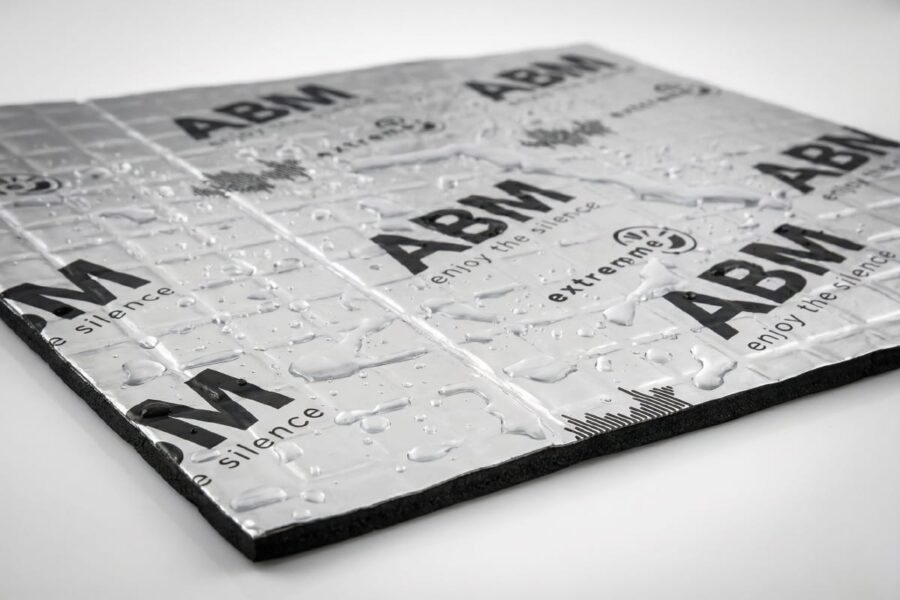
Moisture is one of the most dangerous enemies of any car. It penetrates under the sheet metal, promotes corrosion, and destroys body components from the inside. Butyl mats provide an effective barrier against this threat, and their exceptional moisture resistance stems directly from the properties of the material from which they are made. Understanding this relationship allows you to consciously choose the best insulation for your car.
Butyl mass is a material that has been proving its effectiveness in the automotive, industrial, and construction sectors for decades. Its ability to block water is not the result of any chemical coating applied from the outside, but rather stems from the structure of the polymer itself. This is precisely why butyl mats retain their properties for years, regardless of the weather conditions and temperatures inside the vehicle.
Why butyl rubber is naturally waterproof
Butyl rubber, designated in chemistry as IIR (isobutylene-isoprene), is a synthetic elastomer with exceptional sealing properties. Its chemical nature means that water molecules simply have no way to penetrate the material’s structure. It is this fundamental characteristic that makes it indispensable for insulating vehicle interiors.
Chemical structure of butyl rubber and water resistance
Butyl rubber is created through the copolymerization of isobutylene with a small amount of isoprene, typically between 1 and 3 percent. Isobutylene gives the material a dense, regular structure of polymer chains that adhere tightly to one another. The result is a molecular network with a minimal number of free spaces.
This compact structure is the key to water resistance. Tightly packed polyisobutylene chains form a kind of molecular dam through which water molecules cannot pass. This is why butyl rubber is characterized by the lowest permeability to gases and liquids among all commonly used elastomers.
How non-polar molecular bonds block moisture penetration
Water molecules are polar, meaning they have an uneven distribution of electrical charge. They attract each other and penetrate only through materials with a similar polar character. Butyl rubber is built from hydrocarbon chains with a non-polar character, which creates a natural incompatibility with water.
This mechanism works on the principle of repulsion. The non-polar carbon-hydrogen bonds in the polyisobutylene structure do not form any interactions with water molecules. Water remains on the surface of the mat without penetrating deep into it. This same phenomenon is responsible for the resistance of butyl rubber to acids, bases, and salt solutions, which often appear on car floors in winter.
Properties of non-polar polyisobutylene chains:
- absence of hydrophilic groups in the molecular structure that could bind water
- high electron density at C-H bonds prevents polar interaction with water
- regular arrangement of chains blocks the diffusion of water molecules into the material
- resistance to ozone and oxidation maintains these properties for a long time
The non-polar properties of butyl rubber translate into practical durability. The mat does not lose its ability to repel moisture even after years of use, because the polymer structure itself remains chemically stable. This distinguishes butyl rubber from many other insulation materials.
Density and viscosity of the butyl compound as a barrier against water
In addition to its chemical nature, the physical density of the butyl compound is of great importance. The high density of the material means that there are very few empty spaces per unit volume through which moisture could migrate. The dense structure mechanically blocks water penetration.
The butyl compound is also characterized by high viscosity at operating temperatures. Thanks to this, it tightly fills all irregularities and micropores on the surface of the car body sheet metal. The combination of density, viscosity, and non-polar chemical character creates a triple barrier against moisture. None of these elements alone would be as effective as their combined action.
Multilayer structure of the butyl mat and its role in insulation
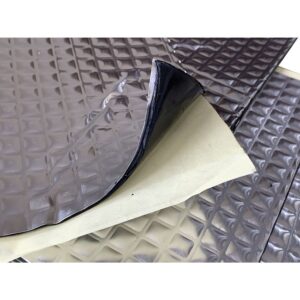
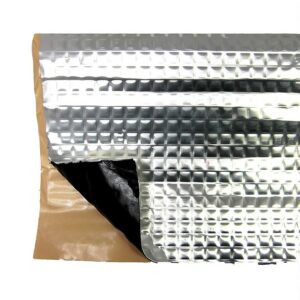
A modern butyl mat is not a uniform sheet of rubber. It is a precisely designed system of several layers, each of which performs a distinct function. Together, they form a protective system that insulates the car interior from moisture, as well as from temperature and noise.
Layers of a typical butyl mat:
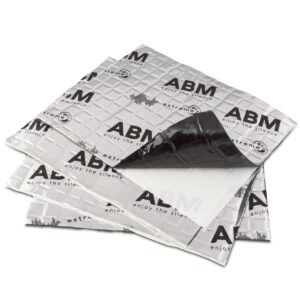
- A layer of butyl compound, constituting the main acoustic and moisture barrier
- Aluminum foil, sealing and protecting against corrosion
- Self-adhesive coating, ensuring a permanent connection to the body sheet metal
Each of these layers plays an essential role. The butyl compound itself, without the aluminum foil, would be exposed to high temperatures from the engine compartment. Conversely, the foil without the butyl compound would not have the ability to dampen vibrations. The synergistic action of the layers creates a product with properties exceeding the sum of its components.
The butyl compound layer as the first line of defense against moisture
The butyl compound forms the core of every mat. Its thickness is usually between 1.3 and 4 mm, and the effectiveness of the insulation depends directly on this value. The thicker the layer of the compound, the better the mechanical and chemical barrier against moisture.
The butyl rubber in this layer acts like a sponge in reverse. Instead of absorbing water, it repels it. The material does not absorb moisture, does not swell, and does not change its properties after contact with water. In practice, this means that the mat maintains constant dimensions and full tightness throughout its entire service life.
Aluminum foil as a seal and anti-corrosion shield
Placed on the layer of butyl compound is an aluminum foil, typically 0.1 mm thick. Aluminum is a metal that naturally forms a thin oxide layer on its surface, protecting it from corrosion. In a butyl mat, this foil performs several functions at once.
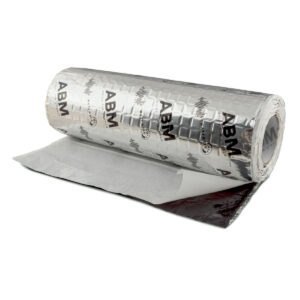
First and foremost, the aluminum foil seals the mat from the outside, preventing mechanical damage to the butyl compound. It reflects heat from hot body components, which protects the butyl compound from deformation. At the same time, it acts as an additional barrier against moisture, because aluminum is impermeable to water. The ABM Insulation mat uses exactly this solution, where 0.1 mm aluminum foil provides full protection for the butyl layer.
The aluminum foil also protects the body sheet metal itself. It cuts off access of oxygen and moisture to metal surfaces, which inhibits corrosion processes. The connection of the mat to the sheet metal creates a moisture-free environment in which corrosion cannot develop.
Self-adhesive coating and the tightness of the connection with the body sheet metal
On the underside of the butyl mat, there is a layer of adhesive that ensures a tight connection with the sheet metal surface. The quality of this connection is crucial for protection against moisture. Any gap or air bubble between the mat and the sheet metal is a potential place for condensate to accumulate.
The adhesive mass in butyl mats is characterized by high adhesion to metal. It adheres firmly to the surface without the need for heating, which distinguishes them from bituminous mats. The adhesion of the self-adhesive coating is sufficient so that the mat does not peel off even under the influence of vibrations, temperature changes, or mechanical stresses.
How the thickness of the butyl mat affects the effectiveness of the insulation
The thickness of the butyl mat has a direct impact on the effectiveness of protection against moisture and noise. Thinner mats with a thickness of 1.3 to 2 mm work well on doors and the trunk lid. Thicker mats, reaching 3 to 4 mm, are used on floors and in wheel arches, where exposure to moisture and vibrations is the greatest.
Greater thickness also means a greater mass of material per unit area. More butyl mass means more polymer molecules blocking the path of moisture. ABM Insulation mats are available in thicknesses from 1.3 to 4 mm, which allows for matching the parameters to the specific installation location in the vehicle.
A thicker mat handles internal condensation better. In vehicles, especially in winter, the temperature difference between the cabin and the outer sheet metal causes water vapor to condense. A thick layer of butyl mass effectively thermally insulates the sheet metal, reducing this difference and thereby limiting condensation.
How the butyl mat protects the car interior from moisture and corrosion
Butyl rubber exhibits resistance not only to water but also to a wide range of chemical substances. In a car, the mat comes into contact with road salt, cleaning agents, oils, and acids. Long-term protection against moisture requires a material that will survive contact with these substances without degradation.
Tight bonding of the butyl mat eliminates water getting under the sheet metal
One of the most serious problems in automotive insulation is water getting under the sheet metal. This phenomenon consists of moisture penetrating between the mat and the metal surface through leaky edges or weak points in the adhesive. In butyl mats, this problem is effectively limited by the properties of the adhesive mass.
Butyl compound is malleable and self-adhesive. When pressed against sheet metal, the material fills surface micro-irregularities and creates a tight sealing boundary. There is no space where water could collect or migrate along the surface of the metal. It is this property, known as adhesion to the substrate, that determines long-term protection against corrosion.
Proper installation of the mat requires careful surface preparation. The metal should be clean, degreased, and dry. Only then is the mat applied to the prepared surface, pressing it down with a roller to remove air bubbles. Every bubble is a potential source of moisture and future corrosion.
Resistance of the butyl mat to mold, fungi, and chemical substances
Moisture trapped in a car creates ideal conditions for the growth of mold and fungi. Bituminous mats and some organic foams can provide a breeding ground for microorganisms. Butyl rubber is chemically inert, which means it does not provide a substrate for mold or fungi.
Resistance of butyl rubber to chemical substances:
- inorganic acids and alkaline solutions, common in car wash products
- salt solutions, including road salt used in winter
- vegetable fats and technical lubricants
- ozone and ultraviolet radiation, which cause rubber aging
The chemical resistance of butyl rubber results directly from its non-polar structure. Polar substances, such as water and salts, do not react with the non-polar polymer. The exception is aliphatic and aromatic hydrocarbons, i.e., gasoline and mineral oils, which can cause the rubber to swell. In practice, the bodywork sheet metal effectively separates the mat from these substances.
Durability of insulation in a wide temperature range from freezing to heat
A car is exposed to extreme temperature differences throughout the year. In winter, the temperature under the door sills can drop to minus 30 degrees Celsius, and in summer, the roof metal heats up to over 80 degrees Celsius. The insulation material must maintain its properties in both of these extremes.
Butyl rubber works efficiently in the range from minus 40 to plus 140 degrees Celsius. At low temperatures, it does not become brittle or lose its elasticity, which distinguishes it from bituminous materials. At high temperatures, it does not lose adhesion or water resistance. ABM Insulation mats maintain full performance parameters precisely within this wide thermal range.
The thermal stability of butyl rubber is the result of the stability of its chemical bonds. The carbon-carbon and carbon-hydrogen bonds in the polyisobutylene structure are resistant to thermal degradation under normal operating conditions. Therefore, the mat does not lose its water resistance under the influence of freeze-thaw cycles, which are particularly destructive to bituminous mats.
Tip: Before installing the butyl mat, it is worth heating the metal surface to room temperature, especially on cold days. Warm metal ensures better adhesive adhesion and a tighter fit of the butyl compound, which directly translates into the durability of moisture protection.
Effective acoustic insulation and moisture protection at the ABM Insulation store
ABM Insulation is a manufacturer and supplier of soundproofing materials for vehicles, machinery, and buildings, operating on the market since 2010. The company specializes in butyl and rubber materials that combine acoustic insulation with moisture protection. Orders are processed within 24 hours, and delivery covers the entire European Union.
The store’s assortment includes products intended for both automotive and industrial and construction applications. Each material has the appropriate certificates and is covered by a 5-year manufacturer’s warranty. Numerous positive customer reviews confirm the effectiveness of the products and the high quality of service.
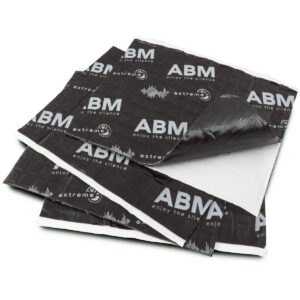
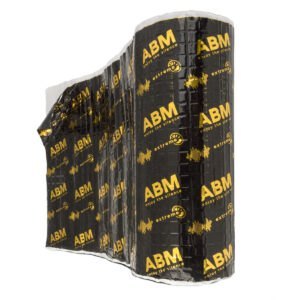
Butyl mats for soundproofing and body protection
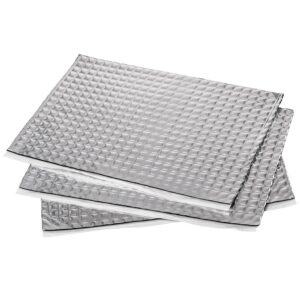
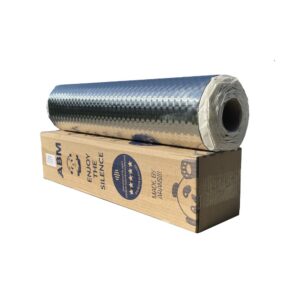
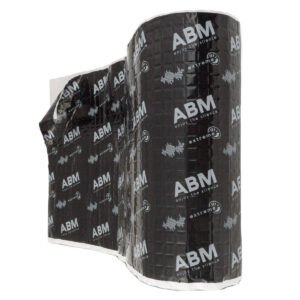
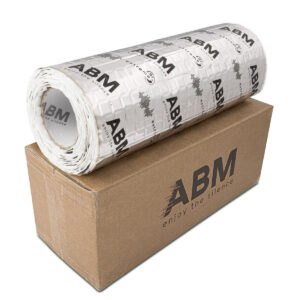
The ABM Insulation store offers two lines of butyl mats, tailored to different installation needs. ABM Professional butyl mats are available in sheets and rolls, in thicknesses from 1.3 to 4 mm. The self-adhesive layer ensures a permanent bond with the metal without the need for heating. The products effectively reduce vibrations, dampen noise, and create a barrier against moisture on sills, floors, and wheel arches.
Applications of ABM Professional butyl mats:
- soundproofing of floors, doors, and roofs in passenger cars and delivery vans
- insulation of wheel arches and sills exposed to moisture and road salt
- soundproofing of industrial machinery, compressors, and ventilation equipment
- insulation of ventilation ducts and sewage pipes in construction
For demanding acoustic applications, the ABM Xtreme butyl mats line is available, designed for extreme working conditions. Materials in this series provide the highest level of sound dampening while maintaining full resistance to moisture and temperature changes.



Insulation foams complementing the soundproofing system
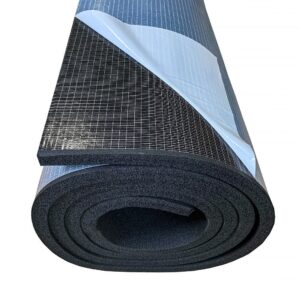
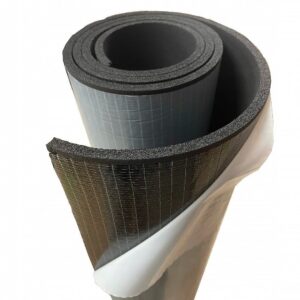
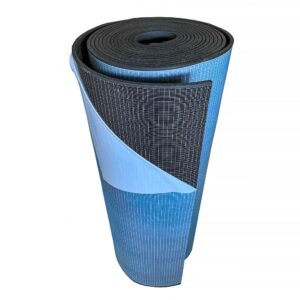
A complete acoustic insulation system requires not only butyl mats but also sound-absorbing materials. Insulation rubber foams from ABM Insulation are characterized by a closed-cell structure that effectively blocks the penetration of heat and moisture. They are used as a second layer of insulation, installed directly on the butyl mat.
Acoustic absorption foams and panels are the final element of a soundproofing system. They absorb sound waves inside the cabin, reducing reflections and reverberation. Combining a butyl mat with rubber foam and an acoustic panel creates a complete barrier against noise, vibrations, and moisture.
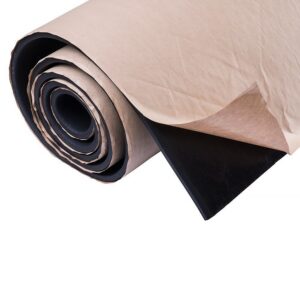
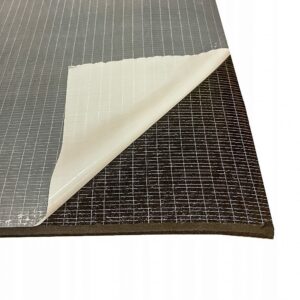
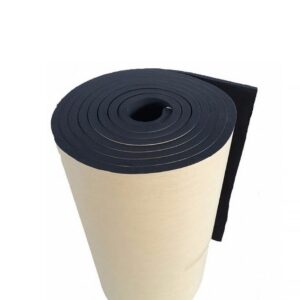
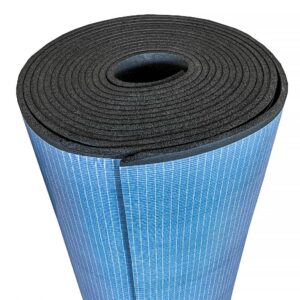
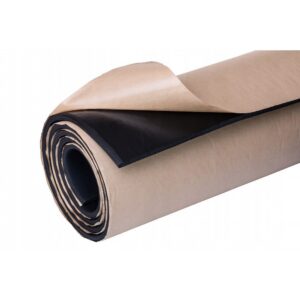
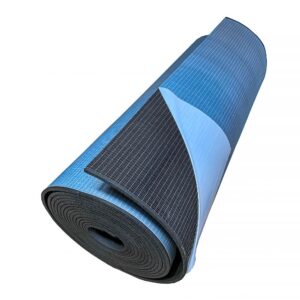
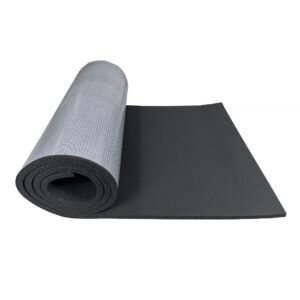
Rubber Foam. ABM Acoustic Insulation Self-adhesive, 25mm, 1m2
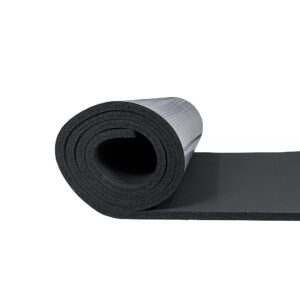
ABM Rubber Foam. Acoustic Insulation Self-adhesive, 32mm, 0.5m2
Rubber Foam. Acoustic Insulation Self-adhesive ABM, 32mm, 1m2
Orders are processed efficiently, and customer reviews of ABM Insulation confirm the high quality of products, fast shipping, and professional advice. When choosing the right material for a specific vehicle or industrial application, you can take advantage of consultation and technical support available directly from the manufacturer.
Butyl vs. bituminous mats, which insulation better resists moisture
Choosing between a butyl mat and a bituminous mat is one of the most common decisions when soundproofing a car. In terms of moisture protection, the differences between these materials are significant and have real consequences for the durability of the vehicle body.
| Feature | Butyl mat | Bitumen mat |
|---|---|---|
| Water resistance | Very high, non-polar chemical structure | Moderate, bitumen can absorb moisture |
| Flexibility in freezing temperatures | Retains flexibility down to minus 40°C | Hardens and becomes brittle below minus 10°C |
| Risk of cracking | Very low | High at low temperatures |
| Mold resistance | Complete, chemically inert material | Possible growth of microorganisms in crevices |
| Installation | No heating required, self-adhesive | Requires heating with a heat gun |
| Bond durability | Long-lasting, stable adhesion | May lose adhesion after thermal cycles |
Degradation of bitumen mats under the influence of moisture and low temperatures
Bitumen, also known as asphalt, is an organic material with a complex hydrocarbon structure. At low temperatures, it becomes rigid and brittle. Cracks in the surface of the bitumen mat create pathways for moisture to reach the bodywork sheet metal. Once the corrosion process has been initiated, it is difficult to stop.
Another problem is the behavior of the bitumen mat at high temperatures. In summer, the asphalt softens and can detach from the metal, creating gaps. Freeze-thaw cycles accelerate the degradation of the material. After a few seasons, the bitumen mat often requires replacement because it stops effectively protecting the bodywork.
Moisture acting on the bitumen mat over a long period causes its gradual destruction. Microorganisms, including fungi and bacteria, can decompose the organic components of the bitumen. These processes lead to a loss of adhesion and chemical protection of the metal. As a result, corrosion progresses faster under a damaged bitumen mat than on metal sheets without any insulation.
Hydrophobic properties of butyl compared to bitumen mass
Butyl rubber and bitumen differ fundamentally in terms of hydrophobicity. Bitumen contains polar functional groups that allow for limited interaction with water. Butyl rubber is built exclusively from non-polar hydrocarbon chains, which ensures complete water repellency.
The practical difference is clear. A bitumen mat in contact with water can slowly absorb moisture at the edges and in areas where cracks have formed. A butyl mat does not absorb water under any conditions. Even prolonged immersion does not change its insulating or mechanical properties.
Tip: When replacing an old bitumen mat, it is worth thoroughly checking the condition of the metal underneath it. Even minor traces of rust should be removed and protected with an anti-corrosion primer before installing a new butyl mat. Only on healthy metal will a butyl mat provide many years of protection against moisture.
FAQ: Frequently asked questions
Is a butyl mat completely waterproof, or only moisture-resistant?
A butyl mat is a completely waterproof material, not just moisture-resistant. Butyl rubber is built from non-polar hydrocarbon chains that chemically repel water molecules. Water does not penetrate the structure of the butyl mass, even with prolonged contact.
The aluminum foil on the surface of the mat further strengthens this protection. It creates a physical barrier that is impermeable to moisture. Thanks to this, a butyl mat effectively protects the bodywork metal from condensation, rain, and road salt for many years of operation.
Does a butyl mat protect the car from corrosion?
A butyl mat effectively protects the car body from corrosion. The tight adhesion of the adhesive mass to the metal eliminates spaces where moisture could accumulate. Without access to water and oxygen, corrosion processes simply do not occur. This is precisely why installing a butyl mat on the sills, floor, and wheel arches is one of the most effective ways to protect the bodywork.
Butyl rubber is chemically inert and does not react with metal. It does not conduct moisture, nor does it create an environment conducive to rust. However, careful preparation of the sheet metal before installation is crucial. Any residual moisture or rust under the mat can lead to corrosion even under tightly adhered insulation.
Regular inspection of the mat edges, especially after the first winter season, allows for the quick detection of potential leaks and the prevention of major damage.
At what temperature does a butyl mat maintain its waterproof properties?
A butyl mat maintains its full waterproof properties over a very wide temperature range. The material functions without interference from minus 40 degrees Celsius to over 150 degrees Celsius. Neither freezing temperatures nor a hot summer affect the tightness of the insulation.
In low temperatures, butyl rubber retains its flexibility and does not crack. The mat does not lose its adhesion to the metal even after repeated freeze-thaw cycles. It is precisely this feature that makes butyl mats reliable all year round, regardless of the weather conditions outside the vehicle.
Why does a butyl mat not mold or degrade under the influence of moisture?
Butyl rubber is a synthetic polymer with a purely hydrocarbon structure. It does not contain any organic components that could serve as a nutrient source for mold, fungi, or bacteria. Microorganisms responsible for mold have nothing to feed on, so their growth on the surface of a butyl mat is impossible.
Moisture acting on a butyl mat over a long period does not cause it to soften, swell, or degrade. The chemical structure of the material remains stable regardless of the amount of water absorbed, or rather, the lack thereof. The mat maintains constant dimensions and full tightness, which distinguishes it from bitumen mats, which lose their insulating properties over time under the influence of moisture and frost.
Summary
Butyl mats owe their resistance to moisture to the deep chemistry of the material. The non-polar structure of butyl rubber, densely packed polymer chains, and the multi-layer construction of the mat together create a barrier that water simply cannot overcome. The aluminum foil reinforces this protection, and the self-adhesive layer ensures a tight connection with the metal.
Compared to bitumen mats, butyl mats offer an advantage in every aspect relevant to protecting the bodywork from moisture. They maintain flexibility and water resistance in freezing and hot conditions, do not crack, do not absorb water, and are resistant to mold. Choosing butyl mats, such as ABM Insulation products, is an investment in durable bodywork protection that retains its full properties for many years of vehicle operation.
Sources:
- https://www.nature.com/articles/s41598-024-55823-x
- https://pmc.ncbi.nlm.nih.gov/articles/PMC10904857/
- https://pmc.ncbi.nlm.nih.gov/articles/PMC10974635/
- https://pubmed.ncbi.nlm.nih.gov/38542942/
- https://pmc.ncbi.nlm.nih.gov/articles/PMC10780557/
- https://pmc.ncbi.nlm.nih.gov/articles/PMC8434312/
- https://pubs.acs.org/doi/10.1021/acs.langmuir.6b02897
- https://www.sciencedirect.com/science/article/pii/S2211715625004680
- https://www.sciencedirect.com/science/article/abs/pii/S0927024811006933
