
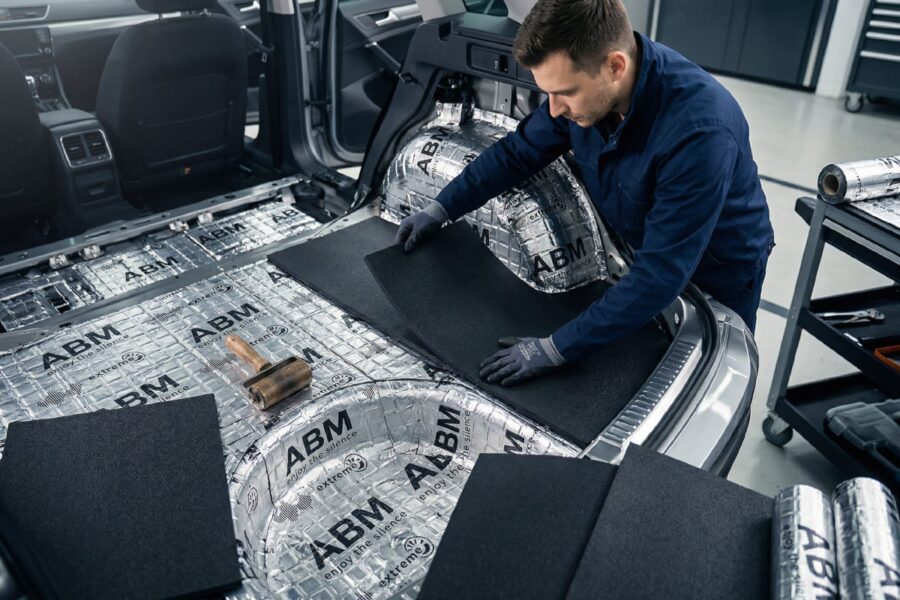
Anyone who has ever driven on a highway at full speed knows how exhausting noise can be. The roar of tires, floor vibrations, and body drumming make even a short trip tiring. That is exactly why rubber foam over butyl mat has become the standard in professional car soundproofing. These are not two equivalent layers that can be used interchangeably. They are two completely different materials that, together, create a system far more effective than either one alone.
Butyl mat is the foundation of any good insulation. It is applied directly to the body sheet metal, where it dampens vibrations and stops metal resonance. However, it does not absorb sound waves floating in the air on its own. This is where the role of rubber foam as a sound-absorbing layer comes in. Together, they form a system that eliminates noise on two levels simultaneously, which translates into real silence in the cabin.
A noise reduction of just 3 to 4 decibels is, according to the logarithmic scale, a reduction in perceived noise of over 50 percent. This is the exact effect produced by combining a butyl mat with rubber foam applied to the floor, doors, and trunk of a vehicle. Without the second layer, the result is significantly weaker, even if the butyl mat covers the entire surface of the sheet metal.
Why does a butyl mat alone not fully soundproof a car?
Butyl mat is a material with high specific mass that works through direct contact with the vibrations of the body panels. It effectively eliminates mechanical vibrations, but its mechanism of action has limits. Understanding these limits is the key to properly selecting subsequent layers of insulation.
How does a butyl mat dampen vibrations but not absorb sound?
A butyl mat works on the principle of vibration damping by converting mechanical energy into heat. When the body sheet metal is set in motion by the engine, road irregularities, or wind, the butyl mat prevents it from vibrating freely. Its mass and flexibility force the dissipation of this energy instead of transmitting it further.
However, vibration damping is something different than sound absorption. Acoustic waves are variable air pressures that penetrate through gaps, service openings, and thin body elements. A butyl mat is too hard and dense to absorb these waves. It reflects them instead of stopping them, which causes some of the acoustic energy to still reach the interior of the cabin.
Where in the body does resonance bypass the butyl layer?
Even when a butyl mat covers a large portion of the sheet metal, there are always hard-to-reach places. Sill reinforcements, spaces behind door upholstery, pillar columns, or recesses in the center tunnel often remain without full coverage. In these areas, the sheet metal continues to resonate freely at specific frequencies.
Resonance also bypasses the mat where sound waves do not come into direct contact with the sheet metal. Sound entering through door seals, ventilation grilles, or unauthorized gaps in the upholstery goes directly into the cabin space. A butyl mat has no way of stopping these waves because it is not in their path. It is in these areas that rubber foam as an absorbing layer works best.
What does the driver lose by skipping rubber foam?
Skipping rubber foam means there is no absorbing layer in the insulation system. The result is selective noise reduction, limited mainly to low frequencies and mechanical vibrations. Mid- and high-frequency sounds, such as tire noise, wind whistling, or outside noises, remain unchanged.
Problems when rubber foam is missing:
- lack of absorption of acoustic waves in the air
- noticeable tire noise even after full soundproofing with a butyl mat
- degraded car audio system sound quality due to acoustic reflections in the cabin
- high temperature inside the vehicle due to a lack of thermal insulation
The driver also loses thermal comfort. Rubber foam has very low thermal conductivity, which significantly slows down the heating of the cabin in summer and its cooling in winter. The butyl mat alone does not perform this function to a sufficient degree. The lack of a second layer is therefore giving up half the potential of the entire insulation system.
How does rubber foam work with a butyl mat?
The combination of both materials is not accidental. It is based on a well-described physical phenomenon that acoustics experts call a mass-spring system. Understanding this mechanism allows for better planning of the entire insulation and avoiding the most common installation errors.
What is the mass-spring system in car soundproofing?
The mass-spring system is an acoustic model describing how two layers of materials with different mechanical properties work together to dampen sound. The body sheet metal acts as the mass, the butyl mat increases this mass and dampens vibrations, and the rubber foam acts as the spring.
In this model, rubber foam absorbs acoustic energy thanks to its flexible structure. When a sound wave hits the soft foam, the energy is converted into heat through the internal friction of the material. The rigid butyl mat underneath, in turn, does not allow this energy to return to the cabin through reflection. Together, they create a system that attacks sound at different stages of its propagation.
The synergy of both layers results in significantly better noise reduction than the sum of the achievements of each material separately. ABM Insulation recommends using rubber foam directly on the butyl mat precisely because this system exploits the advantages of both materials simultaneously.
Which sound bands does the foam absorb, and which does the butyl not dampen?
The butyl mat works best in the low-frequency range, from about 20 to 500 Hz. This band includes engine vibrations, suspension rumbling, and low-frequency road noise. In this range, the mass of the material and contact with the sheet metal are of key importance.
Rubber foam complements the mat’s performance in higher frequency bands. It is particularly effective in the range from 500 Hz to several kilohertz, where most traffic noise, tire noise on asphalt, and sounds from outside the vehicle are located.
| Frequency band | Butyl mat | Rubber foam |
|---|---|---|
| Low (20–500 Hz) | Very effective | Lower effectiveness |
| Medium (500 Hz – 2 kHz) | Moderate effectiveness | Very effective |
| High (2 kHz – 20 kHz) | Poor effectiveness | Effective |
This division means that no single material eliminates the entire range of noise on its own. Only their combination provides broadband acoustic protection, which significantly improves driving comfort.
How does the thickness of rubber foam change the soundproofing effect?
The thickness of rubber foam has a direct impact on the range of absorbed frequencies. Thin foams, from 3 to 6 millimeters, handle higher frequencies better and are suitable for doors and pillars. Thicker variants, from 10 to 19 millimeters or more, absorb lower tones more effectively and work well on the floor or in the trunk.
ABM Insulation offers rubber foams in a wide range of thicknesses, from 3 mm to 50 mm. Variants with aluminum foil, available from 6 mm and up, provide additional thermal insulation, which is particularly useful on the floor and in the center tunnel area.
Foam that is too thick in tight spaces, such as inside a door, can make closing difficult or interfere with mechanical components. Foam that is too thin will not provide the expected acoustic effect. The choice of thickness should take into account the available space and the main sources of noise in a given area of the vehicle.
How to combine both layers to avoid acoustic bridges?
An acoustic bridge is any place where sound can bypass the insulation layer. It most often occurs where the rubber foam does not adhere tightly to the butyl mat or the door frame. Gaps, crevices, and unglued edges create paths through which sound waves enter the cabin without obstruction.
Rules for properly combining layers:
- First, apply the butyl mat directly to the cleaned, degreased sheet metal.
- Press the mat down with a roller, especially at the edges and around service holes.
- Apply the rubber foam over the entire surface of the butyl mat, without gaps.
- Seal the foam joints with airtight rubber tape or aluminum foil.
- Ensure the continuity of both layers at cable passages and mechanical mounts.
Careful application of materials determines the final result. Even the best products will not provide full results if the insulation has gaps. The airtightness of the entire system is just as important as the quality of the materials themselves.
Where in the car does rubber foam on butyl provide an effect?
Not every part of the body requires the same approach. Different areas of the vehicle have different sources of noise and different operating conditions for insulation materials. Good insulation is that which takes into account the specifics of each zone.
Floor and tunnel: where does the two-layer system work best?
The car floor is the area through which the largest volume of noise penetrates. Road noise, tire resonance, and drivetrain vibrations reach the cabin from here. The floor sheet metal is also particularly susceptible to vibrations due to its large, unstiffened surface.
Using a butyl mat over the entire floor surface, together with thick rubber foam, provides the best results here. Foam with a thickness of at least 10 mm absorbs the frequencies that resonate in the cabin. The center tunnel, where the exhaust system and driveshaft run, heats up particularly strongly. Here, it is worth using rubber foams with aluminum foil, which simultaneously insulate heat and sound.
Doors and pillars: how does foam eliminate whistling while driving?
Doors are a complex acoustic space. Inside them run windows, window regulators, speakers, and wiring harnesses. The door sheet metal resonates during acceleration, and seal leaks let air whistles into the cabin at higher speeds.
A butyl mat glued to the inner door panel reduces the resonance of the metal panels. Thin rubber foam, from 3 to 9 mm, applied over the mat, absorbs sound waves reflecting inside the door cavity. The result is the silencing of characteristic rattling, whistling, and booming sounds while driving.
Vehicle pillars, especially the A and B pillars, are a common source of resonance at high speeds. Filling their space with rubber foam combined with a butyl mat on the metal core eliminates this effect. Pillar insulation also positively affects the performance of the audio system because it eliminates sound reflections inside the cabin.
Tip: When installing rubber foam in doors, it is worth leaving access to the drainage holes in the lower part of the door so that water has free drainage and does not accumulate inside.
Materials for car soundproofing at the ABM Insulation store
ABM Insulation is a manufacturer and supplier of insulation materials with many years of experience in the vehicle, machinery, and building soundproofing industry. The company has been operating since 2010 and is constantly expanding its range with new acoustic and thermal solutions. Orders are processed within 24 hours, and delivery covers the entire European Union.
The ABM Insulation store’s assortment responds to the real needs of people involved in vehicle soundproofing. Each product has precisely defined technical properties, which makes it easier to select the right materials for specific places in the bodywork.
Butyl mats and foams for vehicle soundproofing
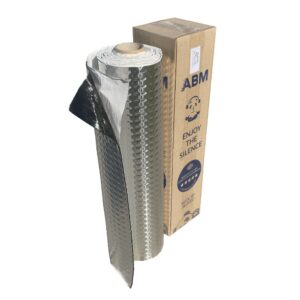
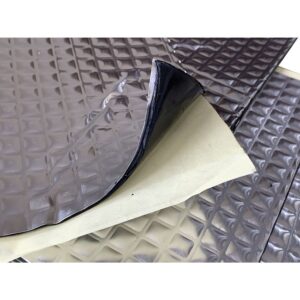
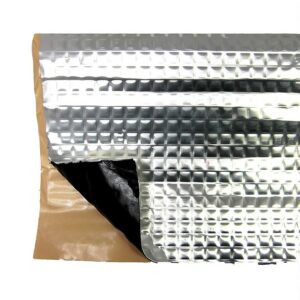
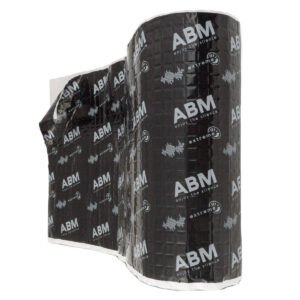
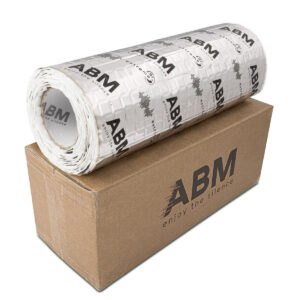
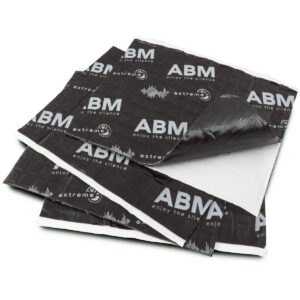
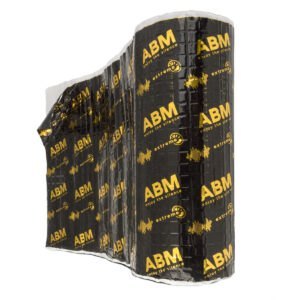
The basis of any insulation is a butyl mat glued directly to the sheet metal. ABM Insulation offers two product lines with different levels of advancement.
ABM Insulation butyl mat lines:
-
ABM Professional butyl mats effectively dampen body sheet metal vibrations and reduce resonance at low frequencies
-
ABM Xtreme butyl mats are designed for extreme acoustic conditions and provide the maximum level of soundproofing
Both lines of mats work in a wide temperature range, from deep frost to high summer values, which guarantees durability for many years of vehicle use.



Rubber and acoustic foams as the second layer of insulation
After butyl mats, the next element of the insulation system is foam. ABM Insulation offers two types adapted to different acoustic functions.
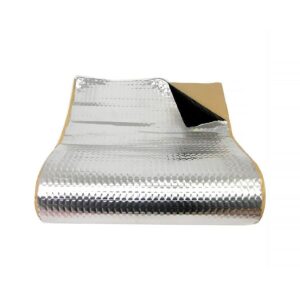
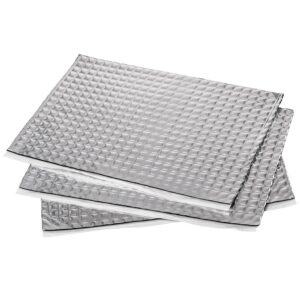
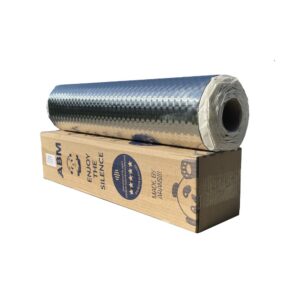
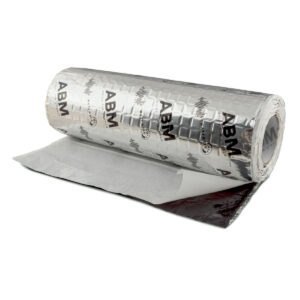
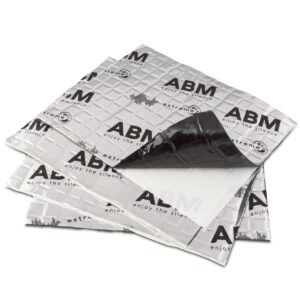
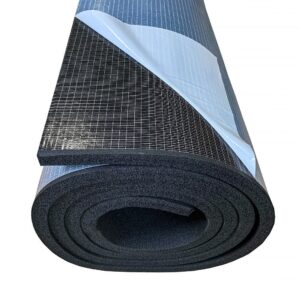
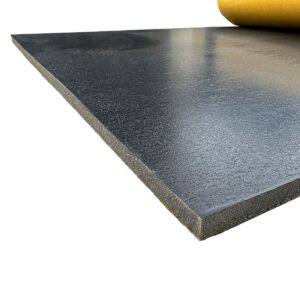
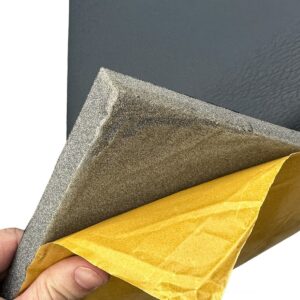
Insulating rubber foams have a closed-cell structure, are moisture-resistant, and act as a sound-absorbing layer in the medium and high-frequency range. Variants with aluminum foil provide additional thermal insulation, which is effective on the floor and in the center tunnel.
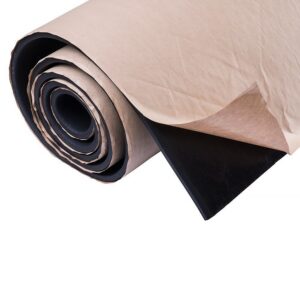
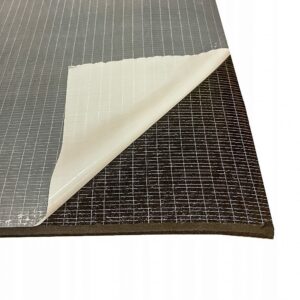
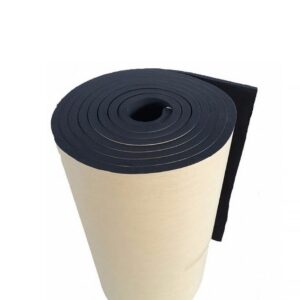
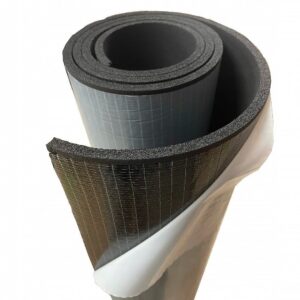
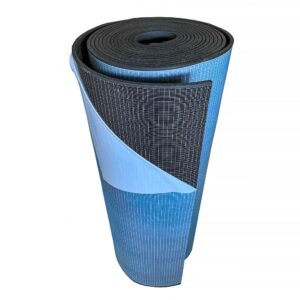
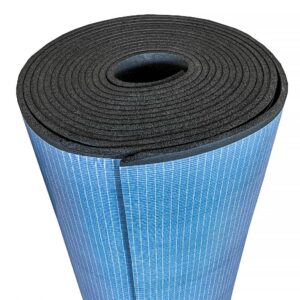
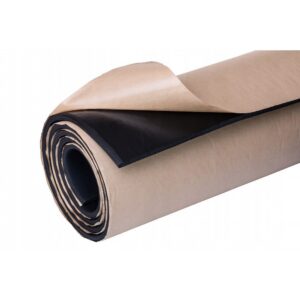
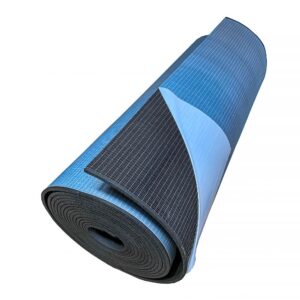
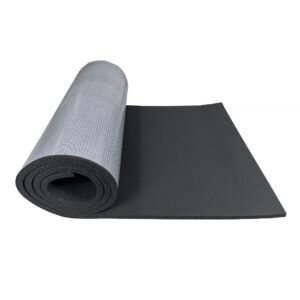
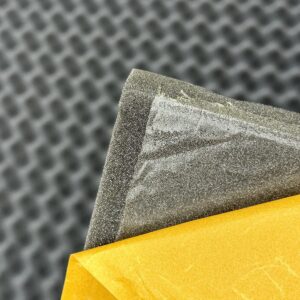
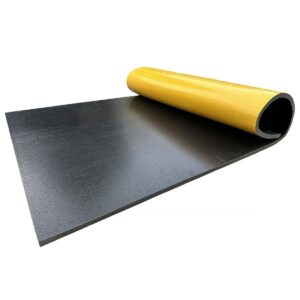
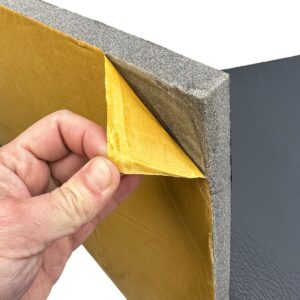
Rubber Foam. ABM Acoustic Insulation Self-adhesive, 25mm, 1m2
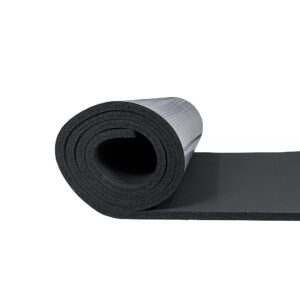
ABM Rubber Foam. Acoustic Insulation Self-adhesive, 32mm, 0.5m2
Rubber Foam. Acoustic Insulation Self-adhesive ABM, 32mm, 1m2
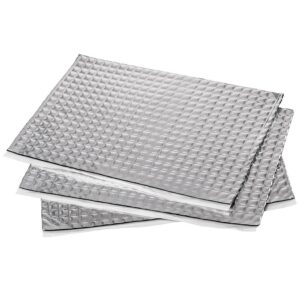
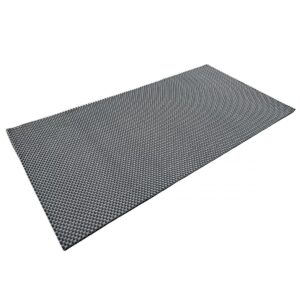
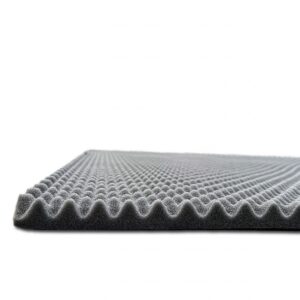
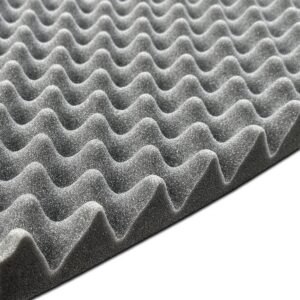
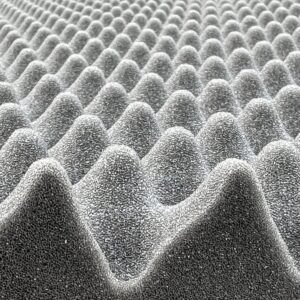
Acoustic absorbing foams and panels complement the system with an open-cell polyurethane foam layer. This material absorbs sound waves with particular effectiveness and improves the overall acoustics of the cabin. Available formats include flat sheets, wave profiles, and pyramids in various thicknesses.
Technical advice and support with material selection are available via the contact form. Customer reviews confirming the quality of products, fast delivery, and professional service can be checked on the company profile.
Closed-cell or open-cell foam for butyl mat?
The choice of rubber foam type has great practical significance. There are two basic types available on the market that differ in structure, properties, and application. The decision to choose one of them should be informed and based on specific requirements for a given part of the vehicle.
How does the structure of both foams differ in acoustic insulation?
Closed-cell foam is built from gas-filled cells that do not connect to each other. This compact structure makes the material hard, airtight, and water-resistant. It does not allow moisture to pass through and has good thermal insulation.
Open-cell foam has a mesh structure where the cells are connected to each other. Air passes freely through the material, which makes it absorb acoustic waves much more effectively than the closed-cell variant. The disadvantage is higher water absorption and weaker thermal insulation.
Differences between closed-cell and open-cell foam:
- closed-cell foam: airtight, water-resistant, better thermal properties, moderate acoustic performance
- open-cell foam: flexible, higher sound absorption, lower moisture resistance
- closed-cell rubber foam combines the features of rubber and foam, giving it an advantage over standard PUR foams
Rubber foam used in the automotive industry is a type of closed-cell foam based on synthetic rubber. Its cellular structure is, however, more flexible than typical closed-cell PUR foam, which gives it better sound absorption properties while maintaining moisture resistance.
How do moisture and temperature determine the choice of foam for a car?
A car interior is a demanding environment. Temperatures fluctuate from several dozen degrees below zero to over 80 degrees Celsius in the summer when exposed to sunlight. Moisture penetrates the doors through seals and drainage holes. ABM Insulation butyl mat works in a range from minus 40 to plus 170 degrees Celsius. Rubber foam should meet similar requirements.
Open-cell foam absorbs water like a sponge. Once damp, it loses its acoustic properties and begins to rot. In the door cavity, trunk, or on the car floor, this is an unacceptable risk. Closed-cell foam based on rubber is the right solution in this situation. It does not absorb water, does not lose its properties during temperature fluctuations, and does not corrode adjacent metal elements.
What technical parameters of rubber foam are worth knowing?
When choosing rubber foam for car soundproofing, several parameters are of key importance. The density of the material, measured in kilograms per cubic meter, directly affects its sound absorption capacity. Higher density means better damping, but also greater weight of the installed insulation.
The sound absorption coefficient, denoted as alpha, indicates what percentage of incident acoustic energy the material retains. The closer to a value of 1.0, the better the insulation. ABM Insulation rubber foams achieve high values for this coefficient, especially in the medium and high-frequency bands.
Equally important is thermal conductivity, denoted as lambda. Rubber foams have a low value for this parameter, which means good thermal insulation. Variants with aluminum foil lower thermal conductivity even further through the radiation reflection effect. Available thicknesses from 3 to 50 mm allow for precise selection of material for every place in the vehicle.
Tip: When choosing rubber foam for the vehicle floor, it is worth reaching for a variant with aluminum foil at least 10 mm thick. It simultaneously limits heat from the exhaust system and absorbs road noise in medium frequencies.
FAQ: Frequently Asked Questions
Does rubber foam replace butyl mat when soundproofing a car?
Rubber foam and butyl mat perform completely different functions. Butyl mat adheres directly to the body sheet metal and dampens its mechanical vibrations. It stops metal resonance and blocks low frequencies generated by the engine, suspension, and wheels.
Rubber foam, on the other hand, absorbs acoustic waves traveling through the air, mainly in the medium and high-frequency ranges. No single material can replace the other, as each operates at a different level of insulation. Installing only rubber foam without a butyl mat leaves the sheet metal without vibration damping, which causes the body resonance to continue penetrating the cabin.
How does rubber foam on a butyl mat affect the temperature inside the car?
Rubber foam has very low thermal conductivity, which means it effectively slows down heat exchange through the vehicle’s body panels. In summer, it limits the heating of the cabin from the sun and hot asphalt. In winter, it slows down heat loss through the floor and doors.
Variants of rubber foam with an additional aluminum foil layer enhance this effect by reflecting thermal radiation. This is particularly useful on the vehicle floor, where heat from the exhaust system reaches from underneath. The butyl mat itself has limited thermal properties. Only the combination of both layers provides a noticeable improvement in thermal comfort throughout the year.
Is rubber foam on a butyl mat resistant to moisture in the car?
Rubber foam used in the automotive industry has a closed-cell structure, which means that water does not penetrate its interior. It does not soak up water, does not lose its properties after contact with moisture, and does not rot over years of use. It is resistant to chemical substances, does not absorb odors, and does not create conditions conducive to mold growth.
The butyl mat is equally airtight and impermeable to water. Together, both materials create a barrier resistant to the conditions inside the body, where moisture appears seasonally through seals, door drainage holes, and water vapor condensation. This is precisely why the rubber foam on butyl mat system works for many years without the need for replacement.
Where in the car is it most worthwhile to apply rubber foam over a butyl mat?
The greatest acoustic effect of the rubber foam on butyl mat system is achieved on the vehicle floor. The floor has a large, unstiffened surface and is in direct contact with the space through which road noise and suspension vibrations penetrate. Applying both layers over the entire floor surface reduces cabin noise by more than 50 percent.
Equally important are the doors, trunk, and center tunnel. The doors are a source of wind noise and metal panel resonance, while the trunk acts as a resonance box for sounds coming from outside. The center tunnel, on the other hand, heats up from the exhaust system, so the rubber foam plays a dual role there: acoustic and thermal. Soundproofing these four zones simultaneously brings a comprehensive improvement in driving comfort.
Summary
Rubber foam on a butyl mat is not an option, but a logical completion of an insulation system. The butyl mat dampens sheet metal vibrations and eliminates resonance, but it does not absorb acoustic waves transmitted through the air. Rubber foam fills these gaps by absorbing medium and high frequencies and providing thermal insulation. Together, they create a mass-spring system that reduces cabin noise by more than 50 percent compared to a vehicle without any insulation.
The effectiveness of the entire system depends on the quality of both layers, their thickness, surface coverage, and the tightness of the installation. Closed-cell rubber-based foam, such as that offered by ABM Insulation, works well in every area of the vehicle due to its resistance to moisture and temperature. Proper selection of materials and careful installation are the only way to achieve real silence in all driving conditions.
Sources:
- https://pmc.ncbi.nlm.nih.gov/articles/PMC6403634/
- https://onlinelibrary.wiley.com/doi/10.1155/2022/1084738
- https://patents.google.com/patent/CN105061912A/en
- https://patents.google.com/patent/DE3824171A1/en
- https://en.wikipedia.org/wiki/Sound_deadening
- https://en.wikipedia.org/wiki/Acoustic_foam
- https://en.wikipedia.org/wiki/Soundproofing
- https://dael.euracoustics.org/confs/fa2023/data/articles/001191.pdf
- https://arxiv.org/html/2408.14933v1
- https://www.sciencedirect.com/science/article/pii/S0264127524009158
- https://stacks.cdc.gov/view/cdc/59229/cdc_59229_DS1.pdf
